
MIDI guitar controllers let you play software instruments using guitar technique. Choose a guitar with MIDI built in, or fit a MIDI pickup to a compatible guitar you already own.
My top pick is the Jamstik Standard MIDI Guitar (Black). It combines normal electric-guitar outputs with several MIDI connection options for studio work.
My compact pick is the Jamstik Core MIDI Guitar (Midnight Black). Its smaller body and USB-powered MIDI system suit a computer-based recording setup.
The 4 Best MIDI Guitar Controllers (2026)


Let’s compare them in more detail.
1. Jamstik Standard MIDI Guitar (Black)
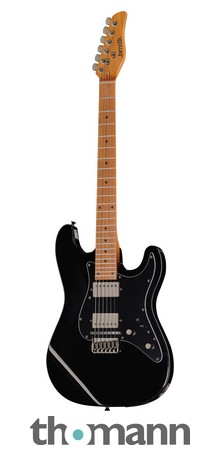
The Jamstik Standard is my first choice if you want a familiar full-size electric guitar that also records MIDI. Its two humbuckers and quarter-inch output work with an ordinary guitar amp, while USB-C, TRS-MIDI and Bluetooth MIDI send note information to a suitable sound source.
Pros
- Electric-guitar audio and MIDI outputs
- USB-C, TRS-MIDI and Bluetooth MIDI
- Per-string expression and MPE support
Cons
- Needs tuning, calibration and suitable software
This is the right-handed black Standard, rather than the older headless Studio model. The built-in rechargeable battery makes wireless MIDI possible. Bluetooth carries MIDI data, so use your normal audio connection or interface to hear the guitar itself.
| Type | Full-size MIDI electric guitar |
| MIDI connections | USB-C, 3.5 mm TRS-MIDI, Bluetooth MIDI |
| Guitar pickups | Two humbuckers |
| Power | Rechargeable battery; USB-C charging |
Choose it if you want one instrument for guitar parts and software synths. Set the pitch-bend range and MIDI mode to match your virtual instrument, and update the firmware before judging tracking. Thomann is the buying route shown here; check the delivery estimate and shipping options for your country.
2. Jamstik Core MIDI Guitar (Midnight Black)
The Jamstik Core makes sense when you want a complete MIDI guitar with less bulk. It has a compact body, a normal 25.5-inch scale length and 22 frets. A single humbucker and quarter-inch output also let it serve as a regular electric guitar.
Pros
- Compact body with normal scale length
- USB-C and TRS-MIDI connections
- Single-channel, multi-channel and MPE modes
Cons
- USB power is required for MIDI
- No Bluetooth MIDI or internal battery
The Core uses USB power for its MIDI system. That is convenient beside a computer, but it is a different arrangement from the Standard above: you cannot charge an internal battery and use Bluetooth MIDI. Its onboard selector gives you single-channel, multi-channel and MPE modes for different software instruments.
| Type | Compact MIDI electric guitar |
| MIDI connections | USB-C and 3.5 mm TRS-MIDI |
| Scale and frets | 25.5 inches; 22 frets |
| Power | USB-powered MIDI system |
I would pick the Core for recording at a desk or transporting a smaller instrument. The Midnight Black model is shown in the buying links. If you need to walk around with a wireless MIDI setup, choose the Standard or the Fishman Wireless instead.
3. Fishman TriplePlay Express
The Fishman TriplePlay Express is the wired option for keeping your existing guitar. Its hexaphonic pickup senses the strings separately, and the controller sends MIDI over USB-C to a compatible computer, tablet or other USB-MIDI host.
Pros
- Keep a compatible guitar you already own
- Direct USB-C MIDI connection
- No pickup battery to charge
Cons
- Pickup clearance and guitar fit need checking
- USB cable restricts movement
Check the installation instructions before buying. The magnetic pickup is intended for compatible six-string steel-string guitars; it does not work with nylon strings. Correct spacing beneath the strings is part of the setup, even though the mounting system avoids permanent modifications on suitable instruments.
| Type | Hexaphonic MIDI pickup and controller |
| Connection | USB-C MIDI |
| Power | USB |
| Sound source | Compatible computer, mobile device or USB-MIDI host |
The Express suits recording MIDI or entering notation while using familiar guitar fingering. Basic operation sends notes on one MIDI channel, while the TriplePlay Utility software provides configuration options. Hardware synths need a suitable USB-MIDI host or the appropriate Fishman floor-controller setup; a USB cable alone cannot connect to a five-pin MIDI input.
4. Fishman TriplePlay Wireless
The Fishman TriplePlay Wireless is the choice for players who want to fit a MIDI pickup without remaining attached to a USB cable. The pickup and controller send MIDI to the supplied USB receiver over a proprietary 2.4 GHz wireless connection. This is separate from Bluetooth MIDI.
Pros
- Use your own compatible guitar
- Wireless link to the USB receiver
- Rechargeable controller
Cons
- Pickup installation and sensitivity need adjustment
- Receiver still needs a compatible host
The rechargeable controller sits on your guitar, with the divided pickup beneath the strings. Your computer or compatible host receives the MIDI and plays the selected software instrument. The normal guitar signal remains a separate audio path, so plan both connections if you want to blend guitar and synth sounds.
| Type | Hexaphonic wireless MIDI pickup |
| MIDI connection | 2.4 GHz wireless to USB receiver |
| Controller power | Rechargeable battery |
| Guitar compatibility | Suitable six-string steel-string guitar |
Choose the Wireless over the Express when cable freedom matters on stage or in a recording room. Allow time for installation, firmware updates and sensitivity adjustments. A clean playing technique and a patch suited to guitar phrasing will make the result more useful than expecting every keyboard sound to respond in the same way.
Can a Guitar be a MIDI Controller?
Yes. A guitar with MIDI electronics, such as the Jamstik Standard or Core, can send note and expression data to a virtual instrument. A compatible guitar fitted with a Fishman TriplePlay pickup can do the same job. The MIDI data needs a software or hardware sound source before you can hear it.
How do you Make a Guitar MIDI?
Fit a compatible MIDI pickup, follow its spacing and mounting instructions, and connect it to the appropriate host or receiver. TriplePlay Express uses USB-C, while TriplePlay Wireless uses its USB receiver. A divided pickup such as a Roland GK-3 needs a compatible processor; it is not a direct USB-MIDI converter on its own.
How do I Make my MIDI Guitar Sound Real?
Start with the right virtual instrument, then match its pitch-bend and MIDI settings to your controller. Piano parts need clean note starts, while a synth lead may benefit from bends and slides. Tuning, pickup calibration, muting unwanted strings and using phrasing appropriate to the chosen instrument all affect the result.
How does MIDI Work with Guitar Pedals?
MIDI-enabled pedals accept commands such as program changes and continuous-controller messages to switch presets or adjust parameters. That is a different job from converting played guitar notes to MIDI. Connect compatible MIDI ports, or use a suitable USB-MIDI host where required. A foot controller can control pedals without turning your guitar notes into synth notes.
Summary
The Jamstik Standard MIDI Guitar (Black) is my first choice for a complete MIDI guitar with a full-size body and wired or Bluetooth MIDI connections. Choose the Jamstik Core MIDI Guitar (Midnight Black) for a smaller USB-powered instrument. If you prefer your current guitar, TriplePlay Express provides a wired pickup route and TriplePlay Wireless adds cable freedom.