
Envelope filter pedals are a great type of guitar pedal that brings in a wah effect that reacts to your playing style. An envelope filter pedal filters out specific frequency ranges of the sound to add or remove high and low frequencies.
This reacts to your playing dynamics, so placing it early in the signal chain is a useful starting point. Compression, drive and pickup output can change the response. Envelope filtering is strongly associated with funk, but it also provides expressive movement in rock, pop and more experimental music.
My top recommended envelope filter pedal is the Electro-Harmonix Q-Tron Plus. This is a quintessential vintage pedal with great flexibility and functionality.
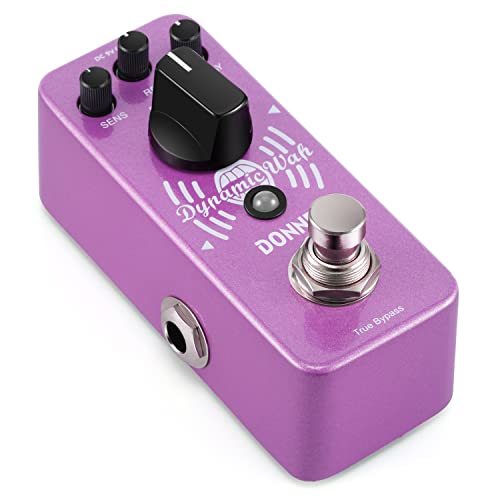
My second recommended envelope filter pedal is the Donner Dynamic Wah. If you want an affordable option, this mini-pedal will do the job well.
The 6 Best Envelope Filter Pedals (2026)



Let’s compare these in more detail.
1. Electro-Harmonix Q-Tron Plus
The Electro-Harmonix Q-Tron Plus is a flexible choice for players who want to shape more than a simple touch-wah sound. It combines an envelope-controlled filter with an effects loop and response switching. Those are its distinguishing features; it does not contain a second independent envelope-filter pedal that doubles the effect automatically.
Low-pass, band-pass and high-pass settings change which part of the signal receives emphasis, while the Mix setting combines the band-pass response with the original signal. Sweep direction and frequency range alter the movement of the effect. Begin with a restrained setting and establish a consistent picking level before increasing resonance or trying a dramatic sweep.
Gain and the normal/boost setting affect the way the signal drives the filter. The response switch selects a faster or slower attack character. A guitar with strong pickups may need a different gain setting from a lower-output instrument, so a copied knob position is a starting point rather than a universal recipe.
The effects loop sits between the preamp and filter sections. An effect placed there can change the sound without changing the original envelope drive in the same way as putting it before the entire pedal. For example, distortion in that loop offers a different response from distortion between the guitar and Q-Tron input. Follow the loop routing in the manual.
This remains my top pick for musicians who want that routing flexibility and several filter controls. Its enclosure and dedicated 24V adapter need space and power planning; do not plug it into an ordinary 9V output simply because neighbouring pedals use one. The smaller Nano below is easier to integrate when a compact conventional supply arrangement matters more than the Plus's loop.
2. Donner Dynamic Wah
The Donner Dynamic Wah is a compact analog envelope filter with four controls. It remains my budget-oriented mini-pedal choice for players wanting a touch-sensitive wah effect without a large panel. It reacts to input dynamics instead of using a treadle under your foot, so consistent picking and suitable sensitivity matter more than copying somebody else's exact settings.
Sens sets the reaction to the input, Res changes the sharpness of the filter response, Decay adjusts the return toward the resting point and Range changes the frequency area of the sweep. Start with the guitar volume at the level you normally use, set moderate resonance, then adjust sensitivity until quieter and louder notes produce useful differences.
Its small metal enclosure and true-bypass switching make it straightforward to add to a compact board. Leave room for the input/output plugs and power connector, rather than measuring only the case. The status LED identifies whether the effect is engaged. There are no presets, expression input or programmable routing functions, which may be an advantage if you want a simple setup.
The manufacturer specifies a separate 9V centre-negative adapter and no battery compartment. Confirm the actual supply and package contents before buying. This is a useful way to explore envelope filtering, but the right response depends on your guitar, picking and signal chain. Strong compression before it can reduce the playing dynamics that trigger the sweep, so compare that arrangement with compression after the filter.
3. EarthQuaker Devices Spatial Delivery V3
The EarthQuaker Devices Spatial Delivery V3 offers familiar touch-wah effects together with more experimental filter movement. It is a voltage-controlled filter with preset and expression facilities, rather than simply a digital substitute for a conventional wah. The current V3 is particularly useful when you need to return to the same settings across several songs.
Its mode switch selects Up Sweep, Down Sweep or Sample and Hold. Those are movement modes, not low-pass, band-pass and high-pass selections. Up and Down respond to the playing envelope, while Sample and Hold produces stepped changes independent of that same pick-driven sweep. The Filter control shapes the filtering response and should be considered separately from the mode switch.
Range adjusts the width and response of the sweep, while Resonance changes how strongly the filter peak is emphasized. A subtle setting can add movement to clean rhythm guitar; a more pronounced peak can make single-note lines stand out. Check the loudest notes before turning resonance high, since a dramatic filter peak may feel very different from the bypass level.
Six preset slots store the controls, selected mode and expression assignment. Live mode follows the current panel positions; preset mode recalls saved settings, so the physical knob position may no longer show the active value. Save a practical rhythm sound and a contrasting lead sound first, then learn how the recall switch behaves before adding more presets.
Flexi-Switch operation offers latching engagement with a tap and momentary engagement while held. This can place a short filter flourish on one phrase without leaving the effect active through the next section. An external expression pedal can control the assigned parameter, but compatibility and assignment must be configured rather than assumed from plugging in any pedal.
Use a specified 9V centre-negative supply and account for its current requirement. The relay-based switching requires power to pass signal, even with true bypass. Choose V3 for repeatable settings and expression control; a simpler unit may be quicker when you only need one touch-wah sound. Check the generation on the exact listing because V2 and original-model stock still appears beside V3.

4. Keeley Neutrino V2
The Keeley Neutrino V2 uses an analog optocoupler-based filter circuit controlled by playing dynamics. It offers a compact route to touch-wah sounds without the presets and editor workflow of more elaborate pedals. The V2's separate side-mounted output adjustment is important when comparing it with photographs or descriptions of the first model.
Filter selection and sweep direction give several starting characters, while the input-gain control changes how your instrument drives the envelope. Set that response with the guitar volume and pickup selection you will actually use. Switching from a quiet single coil to a hotter pickup can change the sweep noticeably even when every pedal control stays fixed.
The Peak control shapes the emphasis of the filter response. Increasing it is not simply adding more overall effect volume; it alters the prominence of the resonant peak. Start conservatively and compare both sustained notes and short muted attacks. Those two playing styles can produce quite different envelope behaviour from the same setting.
Use the separate output adjustment to balance the effect against bypass after the filter response is working. This helps avoid mistaking a louder signal for a more suitable tone. A restrained upward sweep can suit rhythmic single notes, while a different direction or filter setting provides a contrasting voice for a lead passage.
The pedal provides true bypass, but that does not make every complete pedalboard electrically identical to a direct guitar cable. Check its specified power supply and leave clearance around the side control. Choose the Neutrino when a hands-on analog response and a relatively simple layout suit your playing more than software editing or preset recall.
5. Electro-Harmonix Nano Q-Tron
The Electro-Harmonix Nano Q-Tron is a compact single envelope filter with separate output-volume, drive and resonance controls. It makes sense when you want the main touch-wah functions without the Q-Tron Plus's effects loop or larger power arrangement. It is not a dual-channel pedal, so choose it for a simpler setup rather than expecting two independently switchable filter voices.
Low-pass, band-pass and high-pass selections provide distinct frequency emphases. Drive adjusts the filter's sensitivity to your playing, while Q sets the prominence of its peak. Play a quiet note and then a firm attack while adjusting Drive until both sit in a useful range. Changing the guitar's volume after that may require a further sensitivity adjustment.
The separate volume control lets you match the effect's output after establishing the sweep. That is useful when a pronounced peak feels louder than the clean signal. Try a low-pass response for a less bright starting point, then compare the other modes with the same phrase. Chords and isolated notes can trigger very different responses, so check the actual material you plan to play.
It runs from a 9V battery or the specified optional 9V supply, unlike the 24V Q-Tron Plus above. Its compact enclosure still needs clearance for cables. Choose the Nano for conventional hands-on filtering and a straightforward power arrangement; choose the Spectrum below if you need dual-filter sound design, stereo routing or recallable edited presets.
6. Source Audio Spectrum Intelligent Filter
The Source Audio Spectrum Intelligent Filter suits players who want to explore beyond one analog-style wah voice. Its factory sounds provide a starting point, while the Neuro editor exposes a larger collection of filter, envelope, distortion and modulation settings. You can use the pedal without editing every parameter, then develop more specialised sounds when a particular song needs them.
The platform can run two filter effects with different responses and provides stereo input/output routing. This offers the richer layered filtering that a straightforward single-filter pedal cannot reproduce. Check the manual's routing modes before connecting two amplifiers or sending separate signals; two sockets do not mean every possible dual-rig arrangement is configured automatically.
Envelope followers respond to playing dynamics, while LFO settings provide repeating modulation and other movement. Those are different ways of controlling a filter. Distortion options can add a more synthetic edge to the result, making the Spectrum useful for experimental passages as well as conventional touch-wah rhythm parts.
Six presets are accessible from the pedal, with a larger memory available through the supported MIDI arrangements. USB-MIDI and external control routes require the correct host, adapter or hub setup. Save a clean reference preset before changing routing or deep parameters, and establish a reliable recall method before relying on several sounds in a live set.
Choose the Spectrum for editing depth, dual filters and repeatable settings. The tradeoff is a more involved workflow than simply turning two knobs until the sweep feels right. Confirm its prescribed supply and current requirement for your board. It complements the simpler options here, rather than being an automatic upgrade for a player who only wants a single reliable funk rhythm sound.
What is an Envelope Filter Pedal?
Many like to call these units auto-wah pedals because they have a lot of things in common with classic wah-wah pedals. They have that recognizable peak that moves across the frequency range but auto-wah is just one type of filter pedal.
These days, envelope filter pedals are also used by many bass players, so you can find pedals designed specifically for 4- or 6-string players. However, I’ll stick with envelope filter pedals for guitar players.
An envelope follower uses changes in the input signal’s level to control the filter. An LFO instead generates repeating modulation independently of each pick attack. Some pedals provide both methods, or sample-and-hold movement, but those extra modes are separate from the basic envelope-filter principle. Choose the response that fits the rhythm and articulation you want.
Where does an Envelope Filter Pedal go in the signal chain?
For a simple rig, connect the guitar to the filter and the filter to the amplifier. On a pedalboard, try it early so it receives the instrument’s playing dynamics before heavy compression or distortion. Then compare other positions: a compressor or boost before the filter changes how it triggers, while drive after it can preserve more of the original pick-dependent sweep. There is no single best placement for every setup. Begin at normal guitar volume and adjust sensitivity after changing the chain.
What to look for in an Envelope Filter Pedal when buying?
The main things to consider when buying an Envelope Filter Pedal are control options, true bypass, quality, and the price.
Control Options
Look for controls that solve your actual problem: sensitivity for the pickup level, resonance for the strength of the peak, output volume for level matching, or presets for repeated sounds. More controls provide more adjustment, but they do not automatically produce a better result. A simple pedal may be easier to use for one reliable touch-wah sound.
True Bypass
With true bypass, the disengaged pedal routes the signal around its effect circuit so audio still reaches the output. Buffered bypass is a different arrangement and can be useful in a longer cable chain. Check the complete board rather than assuming true bypass guarantees perfect tone in every rig. Some relay-based true-bypass pedals still require power to pass signal.
Quality
Consider connector placement, switch operation, enclosure size and the manufacturer’s support as well as the filter sound. Leave clearance around side knobs and secure the pedal without obstructing ventilation or controls. A respected brand does not guarantee that any unit will survive unlimited rough handling. Confirm the actual warranty and power requirements for the model you choose.
Price
Set a budget for the complete arrangement, including any required supply, expression pedal or MIDI accessories. The Donner is a compact starting option, while the Q-Tron Plus offers a special effects loop and the Spectrum offers deeper editing. Spend on the features you will use, rather than assuming an experienced player always needs the most elaborate model.
Summary
Those are some of my first choices for envelope filtering, and they differ in sound-shaping controls, routing and recall. Match the pedal to your guitar output, preferred picking response and power setup. If possible, compare the response using the type of phrase you actually play; an impressive demonstration may use a very different instrument or attack.
Of course, some of them are rather straightforward and put the focus on classic funky tones. On the other hand, some of them offer a much wider tonal range and leave plenty of room for further experiments. It’s all about your preferences and what you want from this effect.
My top envelope filter pedal pick is the Electro-Harmonix Q-Tron Plus. The quintessential vintage pedal that offers great flexibility and functionality.
My budget envelope filter pedal pick is the Donner Dynamic Wah. As a mini-pedal, this is a very affordable option to consider that can get the job done.