
Whether you’re casually playing your guitar, recording at home, or performing live, a high-quality cable is essential for optimal sound. Many great options are available to make things easier.
A good guitar cable should carry the signal reliably with suitable shielding, secure connectors and enough reach for your setup.
My top recommended cable is the Mogami Gold Series, a guitar cable favored by professional studios for its shielding and dependable construction.
If you’re after a budget-friendly option, look at the Fender Performance Series. It offers excellent value at an affordable price.
The 7 Best Guitar Cables for Sound Quality (2026)


Let’s compare these in more detail.
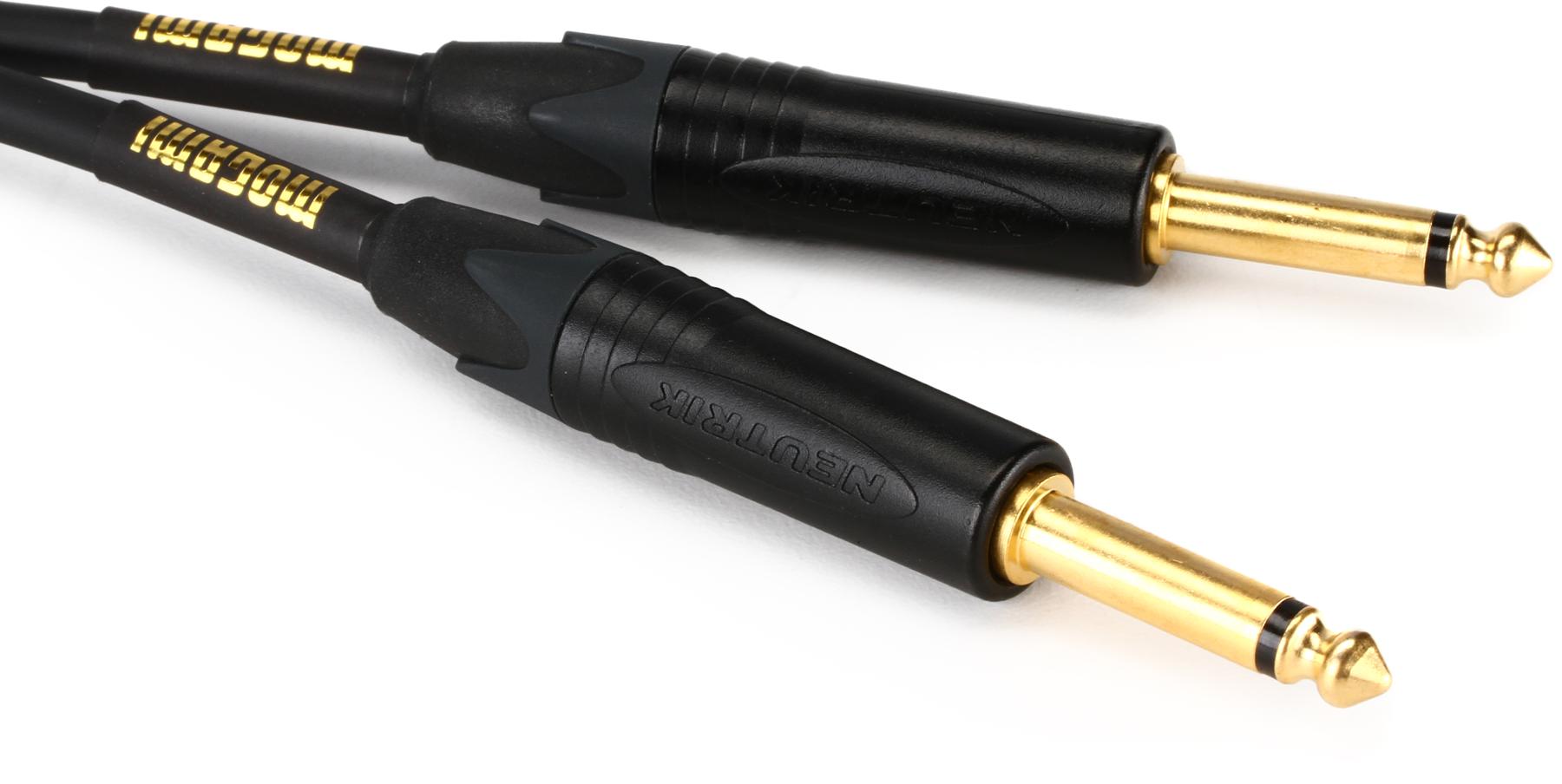
1. Mogami Gold Instrument 10
Mogami Gold Instrument 10 is my pick for a short, dependable connection between a guitar and an amp or pedalboard. The straight plugs suit recessed sockets, while the shielding helps control interference and handling noise. Its value is in construction and support rather than a promise to transform your guitar tone.
Choose the cable length your setup needs. A longer cable adds capacitance, and no passive cable can remove noise already coming from pickups or an amplifier.
Pros
- Top Pick – Shielded 10-foot cable for recording and stage use.
- 10 ft
Cons
- Choose the cable length your setup needs. A longer cable adds capacitance, and no passive cable can remove noise already coming from pickups or an amplifier.
| Selected length | 10 ft |
| Connectors | Straight / straight, 1/4-inch TS |
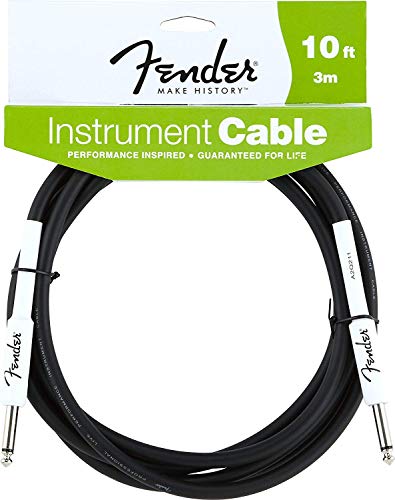
2. Fender Performance Series 10 ft
The retained Fender Performance cable is the 10-foot straight-to-straight version, model 0990820005. It is a practical choice for practice, a first pedalboard or a spare in your gig bag. Keeping the exact model matters: Fender Professional Series cables are a separate range, not interchangeable listings for this cable.
Check the plug shape against your guitar socket and leave enough slack to move without pulling on the connector.
Pros
- Budget Pick – A straightforward 10-foot instrument lead.
- 0990820005
Cons
- Check the plug shape against your guitar socket and leave enough slack to move without pulling on the connector.
| Model | 0990820005 |
| Length | 10 ft |
| Connectors | Straight / straight, 1/4-inch TS |
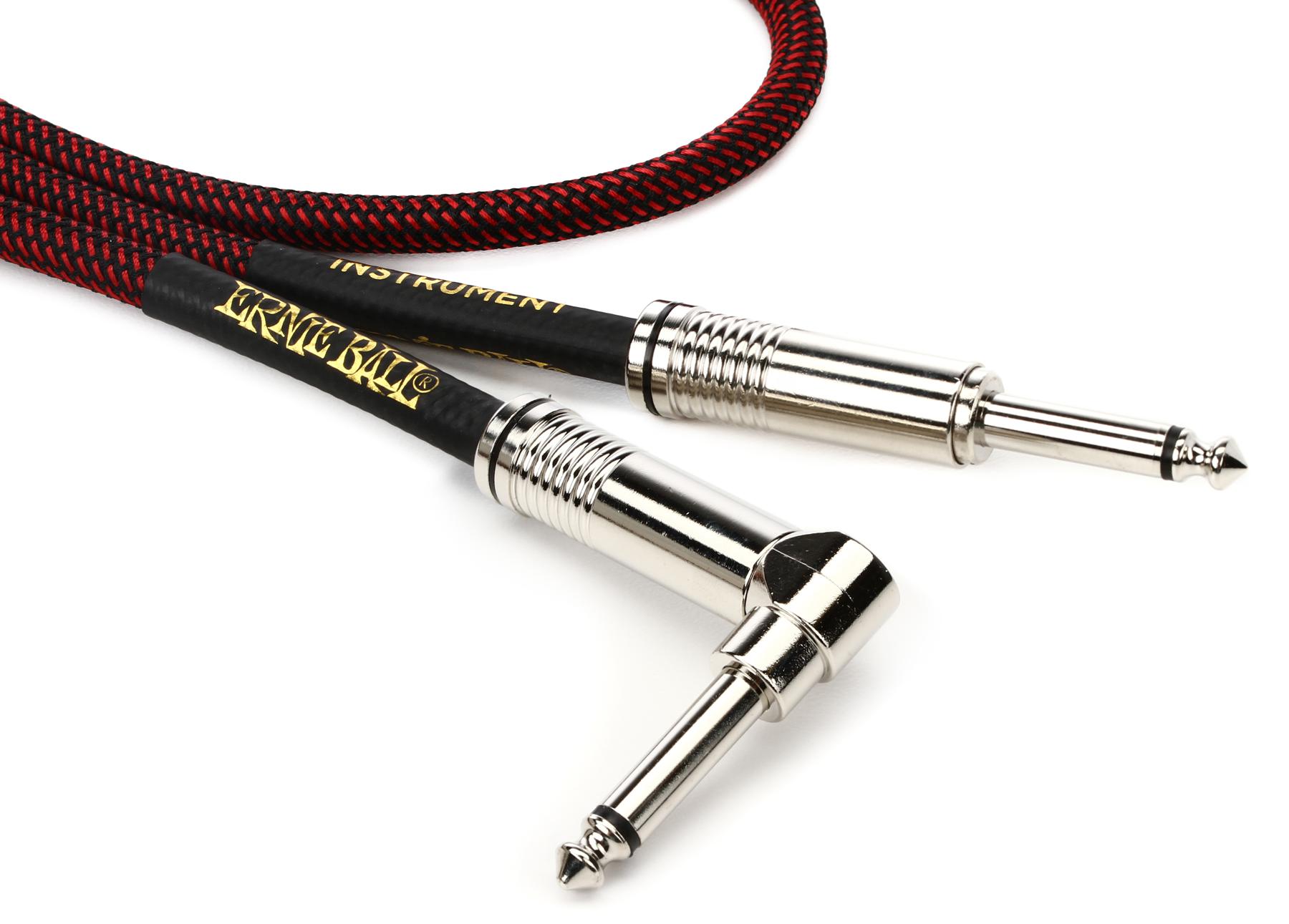
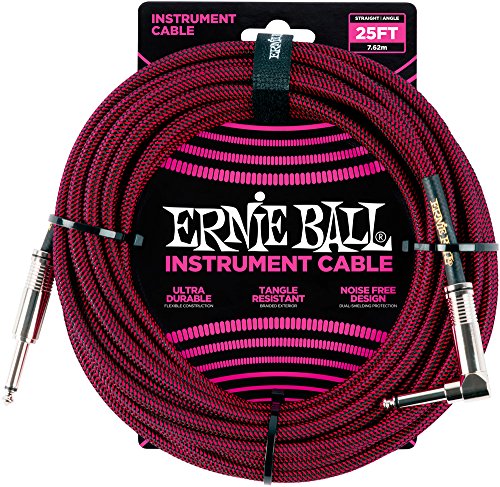
3. Ernie Ball Braided P06062
Ernie Ball P06062 gives you more room to move than the short leads in this guide. The braided black/red covering makes it easy to spot, and the right-angle end works well with many pedalboards and surface-mounted guitar sockets. The selected cable is a single 25-foot lead.
The extra length can be useful on stage but adds bulk in a small recording setup. The neon-blue variant is a different finish and is not the offer paired with this pick.
Pros
- Braided 25-foot straight-to-angle cable in black/red.
- P06062
Cons
- The extra length can be useful on stage but adds bulk in a small recording setup. The neon-blue variant is a different finish and is not the offer paired with this pick.
| Model | P06062 |
| Length | 25 ft |
| Finish | Black/red |
| Connectors | Straight / right angle |
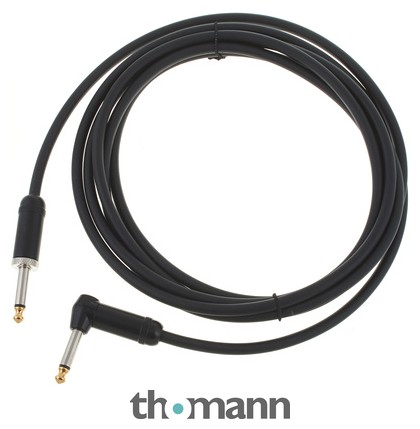
4. D'Addario American Stage PW-AMSGRA-10
This American Stage choice is specifically PW-AMSGRA-10: a 10-foot cable with one straight plug and one right-angle plug. D'Addario's Geo-Tip design is intended to give a secure fit in instrument sockets. It is a useful middle ground for players who want a compact stage cable without the length of the Ernie Ball pick.
Check the connector arrangement before ordering. The straight-to-straight and two-right-angle versions are separate variants; this listing uses the same straight-to-angle model for its US and EU offers.
Pros
- Secure Geo-Tip plugs with a 10-foot straight-to-angle layout.
- PW-AMSGRA-10
Cons
- Check the connector arrangement before ordering. The straight-to-straight and two-right-angle versions are separate variants; this listing uses the same straight-to-angle model for its US and EU offers.
| Model | PW-AMSGRA-10 |
| Length | 10 ft |
| Connectors | Straight / right angle, 1/4-inch TS |
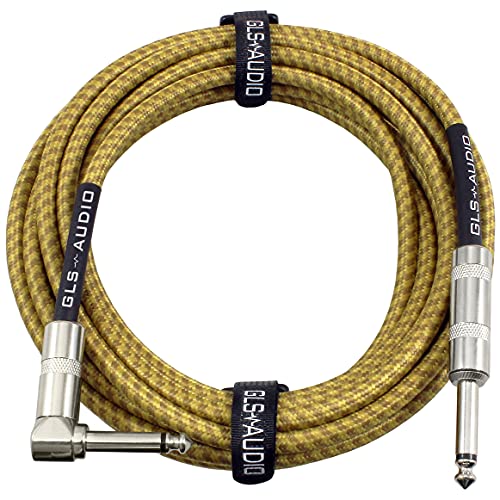
5. GLS Audio Tweed 20 ft
This GLS Audio pick is the single 20-foot brown/yellow tweed instrument cable. It suits players who need more reach and like a visible cloth-covered lead. It sits between the 10-foot cables and the longer Ernie Ball option, so choose it for the space you actually use.
A woven jacket does not make a cable immune to tangles. Coil it loosely and avoid bending either plug sharply when packing it.
Pros
- A 20-foot brown/yellow tweed lead for longer runs.
- 20 ft
Cons
- A woven jacket does not make a cable immune to tangles. Coil it loosely and avoid bending either plug sharply when packing it.
| Length | 20 ft |
| Finish | Brown/yellow tweed |
| Use | Unbalanced instrument connection |
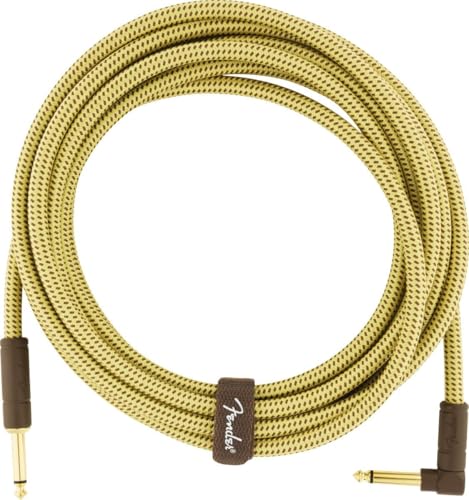
6. Fender Deluxe Tweed 15 ft
Fender Deluxe Tweed 0990820086 is a good choice if you want a substantial woven cable with one straight and one angled end. The 15-foot length gives more movement than the short studio leads without reaching the bulk of a 25-foot cable. Fender specifies an 8 mm jacket, 20 AWG conductor and 95% OFC braided shielding.
It is thicker than a lightweight practice lead. Check that the angled end fits your guitar; a recessed socket may be easier to reach with the straight end.
Pros
- A woven 15-foot cable with molded ends and a right-angle plug.
- 0990820086
Cons
- It is thicker than a lightweight practice lead. Check that the angled end fits your guitar; a recessed socket may be easier to reach with the straight end.
| Model | 0990820086 |
| Length | 15 ft |
| Connectors | Straight / angle |
| Finish | Tweed |

7. MXR Standard DCIS15
The MXR DCIS15 is a simple stage and rehearsal cable with straight plugs at both ends. Its oxygen-free copper conductors, spiral shielding and PVC jacket focus on flexibility and ordinary instrument use. It is a sensible spare for players who want a factory-assembled lead rather than a cable-building system.
This is the Standard DCIS15, not the angled DCIS15R or a two-pack bundle. Keep instrument cables separate from speaker cables when connecting an amplifier to a cabinet.
Pros
- A flexible 15-foot straight-to-straight cable.
- DCIS15
Cons
- This is the Standard DCIS15, not the angled DCIS15R or a two-pack bundle. Keep instrument cables separate from speaker cables when connecting an amplifier to a cabinet.
| Model | DCIS15 |
| Length | 15 ft |
| Connectors | Straight / straight, 1/4-inch TS |
How does a Guitar Cable work?
A guitar cable has copper wires, dielectric insulators, and a plastic shield. The wires transmit the guitar’s audio signals to the amp or recording device. The shield blocks electromagnetic interference, keeping the signal pure.
The dielectric separates the signal conductor from its shield, and the jacket protects the cable mechanically. Conductor, shield and insulation design affect capacitance, flexibility and handling noise.
Does a good Guitar Cable make a difference in sound?
Cable capacitance interacts with passive pickups and can change the high-frequency response. Lower capacitance may preserve more treble, but the preferred response depends on the pickups, cable length and sound you want.
A well-made cable should not introduce excessive handling noise or intermittent connections. Higher cost alone does not establish better sound.
The longer the cable, the higher the capacitance. Opt for an ideal length. Check capacitance levels when buying.
What is the difference between Balanced and Unbalanced Guitar Cables?
An ordinary guitar cable is an unbalanced mono connection: one signal conductor and a shield/return. A balanced connection uses two signal conductors and a shield, allowing a compatible receiving device to reject interference common to both conductors.
Most guitars use a 1/4-inch TS instrument connection. A TRS connector can carry balanced mono or unbalanced stereo in other equipment, but it does not turn an ordinary guitar output into a balanced signal.
What are the types of cable connectors?
There are two types of cables: balanced and unbalanced. Balanced cables use TRS and XLR connectors, while unbalanced cables use TS or RCA connectors.
TS (Tip Sleeve) cables come with ¼ inch connectors and are unbalanced, mono cables. RCA (Radio Corporation of America) cables usually have red and white connectors, are also unbalanced, and can buzz when used with a guitar.
Balanced TRS and XLR cables commonly connect microphones and line-level equipment. Amplifier-to-speaker connections need properly rated speaker cable, which is a different job from an instrument lead.
What are the best Guitar Cables?
Mogami Gold Instrument, D’Addario American Stage and the Fender and MXR options here cover several useful lengths and connector layouts. Choose according to the socket, cable run and handling requirements rather than treating one brand as a universal tone upgrade.
Capacitance levels per meter are crucial for sound. Reliable brands list these levels on the cable specs. If they don’t, be skeptical of that brand.
What to look for in a Guitar Cable when buying?
When buying a guitar cable, consider capacitance level per meter, flexibility, length, connector types, and price. Look for low capacitance, a flexible jacket, the right length for your needs, and a high-quality connector that fits your instrument.
Capacitance Level
Compare capacitance for the length you need. The insulation contributes to capacitance, but material names alone do not establish the finished cable’s response.
Flexibility
Since instrument cables are frequently carried around and used, higher flexibility prolongs their lifespan.
Length
Longer cable runs add capacitance and create more opportunities for interference. Choose enough length for safe movement, then consider a buffer or a suitable balanced connection where the system supports it.
Connectors
Connector type matters. Straight and right-angle connectors each fit different instruments. Test them on your guitar to find the best one.
Also, keep in mind that gold, silver, platinum, and nickel connectors don’t differ in sound quality. The gold and platinum versions simply last a bit longer.
Price
The most critical aspect of guitar cables is the price. Expensive cables don’t sound better. Focus on the necessary specs to find the best cable possible.
What is the best way to wrap and store a Guitar Cable?
The best way to wrap and store a guitar cable is using the “roadie wrap” technique. Hold the connector and the cable shoulder-width apart, twisting one side away. Bring your hands together to create a loop, and repeat.
Let me show you instead of explaining. Watch the video of the technique:
Verdict
Guitar cables might seem unimportant, but they’re crucial for your tone. Use a high-quality cable to get the best sound from your instrument and amp.
My top recommended cable is the Mogami Gold Series, my choice for a short, dependable studio or stage lead.
For tighter budgets, I recommend the Fender Performance Series. It’s the best guitar cable in its price range, featuring high-quality parts and low capacitance levels.