
Guitar humidifiers keep your guitar at the right humidity level. If humidity fluctuates too much, it can damage your instrument. Invest in one if you care about your guitar.
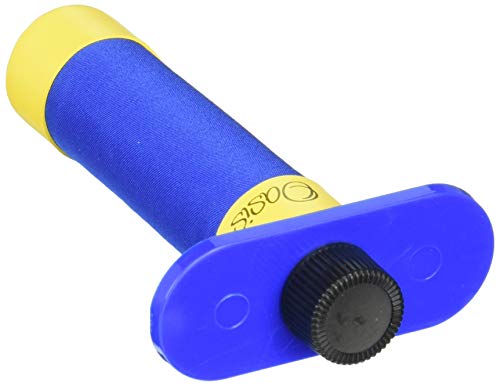
My top recommended pick is the Oasis OH-1 Guitar Humidifier. It’s a high-quality soundhole humidifier that’s both safe and effective.
On a tight budget? Consider the Herco HE360 Guitar Humidifier. Despite its low price, it’s easy to use.
The 7 Best Guitar Humidifiers (2026)



Let’s compare these in more detail.
1. Oasis OH-1 Guitar Humidifier
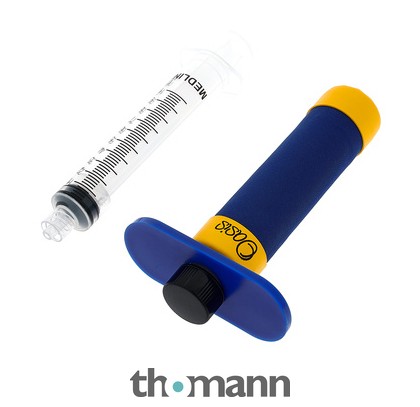
Oasis OH-1 is a practical first choice for an acoustic guitar kept in a case. It hangs between the strings using the stabilizer bar, and the included syringe helps control filling. Use distilled water and watch the humidifier as well as a case hygrometer rather than relying on a fixed refill schedule.
It adds moisture but does not actively regulate a set humidity level. A very dry room may require the higher-output OH-5 or room humidity control.
Pros
- Top Pick – A refillable soundhole humidifier for a closed case.
- OH-1
Cons
- It adds moisture but does not actively regulate a set humidity level. A very dry room may require the higher-output OH-5 or room humidity control.
| Model | OH-1 |
| Type | Refillable soundhole humidifier |
| Water | Distilled |

2. Herco HE360 Guitar Humidifier
Herco HE360 is a simple clay-filled container for adding moisture inside an instrument case. Its compact size is convenient when a soundhole-mounted device is awkward, and it can be used with suitable wooden instruments besides guitars. Place it securely in the case and follow its soaking instructions.
It is a one-way moisture source, not an automatic two-way regulator. Check case humidity to avoid adding water when the instrument already has enough.
Pros
- Budget Pick – A small refillable case humidifier.
- HE360
Cons
- It is a one-way moisture source, not an automatic two-way regulator. Check case humidity to avoid adding water when the instrument already has enough.
| Model | HE360 |
| Type | Case humidifier |
| Refillable | Yes |
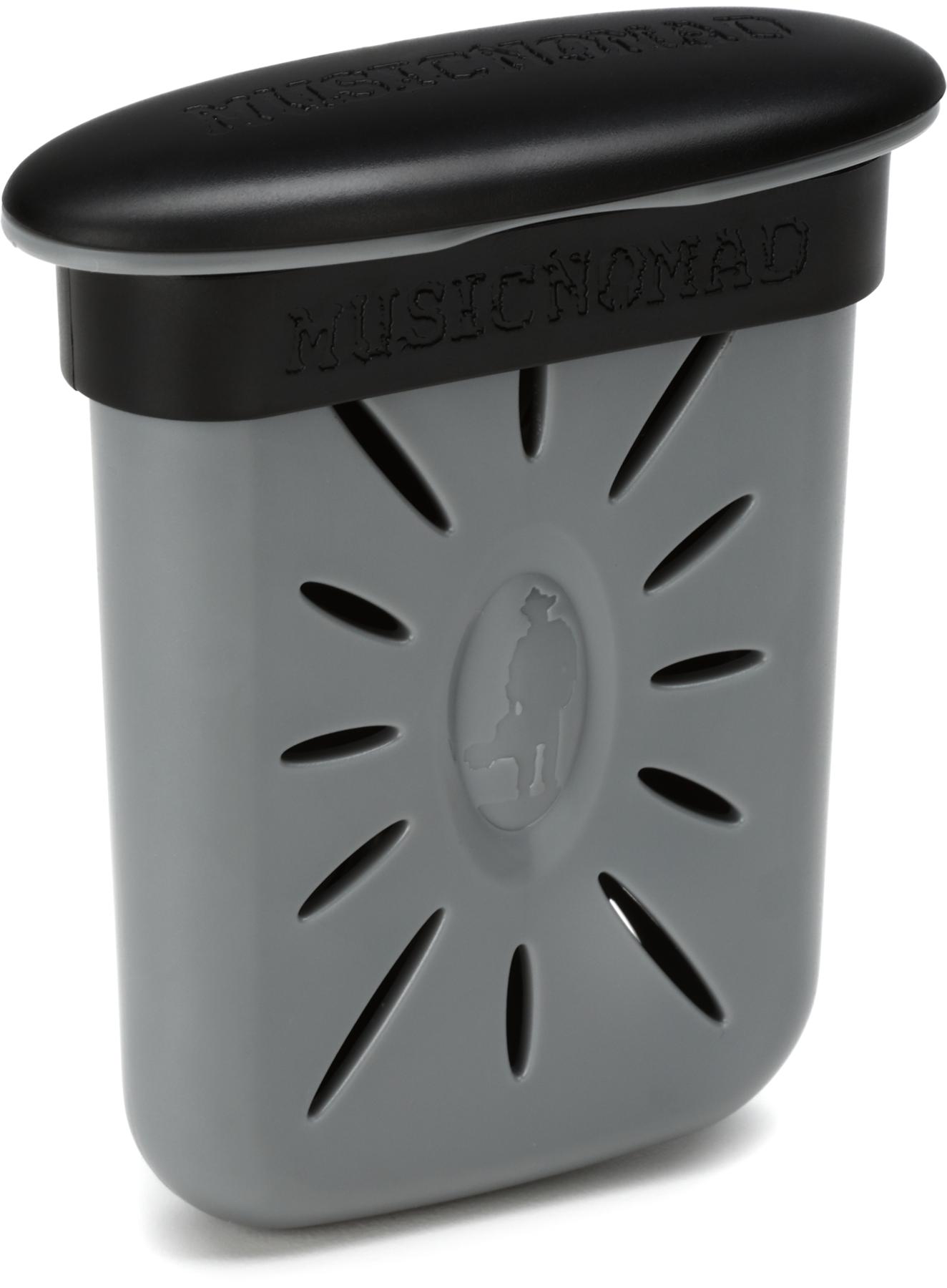
3. MusicNomad Case Humitar MN303
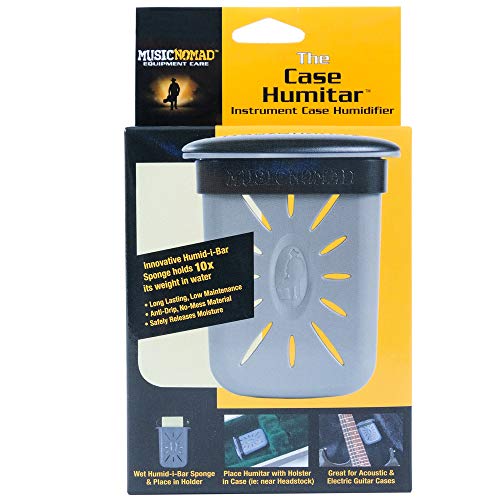
The MN303 Case Humitar is useful when you prefer to attach the humidifier inside the case instead of hanging it in the soundhole. Its holster holds the container, while the removable Humid-i-Bar sponge can be checked and rehydrated with distilled water. This is the case version, not MusicNomad’s soundhole Humitar.
Make sure the holster adheres securely to a suitable area and leaves room for the instrument. Check and clean the sponge as instructed rather than ignoring it for long periods.
Pros
- A refillable sponge humidifier with a case holster.
- MN303
Cons
- Make sure the holster adheres securely to a suitable area and leaves room for the instrument. Check and clean the sponge as instructed rather than ignoring it for long periods.
| Model | MN303 |
| Type | Case sponge humidifier |
| Included | Case holster |

4. D'Addario Humidipak Maintain PW-HPK-01
Humidipak Maintain PW-HPK-01 is the choice for players who want less routine water handling. The kit uses three packets in protective pouches to maintain roughly 45–50% relative humidity inside a closed instrument case. Replace firm, depleted packets; they are consumables rather than refillable containers.
Maintain is intended for an instrument and case already near the proper humidity range. Restore and Absorb are different products for other starting conditions, and a badly dried instrument may need professional attention.
Pros
- Two-way humidity maintenance with packets and protective pouches.
- PW-HPK-01
Cons
- Maintain is intended for an instrument and case already near the proper humidity range. Restore and Absorb are different products for other starting conditions, and a badly dried instrument may need professional attention.
| Model | PW-HPK-01 |
| Target | 45–50% RH |
| Type | Two-way packets with pouches |
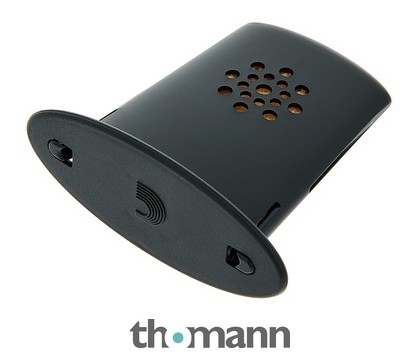
5. D'Addario Acoustic Guitar Humidifier GH
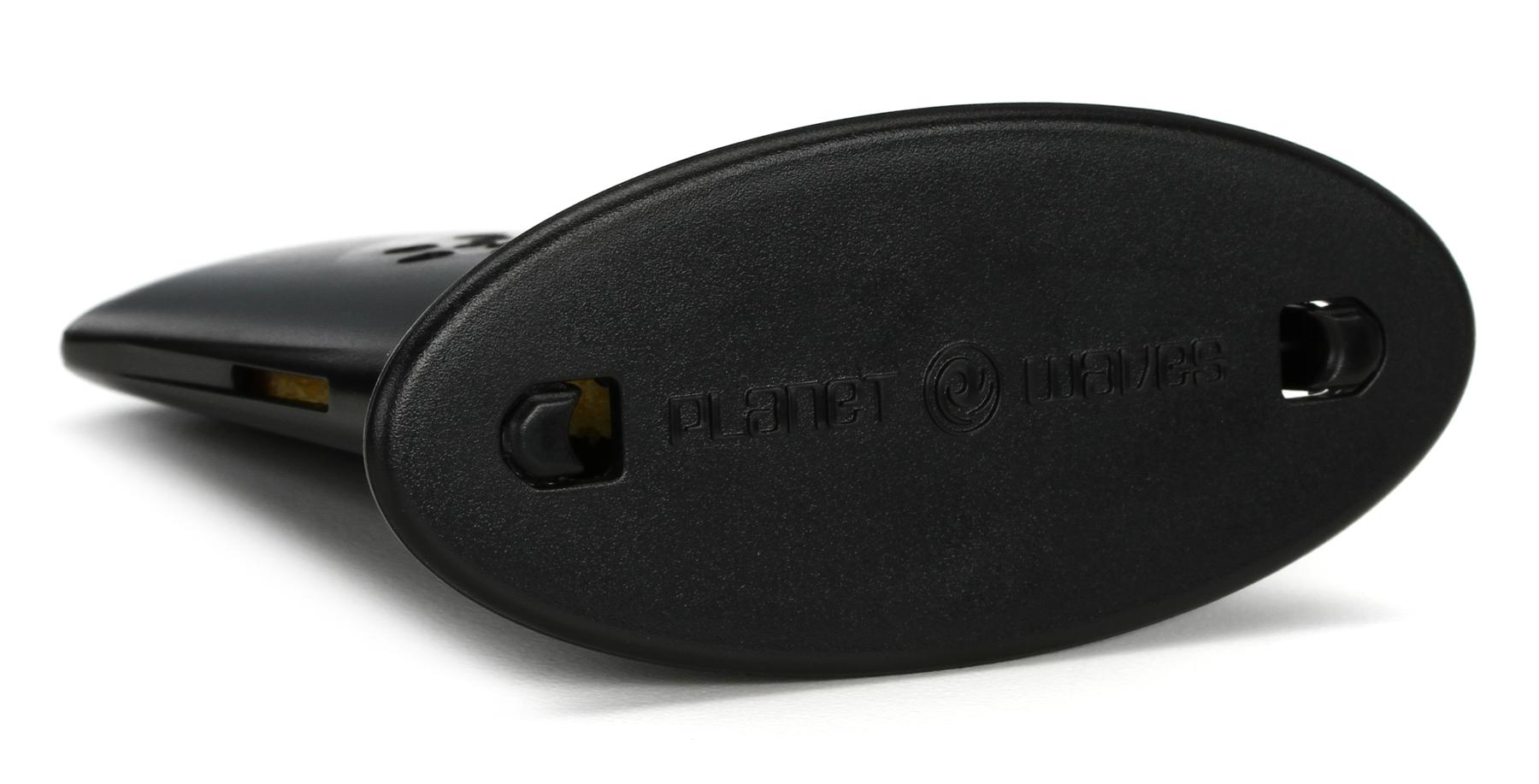
D'Addario GH hangs between the middle strings so the container does not rest on the guitar body. It is a straightforward refillable choice for adding moisture inside a closed case. Moisten the sponge, squeeze out excess water and fit the cap securely before placing it in the soundhole.
It is not a substitute for controlling an extremely dry room. Leaving a guitar on an open stand makes localized humidification much less predictable.
Pros
- A basic string-suspended sponge humidifier.
- GH
Cons
- It is not a substitute for controlling an extremely dry room. Leaving a guitar on an open stand makes localized humidification much less predictable.
| Model | GH |
| Type | Soundhole sponge humidifier |
| Refillable | Yes |

6. Oasis OH-5 Plus+
Oasis OH-5 Plus+ is the alternative for a player whose OH-1 cannot keep up with a dry climate. Its different liner provides 50% more humidity output in the same general size and shape. The manufacturer recommends it for environments outside the case at 25% RH or below, with case humidity monitored separately.
The higher output also means more frequent refilling. Use distilled water and choose it because your hygrometer shows a need, not simply because more humidity sounds better.
Pros
- Higher humidity output for particularly dry environments.
- OH-5 Plus+
Cons
- The higher output also means more frequent refilling. Use distilled water and choose it because your hygrometer shows a need, not simply because more humidity sounds better.
| Model | OH-5 Plus+ |
| Type | Higher-output soundhole humidifier |
| Refillable | Yes |

7. Boveda B49-70-4P 49% Refill Pack
This Boveda choice is specifically the B49-70-4P four-pack of 49% instrument refills. It suits someone who already has the proper protective holders and needs replacement packs. These are not the 62% packs previously linked from this guide, and the refill package is not a starter kit with holders.
Use the manufacturer’s holders and keep the case closed. Replace depleted packs instead of soaking or attempting to recharge them, and buy a starter kit if you do not already have the required holders.
Pros
- Four 49% replacement packs for an existing instrument system.
- B49-70-4P
Cons
- Use the manufacturer’s holders and keep the case closed. Replace depleted packs instead of soaking or attempting to recharge them, and buy a starter kit if you do not already have the required holders.
| Model | B49-70-4P |
| Humidity | 49% RH |
| Quantity | Four refill packs |
| Holders | Not included |
Why do you need a guitar humidifier?
A guitar humidifier is essential for keeping your guitar sounding beautiful, unless you live in an area with perfect humidity levels.
Guitars are made of wood that reacts to humidity and temperature changes. These variations can cause the neck and body to expand or contract. This might lead to warping, cracking, top sinking, fret sprout, a loose bridge, and bad action, among other issues.
Living in a dry area or using air conditioning in summer and heaters in winter can lower humidity levels, impacting your guitar.
Excess humidity is harmful to your guitar, but extreme dryness can be fatal. Severe dryness can cause lasting damage. A cracked or badly distorted instrument needs advice from a qualified repairer.
Warranty doesn’t cover damage from low humidity. Keep your good guitar at the right humidity for protection.
Do all types of guitars need humidifiers?
Not all guitars need humidifiers. Humidifiers are crucial for acoustic guitars, depending on your location. However, electric guitars might not require them.
This is because more electric guitars are built around a solid body. Solid-body guitars are generally less vulnerable than acoustic bodies, but their necks and unfinished wood still react to humidity.
Acoustic guitars have hollow bodies that can shrink or expand due to humidity. This can cause permanent damage. To protect your guitar’s sound, monitor humidity levels and get a humidifier if needed.
With semi-hollow electric guitars, only parts of the body are hollow. This doesn’t cause major changes with humidity shifts. If it gets really dry, you might need a humidifier.
Electric guitars can suffer from excessive humidity. It can cause metal parts to rust, affect electrical components, and alter the guitar’s tone.
How do you use a guitar humidifier?
There are three types of guitar humidifiers: soundhole humidifier, guitar case humidifier, and room humidifier.
Soundhole humidifiers hang between strings or fit a specified soundhole size. Keep the guitar in a closed case for localized humidification; use room humidity control if it normally stays on an open stand.
Case humidifiers sit in the case rather than in the guitar’s soundhole. Close the case and monitor its humidity; they cannot reliably control the humidity of an open room.
Room humidifiers add moisture to the storage space. They do not generally regulate temperature, and their output should be controlled using a hygrometer.
What are the benefits of using a guitar humidifier?
Guitar humidifiers are essential for maintaining your guitar’s shape. The wood in an acoustic guitar reacts to humidity, making humidifiers crucial for preservation.
If the air in your guitar case or storage room is dry, the guitar’s body shrinks, causing the top and back to compress. This can lead to issues like bridge deformation.
Too much humidity can make the guitar expand, causing slight deformation or complete ruin of the instrument.
Humidity affects your guitar’s shape and sound. The tone depends on the soundbox’s dimensions, materials, and construction. Dry or humid conditions will alter this tone.
Other elements of the guitar can degrade and affect sound quality. For example, the neck is prone to humidity-related deformation. Prolonged exposure to bad humidity levels can lead to permanent damage.
Humidifiers help protect your investment in guitars. If you’re a hobbyist or professional musician, you’ve likely spent thousands on your instrument. Humidifiers ensure your guitar stays in top condition and maximizes your enjoyment.
Many guitar manufacturers don’t cover humidity-related damage in their warranty, so repairs could cost you a lot.
If you’ve spent a lot on a guitar, you’re likely proud of its look. High-end guitars often have a perfect finish and intricate details. Cracks from dryness can ruin this. If you care about your guitar’s appearance, store it at the right humidity.
What is the ideal humidity range for guitars?
Follow your guitar maker’s recommended relative-humidity range and use a case hygrometer to check it. Two-way systems here have their own target ranges; for example, Humidipak Maintain targets roughly 45–50% RH. Avoid both prolonged dryness and excessive moisture.
Verdict
The Guitar humidifier keeps the humidity level at the right state to protect your guitar. They’re affordable and beneficial for you and your instrument.
To give your guitar the best care, I suggest choosing the top pick, the Oasis OH-1 Guitar Humidifier.
If you’re on a budget, consider the Herco HE360 Guitar Humidifier. It’s compact and simple to use.