
Using a guitar slide is a common technique in country-style and blues-style guitar playing, allowing the guitarists to play unique licks and riffs. It is a relatively simple tool, but of course, there are some elements to consider, like the material, the size, and the weight.
Worn over a finger of your choice, an acoustic guitar slide is a tube that can be made from different materials such as glass, metal, or ceramic. With the tool on your finger, you slide up and down the fretboard, creating a smooth sound from one pitch to another.
My top pick for acoustic guitar slide is the hand-crafted ceramic Dunlop 243 Moonshine Ceramic Slide – Medium with its warm sound and great sustain.
My budget pick is the Ernie Ball P04229 Glass Slide – Large which provides a smooth and clear tone with its durable material, pyrex glass.
The 7 Best Guitar Slides For Acoustic Guitar (2026)


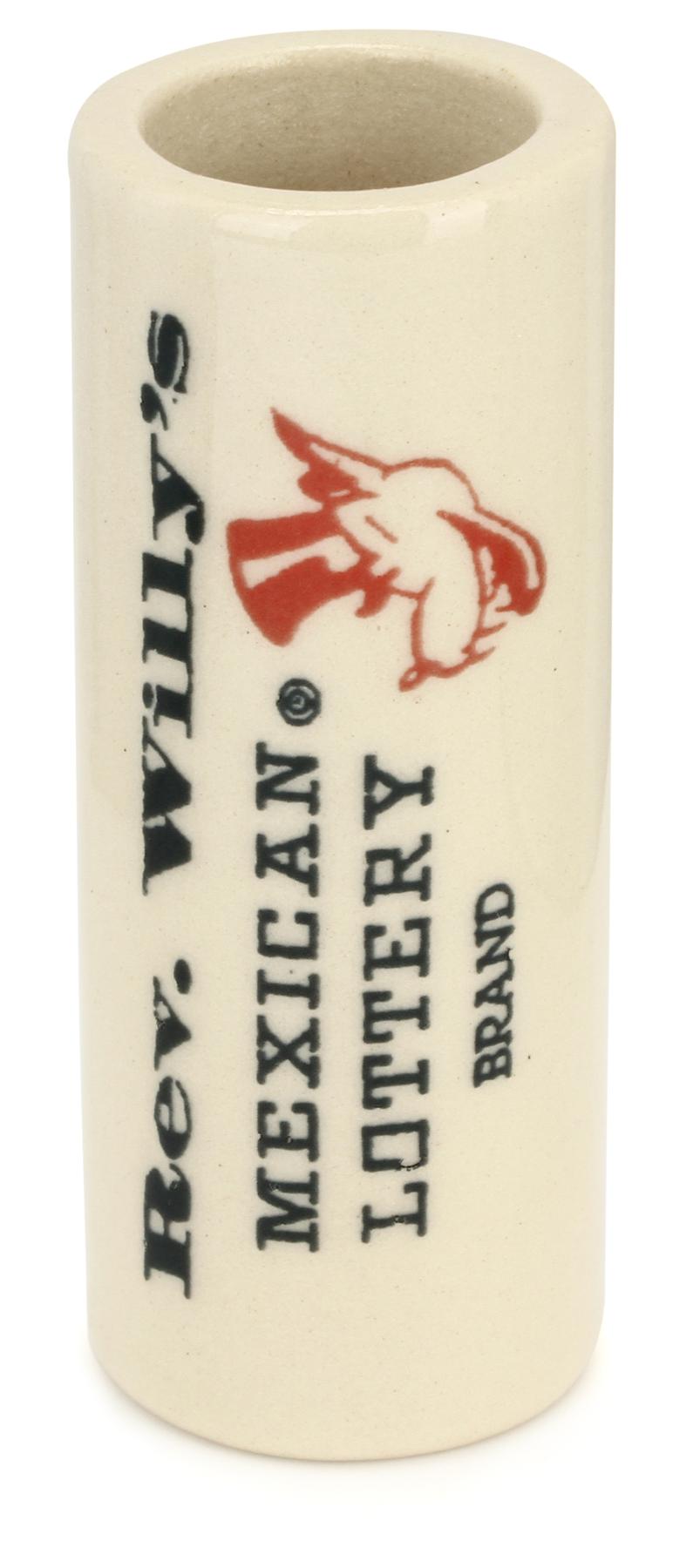

Let’s compare them in more detail:
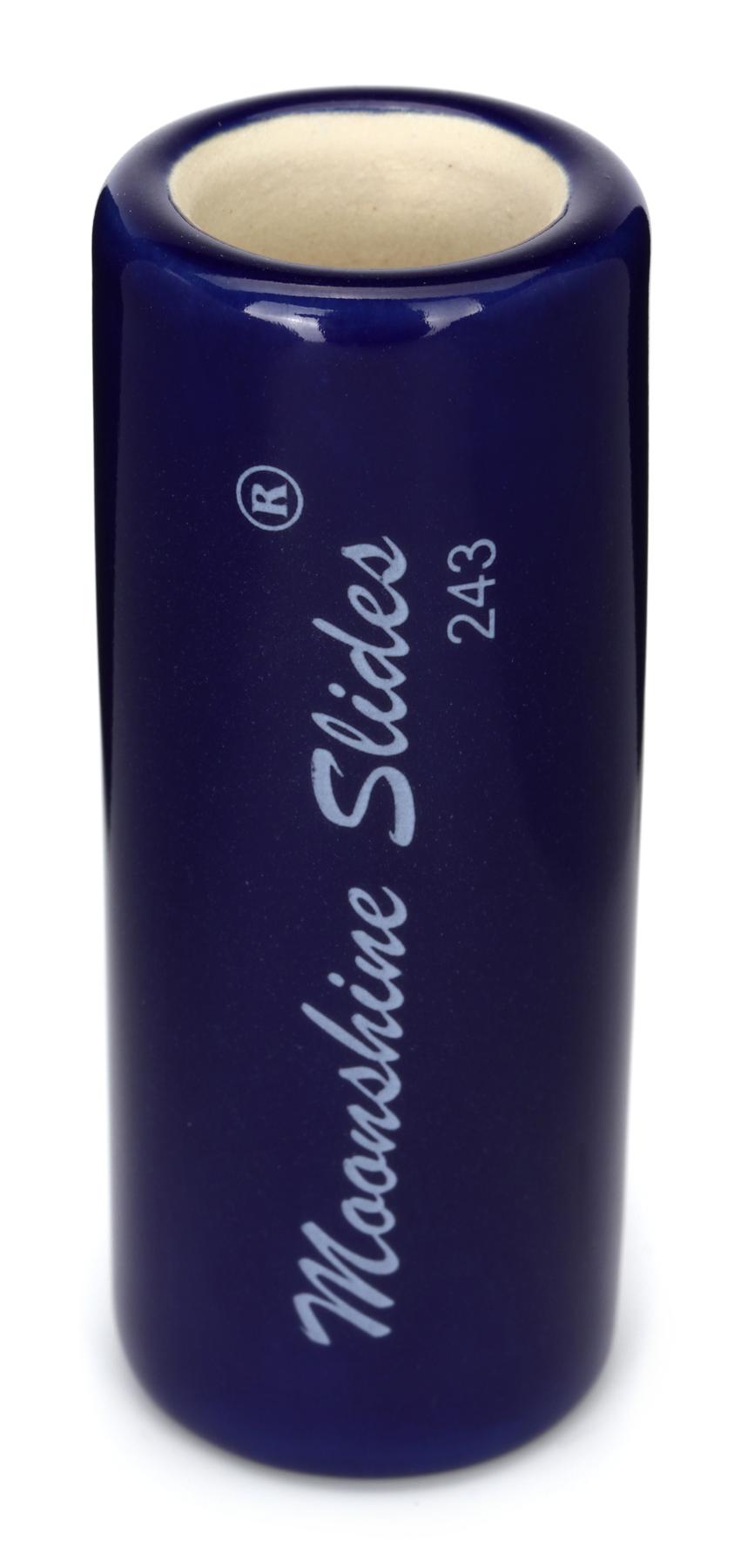
1. Dunlop 243 Moonshine Ceramic Slide - Medium
Dunlop 243 Moonshine is my first choice for an acoustic player who wants the weight of ceramic and a glazed surface that travels smoothly across the strings. The unglazed interior helps absorb moisture. This listing is the medium 243, not a choice between every Moonshine size.
Ceramic can break if dropped. Check the inside diameter against the finger you use; a loose slide makes intonation harder.
Pros
- Top Pick – A medium ceramic slide with a porous interior.
- 243
Cons
- Ceramic can break if dropped. Check the inside diameter against the finger you use; a loose slide makes intonation harder.
| Model | 243 |
| Material | Ceramic |
| Size | Medium |

2. Ernie Ball P04229 Glass Slide - Large
Ernie Ball P04229 is a straightforward glass option for acoustic blues. Its smooth surface and light feel suit someone learning to control pressure without fretting the strings. Choose the large version deliberately rather than relying on a photograph shared across several sizes.
Glass needs careful handling. A large slide will not fit every finger, and the player still needs to mute unwanted strings behind it.
Pros
- Budget Pick – A simple large glass slide.
- P04229
Cons
- Glass needs careful handling. A large slide will not fit every finger, and the player still needs to mute unwanted strings behind it.
| Model | P04229 |
| Material | Glass |
| Size | Large |
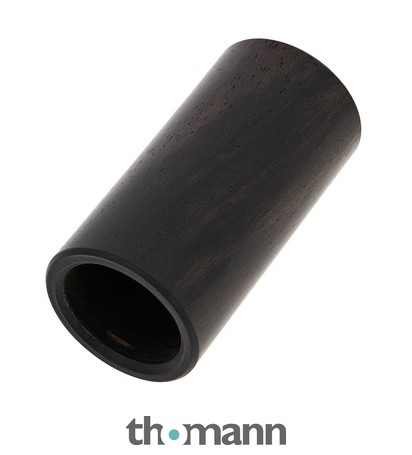
3. Taylor Crelicam Ebony Guitar Slide - Large
Taylor’s large Crelicam ebony slide offers a softer, more muted attack than brass or glass. It is a useful alternative for an acoustic guitarist who prefers a lighter slide and a less ringing sound.
It gives up some of the sustain associated with heavier materials. Check the large size for fit; ebony is a tone choice, not a guarantee of better durability.
Pros
- A lighter wooden alternative with a naturally damped tone.
- Crelicam ebony
Cons
- It gives up some of the sustain associated with heavier materials. Check the large size for fit; ebony is a tone choice, not a guarantee of better durability.
| Material | Crelicam ebony |
| Size | Large |
| Fit reference | Ring size 11 |
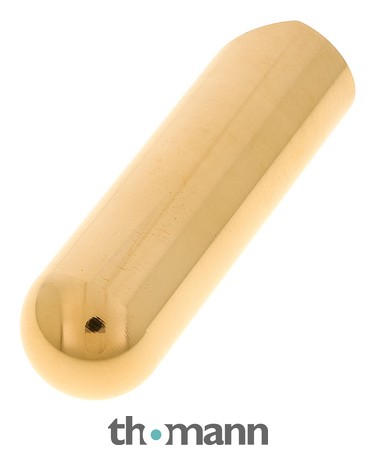
4. The Rock Slide Ariel Posen Signature Slide - Small
The Ariel Posen Signature slide suits a player who wants brass sustain while keeping the finger joint free to bend. Its ball tip and shaped cutaway distinguish it from a plain tube. This is the small signature version, matching the existing EU TRS-APS identity.
The small fit is intentional. Do not choose it solely for the artist name if its inside diameter is wrong for your finger.
Pros
- A small brass slide with a rounded tip and finger cutaway.
- Brass
Cons
- The small fit is intentional. Do not choose it solely for the artist name if its inside diameter is wrong for your finger.
| Material | Brass |
| Size | Small |
| Design | Ball tip; finger cutaway |
5. Dunlop RWS12 Rev Willy’s Porcelain Slide - Large
Dunlop RWS12 is the large Rev Willy’s porcelain slide associated with Billy Gibbons. Its weight and smooth exterior suit a player seeking a sustained acoustic slide sound. Choose RWS12 for the large fit; RWS11 is a different size.
Porcelain is brittle, and the large fit needs checking. Use light pressure so the added mass does not push the strings onto the frets.
Pros
- A large porcelain option for a heavier slide feel.
- RWS12
Cons
- Porcelain is brittle, and the large fit needs checking. Use light pressure so the added mass does not push the strings onto the frets.
| Model | RWS12 |
| Material | Porcelain |
| Size | Large |

6. D’Addario PWGS-SL Glass Slide - Large
D’Addario PWGS-SL is the large glass slide, 60 mm long with a 21.5 mm internal diameter. It suits acoustic players who want to cover several strings rather than use a short pinky slide.
Its full length and large diameter need to suit your technique; choose a smaller model for a snug pinky fit.
Pros
- A full-length borosilicate slide for wider string coverage.
- PWGS-SL
Cons
- Its full length and large diameter need to suit your technique; choose a smaller model for a snug pinky fit.
| Model | PWGS-SL |
| Material | Borosilicate glass |
| Length | 60 mm |
| Inside diameter | 21.5 mm |
7. Dunlop 285 Eric Sardinas Preachin’ Pipe - Large
Dunlop 285 Preachin’ Pipe offers the weight and ringing character of brass. It suits acoustic blues players who want a metal option alongside the ceramic and glass picks. Choose the large 285 if that size fits your playing finger.
The extra mass takes a controlled touch. Fit matters more than the signature name, especially if you switch between slide passages and ordinary fretting.
Pros
- A brass slide for players who prefer a heavier attack.
- 285
Cons
- The extra mass takes a controlled touch. Fit matters more than the signature name, especially if you switch between slide passages and ordinary fretting.
| Model | 285 |
| Material | Brass |
| Size | Large |
What is a guitar slide?
A guitar slide is a cylinder-shaped tool often made from glass, ceramic, or metal, which is placed over a finger to slide up and down the fretboard, creating smooth and unique sounds from one pitch to another.
The story of the guitar slides dates back to the late 19th century when a guitar player in Hawaii started using a metal bolt, sliding it on the strings of his instruments. Later, the sound amazed many musicians in the United States, and many guitarists deployed the technique. Since then, slide guitar is often used in blues and country music and occasionally in rock music.
Is a guitar slide easy to use?
Fortunately, playing your guitar with a guitar slide is pretty easy to learn. There are some key points to take into account, such as the tuning, the location to create the notes with your slide, which fingers to use, and muting the strings.
Do not worry, as it is a pretty easy technique that you can learn and start playing with just a little bit of practice, even if you have never touched a guitar slide before. Tune your guitar, try to gently touch the strings in a parallel way, slide between the frets to create the desired notes, and do not forget to mute strings while sliding.
If you are more of a visual learner, check out this beginner guitar slide lesson to get started.
Can a guitar slide damage the strings?
No, guitar slides do not harm the strings, frets, or your fretboard at all. However, using alternative tunings while playing with guitar slides may put a lot of stress on your strings, shortening their life or causing tuning instabilities.
What are the different types of guitar slides?
Today, there are three popular types of guitar slides that you can choose from depending on your needs and the tone color you want. These types are glass, metal, and ceramic.
Glass slides offer a smooth and warm sound, while metal slides provide a brighter and rougher sound. Ceramic slides are relatively new compared to the other materials, and they provide a more balanced sound between the metal and glass slides.
Besides the material, there are other factors, such as the thickness and the length of the guitar slide. There are full-length guitar slides that are around 2.76” (70 mm) and cover your whole finger, and there are knuckle-length guitar slides that cover only a part of your finger. The guitar slides also differ in thickness which heavily affects the sound.
Thinner slides are easier to control as they allow players to feel the strings more than the thicker slides. But, they are not as durable and rigid as the thicker ones. Thicker slides are harder to control, but they provide a warmer sound with better sustain.
What is the best material for an acoustic guitar slide?
I can not say any of the materials is “the best,” as all materials have advantages and disadvantages. The best slide will depend on your needs and the style you play.
What to look for when you’re planning on buying a guitar slide?
The things you should consider when buying a guitar slide are the material and the thickness as they affect the sound heavily.
Furthermore, you should check for the weight, size, and length as they are closely related to the feel and control of the slide. You can not play with a slide that is too small or too big for your hand, so it is better to try and buy afterward.
And finally, you should check the looks of the slide, because, you know, the prettier, the better.
Verdict
Guitar slides are extremely fun to play with cool-sounding tools that can add a bit of spice to your playing style. Luckily, they are highly affordable and easy-to-use tools that you can quickly grab and start playing with. Now you know the top choices in the market, and what to look for in a good guitar slide, you can step into this world without hesitation.
My top recommendation would be the Dunlop 243 Moonshine Ceramic Slide – Medium, as it offers a warm and balanced tone with high comfortability.
My second recommendation would be the Ernie Ball P04229 Glass Slide – Large, as it features a high value-for-price ratio and is a great-sounding tool for beginners.