
The Harmonica is one of the most iconic instruments. Its small size, mellow sound, and ease of play made it popular. From blues and soul to jazz and folk, the harmonica has had a huge global impact.
My chromatic recommendation is the Hohner 64 Chromonica. This harmonica in C has a four-octave range, brass reed plates and an ABS plastic comb. It suits players who want chromatic melody playing; a ten-hole diatonic is a different starting point for many blues lessons.
My second recommended harmonica is the Fender Blues Deluxe. This affordable 10-hole harmonica features ABS plastic combs and chromed metal covers.
The 7 Best Harmonicas (2026)


Let’s compare these in more detail.

1. Hohner 64 Chromonica
The Hohner 64 Chromonica is a 16-hole chromatic harmonica in C with 64 brass reeds and a four-octave range. Its ABS comb and 1.05mm brass reed plates provide the established construction of this model. Choose it for the extended register rather than assuming the largest harmonica is the best first instrument.
The extra low octave is useful for arrangements that run below a smaller chromatic. Its slider provides the alternate semitone notes, helping you play chromatic melodies across the range. Jazz, classical arrangements and other melody work can benefit from that access, but accurate articulation and breath control still take practice.
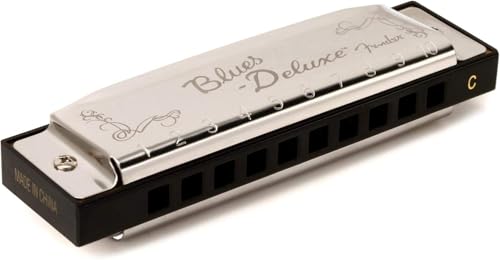
2. Fender Blues Deluxe
Next on the list is a budget-friendly ten-hole diatonic. The Fender Blues Deluxe in C has a plastic comb, brass reeds and chromed metal covers. The reed material is not plastic. Its straightforward layout makes it a reasonable starting point when a course calls for a standard diatonic in C.
Other keys are available, but choose the one your lessons or accompanying instruments require. The included case helps protect it between sessions. Let the harmonica dry before storing it, and do not expect its compact size to remove the work of isolating a single hole and learning controlled bends.
3. Lee Oskar Major Diatonic E
The Lee Oskar Major Diatonic is a ten-hole model with a plastic comb and replaceable reed plates. The linked variant is standard E major, not C or Low E. Its serviceable construction is useful if you intend to keep playing rather than treating the instrument as disposable.
Match the key to your music: the maker labels this E harmonica for straight-harp E and cross-harp B. Many beginner courses instead ask for C, so select the appropriate variant before ordering. Replacement reed plates are a practical advantage, but the brand name alone does not guarantee an easier first bend or a longer reed life.

4. Suzuki F-20J-C Fabulous
Suzuki Musical Instrument Manufacturing makes the Fabulous harmonica range; it should not be confused with the car manufacturer. The F-20J-C here is a ten-hole, 20-reed diatonic in C with just temperament. It is the C-key version of the previously featured G model, so check the key if you are replacing a harmonica for a particular song.
The Fabulous uses a silver-plated brass body and covers with phosphor-bronze reed plates. Its just-tempered tuning is aimed at the chord relationships of this tuning system. The F-20E equal-temperament version is a separate choice, so do not treat the two suffixes as interchangeable. This is a specialist premium option rather than a necessary expense for learning basic diatonic technique.

5. Harmo Polar
In the mid-range, I would consider the Harmo Polar for standard diatonic playing. Harmo identifies it as designed and quality checked in the USA; that does not establish that every part is manufactured there. The selected C model uses standard Richter tuning across ten holes.
The Polar has stainless steel covers and phosphor-bronze reeds. It offers the compact diatonic approach for blues and other styles, with bending learned through breath and mouth control rather than guaranteed by the reed material. Harmo also offers special tunings, including Paddy Richter and half-valved versions. Those have different note behavior, so confirm you are ordering the standard model if that is what your lessons use.
6. Tombo No.1722 Professional 22
The Tombo No.1722 Professional 22 is a Japanese 22-hole tremolo harmonica. The linked model is C major. Tombo describes a wooden body and a complete three-octave layout; other major and minor keys are separate variants. Tremolo reeds are paired at slightly different pitches to produce the characteristic beating sound.
This is a useful choice for melody playing when you want tremolo tone, rather than the slide-controlled chromatic approach above. The additional holes and layout need suitable learning material. It is not automatically unsuitable for every beginner, but a standard ten-hole blues lesson cannot simply be transferred hole for hole. Check the exact key and supplied storage case before ordering.

7. Harmo Angel 16
The Harmo Angel 16 is a 16-hole chromatic in C with a white acrylic comb, stainless steel covers and 64 phosphor-bronze reeds. The round mouthpiece holes and rounded body offer a different feel from a typical ten-hole diatonic. Its four-octave register is useful when your chosen repertoire needs a larger melodic range.
The side slider changes to the alternate semitone note set; it does not simply change octaves. The Angel 16 comes with a hard case and wiping cloth. Beginners can learn on a chromatic, but should choose teaching material for that layout. A diatonic blues course will not map directly onto this instrument.
More about the Harmonica
The instrument was invented at the start of the 19th century in Europe. It quickly spread worldwide due to its ease of play and pocket-sized durability. Common folks embraced it, and it became prominent in folk and blues music.
A chromatic harmonica gives access to the semitone notes through its slider and reed layout, so one instrument can cover music in different keys. Twelve- and sixteen-hole models offer different ranges. The slide selects an alternate set of reeds; it is not a switch that instantly changes the key of your playing without learning the notes.
There are many ways to play the harmonica. A typical diatonic hole has separate blow and draw reeds, rather than one reed producing both notes. Sounding neighboring holes can produce chords, while isolating a hole gives a melody note. Bending and other techniques extend the available expression, but the results depend on the tuning and layout of the instrument.
Conclusion
Whether you are a beginner or an experienced player, start with the type, key and note layout your music needs. These choices span budget diatonics, extended chromatics and a tremolo, so their prices and hole counts are not a single quality ranking. I hope the differences help you make the right decision for your lessons and repertoire.
My chromatic pick is the Hohner 64 Chromonica for its four-octave range in C. If you are starting standard diatonic lessons, check the required key and layout before choosing it over a ten-hole model.
My budget pick is the Fender Blues Deluxe, an affordable 10-hole harmonica with ABS plastic combs and chromed metal covers.