
For a larger head, start with headband extension, earcup space and pressure rather than the headphone’s size alone. These adjustable over-ear options cover wireless travel and quiet-room listening, but fit is individual: try them with your glasses and allow time to assess pressure.
My top recommendation is Bose QuietComfort Headphones (2nd Gen) – Black for everyday wireless listening with noise cancellation. Check the headband extension and cup fit before keeping them.
My budget recommendation is Philips SHP9600 for wired listening in a quiet room. The open design leaks sound.
The 7 Best Headphones for Big Heads (2026)


Let’s compare these in more detail.
1. Bose QuietComfort Headphones (2nd Gen) - Black
Bose QuietComfort Headphones (2nd Gen) are my first choice here for everyday wireless listening. The adjustable headband and cushioned over-ear design are worth trying when a smaller headset presses on your ears. Noise cancellation suits commuting and shared rooms, and wired USB-C audio gives you another connection option. This is the black second-generation QuietComfort, not an Ultra or an accessory bundle.
An adjustable headband does not guarantee a comfortable fit on every large head. Try the maximum extension, cup depth and pressure with your glasses on; choose a seller with a suitable returns policy. Bluetooth is less suitable than a wired connection for timing-sensitive monitoring.
Pros
- Adjustable wireless headphones for everyday listening.
- Type: Closed-back over-ear; Connections: Bluetooth; USB-C audio; Noise cancellation: Active
Cons
- An adjustable headband does not guarantee a comfortable fit on every large head.
| Model | QuietComfort Headphones (2nd Gen) |
| Type | Closed-back over-ear |
| Connections | Bluetooth; USB-C audio |
| Noise cancellation | Active |

2. Philips SHP9600
Philips SHP9600 is my budget choice for listening at home. Its open-back cups, adjustable steel-reinforced headband and breathable cushions provide useful features to compare when fit matters. A detachable cable is easier to replace than a permanently attached lead. The 50 mm drivers and wired connection suit a desk setup without battery management.
It leaks sound and does not isolate a noisy room. Check that the headband extends far enough before committing; broad pads alone do not establish fit. This is the headphone-only SHP9600, not the SHP9600MB microphone package.
Pros
- Open-back listening with a broad padded headband.
- Drivers: 50 mm; Type: Open-back; Cable: Detachable; Connection: 3.5 mm wired
Cons
- It leaks sound and does not isolate a noisy room.
| Drivers | 50 mm |
| Type | Open-back |
| Cable | Detachable |
| Connection | 3.5 mm wired |

3. Audio-Technica ATH-R50x
The ATH-R50x is the wired option I would audition for long sessions at a quiet desk. It uses an adjustable headband, open-back earcups and detachable cables, avoiding the fixed wing-support fit of the older AD700X. Its 50-ohm design suits a wider range of sources than the high-impedance headphones in this list, though actual listening level still depends on the source.
Open backs let nearby people hear your music and let room noise in. They are for listening and editing, rather than vocal tracking beside an open microphone. Check cup space and headband extension instead of assuming a lightweight frame fits everyone.
Pros
- A light open-back option for a quiet desk or studio.
- Type: Open-back; Impedance: 50 ohms; Cable: Detachable; Use: Quiet-room listening and editing
Cons
- Open backs let nearby people hear your music and let room noise in.
| Type | Open-back |
| Impedance | 50 ohms |
| Cable | Detachable |
| Use | Quiet-room listening and editing |

4. Sennheiser HD 650
Sennheiser HD 650 remains a useful choice for quiet, focused listening. Its oval replaceable cushions, adjustable headband and detachable cable make it serviceable over a long ownership period. The open-back design suits comparing recordings at home, and the exact current offer is the standard HD 650. I would keep it for someone who already has a suitable headphone output.
Its 300-ohm load benefits from a source with adequate voltage. Headband pressure can be noticeable, so audition the fit rather than treating it as a guaranteed low-clamp option. It has no microphone, Bluetooth or active noise cancellation.
Pros
- An open-back reference for a capable headphone output.
- Impedance: 300 ohms; Type: Open-back; Cable: Detachable; Pads: Replaceable
Cons
- Its 300-ohm load benefits from a source with adequate voltage.
| Impedance | 300 ohms |
| Type | Open-back |
| Cable | Detachable |
| Pads | Replaceable |
5. Bose QuietComfort Ultra Headphones (2nd Gen) - Black
QuietComfort Ultra Headphones (2nd Gen) are the premium travel option in this list. The black over-ear model combines active noise cancellation, an adjustable headband and cushioned cups with USB-C audio. Bose also offers spatial listening modes, though I would choose it for fit and noise reduction before those extras. This is the standalone headphone, not the similarly named earbuds.
Try it against the regular QuietComfort on your own head. Extra processing does not improve fit, and neither model replaces a dedicated wired monitoring headphone. Battery runtime varies with the listening modes you enable.
Pros
- Premium wireless listening with noise cancellation and USB-C audio.
- Generation: Ultra, 2nd Gen; Type: Closed-back over-ear; Connections: Bluetooth and USB-C audio
Cons
- Try it against the regular QuietComfort on your own head.
| Generation | Ultra, 2nd Gen |
| Type | Closed-back over-ear |
| Connections | Bluetooth and USB-C audio |
| Finish | Black |
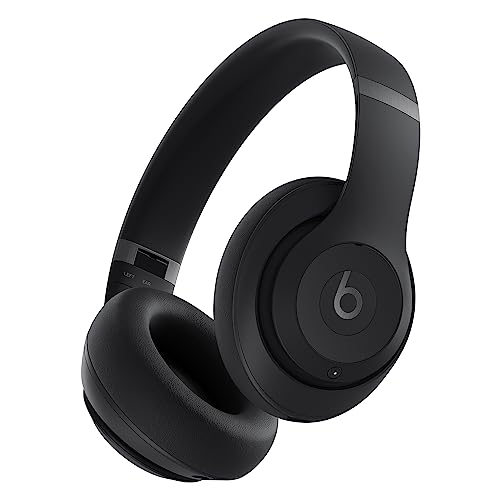
6. Beats Studio Pro - Black
Beats Studio Pro is the alternative for someone who wants wireless listening plus wired connection choices. It supports Bluetooth, USB-C audio and a 3.5 mm input, so it can move between a phone and a desk setup. Active noise cancellation and transparency modes are useful for travel, while folding earcups reduce the space it takes in a bag.
The cups and headband still need a fit check on a large head; this is not a promise of extra-wide sizing. Wired modes and Bluetooth do not offer identical features. Choose an open-back model instead when isolation and travel are irrelevant.
Pros
- Wireless headphones with both USB-C and analog listening.
- Connections: Bluetooth, USB-C and 3.5 mm; Type: Closed-back
Cons
- The cups and headband still need a fit check on a large head; this is not a promise of extra-wide sizing.
| Model | Studio Pro |
| Connections | Bluetooth, USB-C and 3.5 mm |
| Type | Closed-back |
| Finish | Black |

7. beyerdynamic DT 900 PRO X
DT 900 PRO X is my choice here for a studio headphone with replaceable parts and detachable cables. Its padded adjustable headband and velour ear cushions are worth comparing with the HD 650 for longer sessions. The 48-ohm STELLAR.45 drivers make it less demanding of output voltage than the old 250-ohm DT 880 Edition recommendation.
The headband can still feel firm, particularly at first. Test extension and pressure rather than stretching it aggressively. Sound escapes through the open cups, and there is no microphone or wireless connection.
Pros
- A serviceable open-back studio option with detachable cables.
- Impedance: 48 ohms; Type: Open-back; Cable: Detachable mini-XLR; Pads: Replaceable velour
Cons
- The headband can still feel firm, particularly at first.
| Impedance | 48 ohms |
| Type | Open-back |
| Cable | Detachable mini-XLR |
| Pads | Replaceable velour |
What to look for in headphones for big heads when buying?
When buying headphones for a big head, you should look for headphones with an adjustable strap, a large size, weak clamping force, a comfortable design with good cushions or pads, and, of course, good sound quality. A good pair of headphones for large heads should combine comfort and sonic performance.
The comfort part of the headphones is provided with an adjustable headband for different head sizes, low clamping force, and a good layer of cushions or pads on the headband and ear cups. Also, you should look for the device’s size if it fits your head well or not.
Are On-Ear or Over-Ear better for big heads?
Over-ear headphones provide more comfort than on-ear headphones. On-ear headsets are placed on your ears and often have more clamping force, which leads to headaches and discomfort. Over-ear headsets cover the ears entirely while allowing air circulation around the ears, elevating comfort.
Does clamping force make a difference?
Clamping force is one of the most critical aspects of the comfort of headphones. Headsets with high clamping force are more stable on the ears, but they cause headaches and discomfort. You should look for a decent clamping force with good cushions or pads to avoid comfort and have a stable fit.
What’s the difference between an open-back design and closed-back style headphones?
Open-back headphones have the backsides of the woofers on each side open, while closed-back headphones have them closed, isolating the ears and the sound from the outside environment. Often, open-back headphones have more comfort as they let more air in, allowing the ears to breathe.
Closed-back headphones provide a better sound isolation performance and do not let sound leak outside, making them ideal for outdoor use. Open-back headphones can not isolate the sound well and leak the sound outside, making them a better choice for indoor silent environments.
The open-back models in this guide do not have active noise cancellation. Choose a closed-back ANC model for reducing outside noise; open backs suit quieter surroundings.
What other features do you need in your headphones?
An ideal pair of headphones should have a comfortable design, good sonic performance, durable construction, and extra features like a microphone and wireless connection option for versatility.
As you will be using headphones for extended periods, comfort is crucial. If you get headaches and pain after using the headphones, even the sound quality does not matter as you will hate using them. Good ear pads and cushions, a good fit for your head, an adjustable headband, and a medium level of clamping force make an ideal headphone with good comfort.
You should choose headphones that offer good sound quality depending on your use area. If you are going to use them for casual music listening, you should go for a genre-specific approach. Consider a balanced sound with good mid-performance if you listen to mainly rock music. If you are a more electronic music listener, bass performance gets more important.
If you are going to use them in a studio for music production, then neutral and flat-sounding devices are the ideal choice, as they are the best for critical listening.
The construction quality is also important as you do not want your headphones to get damaged or broken after a while. You should look for portable yet sturdy devices if you want to use them everywhere without hesitation.
Extra features like microphones and Bluetooth or wireless connection add value and versatility to headphones. Microphones are especially important if you want to use them for video calls and gaming. Also, noise cancellation performance is important to use outside without getting disturbed by the environment and without disturbing them with your music.
Verdict
As headphones are often used for extended periods, comfort becomes crucial, especially for big heads. The adjustability, ear cushions, pads, and clamping force become as important as sonic performance to avoid headaches and use the headphones without problems.
My top pick is Bose QuietComfort Headphones (2nd Gen) – Black for everyday wireless listening and noise reduction, provided the headband and cups fit you comfortably.
For a simpler wired home setup, consider Philips SHP9600. Check the headband extension and remember that open backs do not isolate outside sound.