
Acoustic guitars with low action are popular since they’re easier to play and need less effort to press the strings. The right setup also matters for experienced players, because string height needs to suit their touch and playing style.
My top recommended low-action acoustic guitar is the Martin LX1E Little Martin. This well-rounded instrument offers great sound and durability from a trusted manufacturer.
My second recommended low-action acoustic guitar is the Yamaha FG800J. This affordable and high-quality option offers excellent value from Yamaha.
A guitar’s action indicates the distance of the strings from the fretboard. Higher action means the strings are farther away, while lower action means they are closer.
These are guitars worth considering for a comfortable setup, rather than models guaranteed to arrive with identical low action. Ask the shop about the individual instrument’s string height, neck relief and setup service before buying.
The 7 Best Low Action Acoustic Guitars (2026)


Let’s look at them in more detail:

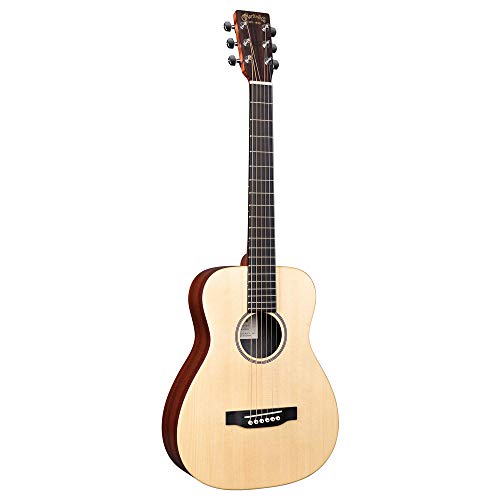
1. Martin LX1E Little Martin
The Martin LX1E Little Martin comes from a long-established acoustic-guitar maker. Its compact body and 23-inch scale make it a useful starting point for players who find a full-size dreadnought awkward to hold. That is a reason to try it, rather than a guarantee of low action on every instrument.
Pros
- Compact body and short fret spacing
- Solid spruce top with practical HPL back and sides
- Built-in Fishman electronics
- Manufacturer package includes a gig bag
Cons
- Less body depth than a full-size acoustic
- No fingerboard face inlays
This guitar stands out for its compact size, solid spruce top and Fishman electronics. The back and sides are mahogany-pattern high-pressure laminate, not solid mahogany. A shorter scale reduces the distance between frets, although comfortable string height still depends on the setup, string gauge and playing style.
The hand-rubbed top and straightforward appearance suit a practical travel or practice instrument. HPL back and sides help with everyday durability, but the solid top still needs sensible humidity care. The compact body also means you should compare its unamplified sound with a larger guitar if strong bass response is important.
| Material | Solid spruce top; mahogany-pattern HPL back and sides; rust birch laminate neck; Richlite fingerboard and bridge |
| Scale Length | 23 inches |
| Number of Frets | 20 frets |
Choose the LX1E when easy reach and portability matter more than a full-size body. Check the exact delivered electronics: the current Martin specification names Fishman Presys VT, while earlier LX1E stock and demonstrations use Sonitone. Both the neck relief and action should be checked after the guitar has settled into its new environment.
2. Yamaha FG800J
The Yamaha FG800J is a budget-friendly acoustic guitar from a trusted brand. Its traditional western body and solid spruce top make it a useful full-size option for a learner who does not need built-in amplification. The 25-inch scale is slightly shorter than some other full-size guitars here.
Pros
- Solid spruce top and scalloped bracing
- Full-size body with 25-inch scale
- Simple acoustic-only design
- Suitable starting point for a personal setup
Cons
- No built-in pickup or tuner
- Large body may not suit every seated player
- Case is separate
The scalloped bracing and solid top are useful features at this level, but a comfortable setup matters more than calling it a factory low-action design. Try open chords and notes higher up the neck with your usual picking strength. A large body can suit strumming while feeling less manageable than the Little Martin or GS Mini when seated.
Yamaha specifies nato/mahogany back and sides, a nato neck and rosewood fingerboard and bridge. These materials do not make the instrument automatically inferior to another affordable guitar. Build condition, fretwork, setup and the sound of the individual example are more useful things to assess.
| Material | Solid spruce top; nato/mahogany back and sides; nato neck; rosewood fingerboard and bridge |
| Scale Length | 25 inches |
| Number of Frets | 20 frets |
The FG800J is a straightforward choice for home practice and unamplified playing. Budget for a case and, if needed, a setup rather than assuming they are included. If you need to plug directly into a PA, compare an acoustic-electric such as the Fender CD-60SCE before buying an external pickup.
3. Taylor 214ce Grand Auditorium, Walnut
The Taylor 214ce Grand Auditorium combines a full-size body with a Venetian cutaway. The current natural-finish walnut version has a torrefied spruce top, layered walnut back and sides, a mahogany neck and ebony fingerboard. Its construction differs from older rosewood-backed 214ce editions.
Pros
- Cutaway Grand Auditorium body
- ES2 electronics for amplified use
- Current C-Class bracing
- Structured gig bag
Cons
- Greater commitment than the simpler learner models
- Full-size body and 25.5-inch scale may not suit every player
The Venetian cutaway provides access to the upper frets, and the Expression System 2 pickup offers a built-in option for amplified playing. The 25.5-inch scale and 1-11/16-inch nut are worth comparing in person with the shorter-scale travel models. A cutaway helps access, but does not itself lower string action.
C-Class bracing and the Grand Auditorium body give this version a different design from older X-braced editions. It can serve players who want one guitar for strumming, fingerpicking and amplified use, but suitability still comes down to your touch and preferred sound. Layered walnut should not be confused with an all-solid walnut body.
| Material | Torrefied spruce top; layered walnut back and sides; mahogany neck; ebony fingerboard and bridge |
| Scale Length | 25.5 inches |
| Number of Frets | 20 frets |
This is the more elaborate full-size acoustic-electric option in the list, supplied with a structured gig bag in the current manufacturer package. Compare it with the 114ce if simpler appointments would meet your needs. Ask for the actual instrument’s action and relief to be checked; a Taylor name alone does not establish your ideal setup.
4. Fender CD-60SCE Black
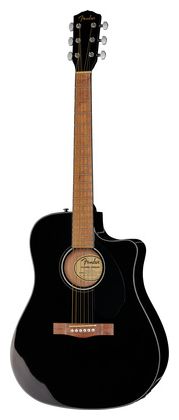
Fender is a leading name in guitar manufacturing. The CD-60SCE combines a cutaway dreadnought body, solid spruce top and built-in Fishman electronics. The selected version is black, with walnut fingerboard and bridge, rather than the rosewood specification found on some older examples.
Pros
- Solid spruce top
- Rolled fingerboard edges
- Cutaway access
- Fishman CD electronics with tuner
Cons
- Full-depth dreadnought body
- Setup still needs checking on the individual instrument
Fender’s easy-to-play neck shape and rolled fingerboard edges are useful features to compare when fretting chords. The quartersawn scalloped X-bracing supports the top, while the Fishman CD system includes a tuner. These are practical reasons to consider it for lessons and plugged-in use; they do not promise a particular delivered string height.
Its mahogany back, sides and neck accompany the solid spruce top. The 25.3-inch scale sits between the shorter travel guitars and the 25.5-inch Taylor 214ce. Assess the neck shape and body size together, because a guitar can have comfortable fretboard edges yet still feel too large for your seated playing position.
| Material | Solid spruce top; mahogany back, sides and neck; walnut fingerboard and bridge |
| Scale Length | 25.3 inches |
| Number of Frets | 20 frets |
The CD-60SCE offers an accessible route to an acoustic-electric with a cutaway. Compare it with the Yamaha FG800J if you mainly play unplugged and want fewer controls. Test the amplified sound through equipment similar to what you will use, and allow for a setup if the individual guitar’s action feels high.
5. Ibanez AW54CE-OPN
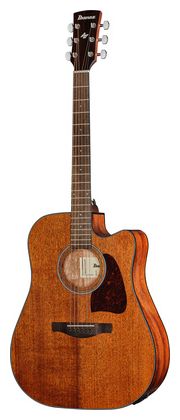
The Ibanez AW54CE-OPN is an open-pore acoustic-electric with a cutaway dreadnought body. Its solid okoume top, onboard tuner and AEQ-TP2 preamp make it a practical alternative to the spruce-top guitars here. Comfortable action needs checking on the actual instrument, rather than assuming every example is unusually low.
Pros
- Solid okoume top
- Cutaway and onboard tuner
- XLR and quarter-inch outputs
Cons
- Full-size body can feel bulky
- Fingerboard material varies with production revision
The full-size body and cutaway suit players who want strumming space and access beyond the neck joint. Its 43 mm nut width is comparable to several other models here. Compare the deeper dreadnought shape with the Yamaha APX600 if reaching around the body is a concern, even when the fretting-hand position feels comfortable.
The AEQ-TP2 preamp provides bass, treble and volume controls, plus a tuner, with balanced XLR and quarter-inch outputs. This is a steel-string guitar: use a suitable steel-string set and the maker’s gauge guidance. Nylon strings are not a general upgrade for this bridge and setup.
| Material | Solid okoume top; okoume back and sides; nyatoh neck; laurel or ovangkol fingerboard and bridge, depending on production revision |
| Scale Length | 25.5 inches in current Ibanez specification; confirm retailer revision |
| Number of Frets | 20 frets |
Specifications have changed across AW54CE production: current Ibanez pages list a laurel fingerboard and bridge, while retailer stock can list ovangkol. Confirm the actual revision if that material matters to you. Keep string gauge, tuning and action adjustments coordinated so that easier fretting does not introduce avoidable buzz or poor intonation.
6. Taylor GS Mini Mahogany
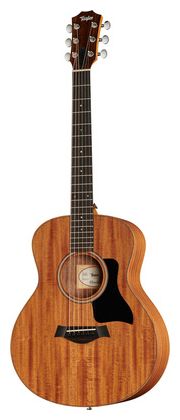
The Taylor GS Mini Mahogany is a popular small-bodied acoustic for practice and travel. Its 23.5-inch scale reduces fret spacing, and its compact body is worth trying if a dreadnought feels bulky. The selected mahogany-top version has no built-in electronics, unlike GS Mini-e models.
Pros
- Compact body and 23.5-inch scale
- Solid mahogany top
- Gig bag included
- Adjustable setup and serviceable neck system
Cons
- No built-in pickup in this version
- Medium strings may not suit every player without adjustment
This travel-friendly guitar can suit younger learners and adults seeking a smaller instrument, but hand size alone does not decide the best fit. Compare its nut width, neck feel and fret spacing with a full-size guitar. Taylor currently specifies medium-gauge strings, so do not assume a short scale means an exceptionally light string set.
A solid mahogany top accompanies layered sapele back and sides and an ebony fingerboard and bridge. The body remains an acoustic instrument that needs humidity care, even though the layered back and sides are practical for everyday use. Its supplied bag makes carrying it easier, but is not a hard case for rough handling.
| Material | Solid mahogany top; layered sapele back and sides; mahogany neck; ebony fingerboard and bridge |
| Scale Length | 23.5 inches |
| Number of Frets | 20 frets |
Choose the GS Mini Mahogany when portability and a smaller body are priorities. If you need regular amplified performances, compare the GS Mini-e Mahogany rather than assuming this model includes a pickup. A technician can assess relief, saddle height and, when necessary, Taylor’s neck-shim adjustment to set it up for your playing style.

7. Yamaha APX600 Natural
The Yamaha APX600 Natural is a thin-body acoustic-electric suited to players who want a less bulky amplified guitar. Its cutaway and 25-inch scale offer a different physical feel from the full-depth dreadnoughts here. It can be useful for small gigs, but the venue, pickup setup and player determine how well it works.
Pros
- Thin body with cutaway
- 25-inch scale
- Pickup and onboard tuner
Cons
- Compare the thinner body’s unplugged sound before buying
- No included case in Yamaha’s specification
The natural-finish version has a spruce top with rosewood fingerboard and bridge. Yamaha identifies the back, sides and neck as locally sourced tonewood rather than promising one fixed species. Its 43 mm nut and 10 mm string spacing are worth trying with both chords and fingerpicking.
The thin body makes reaching around the instrument easier for some players, although it does not establish which hand sizes will suit the neck. Try it in a local shop if possible. The onboard piezo system and tuner provide a direct amplified option; compare its unplugged sound with a deeper body before deciding it covers both roles for you.
| Material | Spruce top; locally sourced tonewood back, sides and neck; rosewood fingerboard and bridge |
| Scale Length | 25 inches |
| Number of Frets | 22 frets |
The APX600 Natural is a practical choice when a thin acoustic-electric body matters more than maximum unamplified body depth. Leave room in your budget for a suitable case and a setup if required. Check the delivered guitar’s action, fret condition and tuning response with the strings and tuning you plan to use.
What is Low Action on an Acoustic Guitar?
Low action on a guitar means the strings are closer to the fretboard. It can reduce the effort needed to fret notes, which helps many beginners. The useful limit depends on string gauge, tuning, fret condition and how strongly you strike the strings.
Do Low Action Acoustic Guitars have fret buzz?
Lowering action reduces the clearance available for string vibration, so fret buzz can become more likely. Set it for your normal playing strength rather than aiming for the smallest possible gap. Uneven frets, unsuitable relief and other setup problems can cause buzz on newer as well as older instruments.
Is Low Action better than High Action on Acoustic Guitars?
Lower action can make fretting easier, while higher action can provide more clearance for a strong picking attack or slide playing. Neither automatically gives every guitar better sustain or tone. The best compromise is the one that lets you play comfortably without unwanted buzzing.
How to manually Lower the Action on an Acoustic Guitar?
A setup begins by checking the guitar’s condition, humidity, tuning and string gauge, then measuring neck relief and string height. The truss rod adjusts neck relief; it is not a universal fix for high action. Saddle height, nut slots, fretwork and neck angle can also require attention.
Ask a qualified guitar technician to diagnose the cause before removing material from a saddle or nut, especially if you are unfamiliar with the work. Follow the instructions for your own instrument and do not force an adjustment. This video explains the role of a truss rod:
What to look for in a Low Action Acoustic Guitar when buying?
Key things to look for in a low-action acoustic guitar include its playability, durability, sound quality, and price.
Playability
Action directly affects playability, but neck shape, nut width, scale length and body depth also matter. A thin body can be easier to reach around, and a cutaway helps upper-fret access. Neither feature guarantees low string height. Try the instrument using your normal chords and picking strength.
Durability
The quality of the guitar affects its durability and longevity. Popular brands are often reliable, but not all models excel. Pay attention to the tonewoods to get the sound you’re after.
Sound
Sound is vital. To find the guitar with the right sound, research online (reviews, videos) or visit your local music shop to test it yourself.
Price
Price is the final thing to think about when choosing an acoustic guitar. Include a setup, suitable case and any amplification you need in the overall budget. More elaborate appointments do not automatically make a guitar easier to fret. A simpler instrument that fits your body and has appropriate string height can be a useful long-term choice.
Summary
Low-action acoustic guitars are great for beginners since they strain fingers and the fretting hand less. There are many options available, making it easy to find one that matches your skill level and preference. Both budget-friendly and premium choices are available to meet everyone’s needs.
My top pick is the Martin LX1E Little Martin, a durable acoustic guitar with excellent sound from a reputable maker.
My budget pick is the Yamaha FG800J, an affordable, quality acoustic guitar with great value from Yamaha.