
A pop filter reduces the breath blasts from plosive consonants before they reach the microphone. It is useful for close vocal recording, but it does not remove background noise, room echo or clipping.
Choose a screen and clamp that fit your microphone position. Mesh offers a simple starting point, while washable metal screens suit repeated studio use.
My top recommended pop filter is the sE Electronics Studio Mic Pop Screen. It’s a budget-friendly option with a solid build and excellent sound filtering quality.
My second recommendation is the Aokeo Professional Dual-Layer Pop Filter for an affordable, reliable pop filter.
The 7 Best Pop Filters (2026)
Let’s compare these in more detail.

1. sE Electronics Studio Mic Pop Screen
The sE metal pop screen is my first choice for someone who wants a reusable screen that is easy to wipe clean. Its clamp and flexible arm let it sit between the vocalist and microphone without covering the mic body.
Allow space between the screen and capsule and check the stand clamp. A pop filter reduces breath blasts; it does not remove room echo, background noise or clipping.
Pros
- Top Pick – A metal screen with a clamp and flexible arm.
- Metal
Cons
- Allow space between the screen and capsule and check the stand clamp. A pop filter reduces breath blasts; it does not remove room echo, background noise or clipping.
| Screen | Metal |
| Mount | Clamp; flexible arm |
| Use | Studio vocals |

2. Aokeo Professional Dual-Layer Pop Filter
This exact Aokeo dual-layer screen is a practical starter choice for a microphone stand that accepts its clamp. Two mesh layers interrupt the fast airflow from plosive consonants before it reaches the capsule.
Check clamp clearance on a desktop arm. It is an external screen, not a microphone mount, and does not need to touch the capsule.
Pros
- Budget Pick – A mesh screen for a basic recording setup.
- Dual-layer mesh
Cons
- Check clamp clearance on a desktop arm. It is an external screen, not a microphone mount, and does not need to touch the capsule.
| Screen | Dual-layer mesh |
| Mount | Clamp; gooseneck |
| Use | Vocal breath control |

3. Stedman Proscreen XL V2
Proscreen XL V2 is the current generation of Stedman’s larger pop filter. It suits a studio where cleaning, reliable positioning and a reusable metal screen matter more than a basic nylon design. Choose V2 if you want this generation.
Check the screen position for your microphone and performer. It controls plosives, not sibilance or the acoustic sound of an untreated room.
Pros
- A current washable screen for repeated studio use.
- Proscreen XL V2
Cons
- Check the screen position for your microphone and performer. It controls plosives, not sibilance or the acoustic sound of an untreated room.
| Model | Proscreen XL V2 |
| Generation | V2 |
| Screen | Washable metal |

4. Stedman Proscreen PS101 V2
PS101 V2 is the choice for someone who wants Stedman’s current pop-screen design in a smaller format than XL V2. It suits a compact vocal position where a large screen gets in the performer’s sight line.
The smaller screen needs careful alignment with the airflow. Choose XL V2 if a broader screen is more useful than saving space.
Pros
- A smaller current metal-screen alternative.
- Proscreen PS101 V2
Cons
- The smaller screen needs careful alignment with the airflow. Choose XL V2 if a broader screen is more useful than saving space.
| Model | Proscreen PS101 V2 |
| Screen | Metal |
| Format | Smaller than XL V2 |
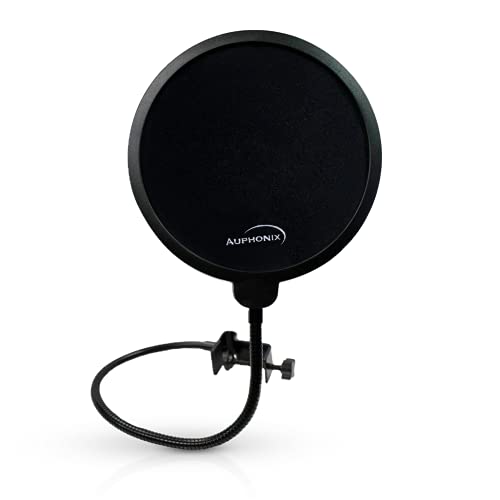
5. Auphonix Pop Filter Screen
The retained Auphonix screen is a basic external pop filter for a compatible stand or boom arm. Its flexible gooseneck lets the screen sit a short distance from the capsule.
Check the clamp on your actual arm rather than relying on a broad Blue Yeti compatibility claim. Microphone technique still matters when a vocalist works very close to the screen.
Pros
- A clamp-mounted screen for a straightforward home studio.
- External pop filter
Cons
- Check the clamp on your actual arm rather than relying on a broad Blue Yeti compatibility claim. Microphone technique still matters when a vocalist works very close to the screen.
| Type | External pop filter |
| Arm | Flexible gooseneck |
| Mount | Clamp |

6. NEEWER Professional Pop Filter
This exact NEEWER filter remains a simple choice for voice recording and home vocals. Its separate screen and flexible arm let you adjust the distance independently of the microphone. It offers a basic mesh alternative to the metal-screen picks.
The clamp and arm need adequate clearance. It will not cure every unwanted noise, so address room reflections and recording level separately.
Pros
- A dual-layer mesh option for occasional recording.
- Dual-layer mesh
Cons
- The clamp and arm need adequate clearance. It will not cure every unwanted noise, so address room reflections and recording level separately.
| Screen | Dual-layer mesh |
| Arm | Flexible |
| Mount | Clamp |

7. On-Stage ASVS6B 6-inch Pop Filter
ASVS6B is the straightforward six-inch nylon-screen choice for an ordinary microphone stand. Its nylon screen is a different construction from the ASFSS6-GB dual-screen model. Its screen can be positioned independently of the microphone.
This is a different model from ASFSS6-GB. Check the clamp and leave room for the screen; do not buy it expecting the old dual-screen construction.
Pros
- A current nylon-screen option with a flexible arm.
- ASVS6B
Cons
- This is a different model from ASFSS6-GB. Check the clamp and leave room for the screen; do not buy it expecting the old dual-screen construction.
| Model | ASVS6B |
| Screen | 6-inch nylon |
| Arm | Flexible |
What are Pop Filters and what do they do?
Pop filters are essential tools that stop sharp sounds from being recorded, like the “p” in “popping”.
Some letters, called plosives, create a fast wind that hits the microphone, causing a popping sound. To stop this, use metal or mesh pop filters. These filters break down and slow the wind before it reaches the microphone, maintaining sound quality.
Do Pop Filters improve vocal quality?
A pop filter can make close vocal recordings easier to manage by reducing plosive blasts. It does not improve the singer’s pitch, cure sibilance or replace suitable microphone technique.
Are Pop Filters absolutely necessary?
Use a pop filter when breath blasts are reaching the capsule. Some microphones and techniques control plosives adequately without an external screen; judge the recording rather than treating it as mandatory.
Do Microphones already have Pop Filters?
Some microphones include internal pop protection. An external screen can add useful airflow control during close recording, but the result depends on the microphone and placement.
What’s the difference between a Pop Filter and a Windshield?
Pop filters and windshields (windscreens) both aim to stop excess wind from breath or the environment from reaching the microphone and affecting the sound quality.
Windshields help mics combat external elements like wind during outdoor recordings, while pop filters are ideal for indoor studio use to block a vocalist’s breath from impacting the recording.
How to make your own Pop Filter?
Pop filters can be made cheaply and easily. Take an embroidery frame and cover it with nylon or silk stockings stretched over the frame. It’s a simple and effective solution.
You can create a frame using wire coat hangers or similar material. Ensure the frame rests on the mic stand, not the microphone itself. Attaching it directly to the mic body can cause vibrations that affect the recording quality.
Conclusion
Choose a screen that you can position reliably and keep clean. Use it with sensible microphone distance and recording levels for a clear vocal take.
My top pop filter pick is the sE Electronics Studio Mic Pop Screen if you want an all-around product. It has a strong build and offers great value for the price.
My budget pop filter pick is the Aokeo Professional Dual-Layer Pop Filter if you want an affordable but decent option.