
A talk box sends instrument sound through a tube to your mouth, where you shape it into vowels and words. These choices include self-contained tube models and one electronic alternative for players who prefer a vocal pedal.
My top recommended talk box is the Dunlop MXR M222. Its built-in amplifier and simple controls make it a good starting point for the classic tube effect.
My budget recommendation is the TC-Helicon Talkbox Synth. It creates a talk-box-style effect electronically using your guitar and vocal microphone, without a tube.
The 5 Best Talk Boxes (2026)


Let’s compare these in more detail.

1. Dunlop MXR M222
The MXR M222 is my first choice for a straightforward tube talk box. Its amplifier and speaker driver are built in, so you connect it like an instrument pedal without routing an amplifier’s speaker output through it. Volume, tone and gain controls cover the main sound adjustments.
Pros
- Built-in amplifier and speaker driver
- Simple volume, tone and gain controls
- Tube, mic clip and power supply included
Cons
- Needs a separate vocal microphone for PA or recording
- Tube technique takes practice
The standard pedal includes tubing, a mic stand clip and its 18V power supply. Some retailer offers add accessories, so check the selected package rather than assuming every M222 comes with extra instrument cables. The pedal’s ordinary output connects to your guitar amp; the shaped talk-box sound needs a microphone at your mouth.
| Connections | 1/4-inch instrument input and output; voice tube |
| Power | Included 18V power supply |
| Controls | Volume, tone, gain |
Choose the M222 if you want the familiar talk-box arrangement with a compact pedal. It suits guitar or keyboard use, but you still need an audio source, a microphone and a PA or recording input to capture the effect. The Signature model below adds more routing control if your setup needs it.

2. TC-Helicon Talkbox Synth
The TC-Helicon Talkbox Synth is the budget option for a guitarist who wants an electronic talking effect. You play guitar and use your vocal microphone while the pedal combines the signals. It avoids a tube, although it does not reproduce the physical experience of a traditional talk box.
Pros
- No tube required
- Talkbox and synth-style vocal sounds
- Vocal tone processing and reverb
Cons
- Requires your voice through a microphone
- Different response from a true tube talk box
The pedal also provides Adaptive Tone, reverb and pitch correction for the vocal signal. Those features make it useful for a singer-guitarist who wants several vocal effects in one unit. I would choose a tube model instead if the main goal is shaping an instrument’s sound silently with mouth movements.
| Connections | 1/4-inch guitar input and thru; XLR mic input and vocal output |
| Power | 9V supply or four AA batteries; supply sold separately |
| Effects | Talkbox/synth voicings, reverb, Adaptive Tone, pitch correction |
Connect the XLR output to a suitable mixer or powered speaker and the guitar thru to your guitar rig. Check that your power supply meets the manual’s requirements. The normal guitar output and vocal-effect output serve different jobs, so plan both paths before adding it to a pedalboard.

3. Rocktron Banshee 2
The Rocktron Banshee 2 is worth considering when routing matters as much as the basic effect. It has its own preamp, amplifier and horn driver, and it can feed your guitar amplifier while the talk-box effect is active. That lets you blend the amp sound with the microphone capturing the tube.
Pros
- Effects loop for additional pedals
- Simultaneous guitar-amp and tube operation
- Built-in preamp, amplifier and horn driver
Cons
- More connections to manage than a simple talk box
The effects loop can place another effect in the talk-box or guitar signal path. It gives you more flexibility for shaping the sound than a basic three-knob unit, but also makes the setup more involved. Gain, tone and output controls handle the onboard preamp, and an LED shows when the effect is engaged.
| Connections | Instrument input, amp output, effects send/return, external speaker output |
| Power | 9V AC supply |
| Controls | Gain, tone, output; routing switches |
The external speaker output is for a suitable speaker cabinet, not a mixer, PA input or amplifier input. Use the supplied power arrangement and follow Rocktron’s connection diagrams. Choose the Banshee 2 if you will use its extra routing; the M222 is easier to justify for a simple first talk-box setup.
4. TalkStar - Talk Box
The TalkStar is a specialist choice for synthesizer players. It is a self-powered tube talk box with its own amplifier and compression driver, rather than a small guitar pedal. A built-in handle helps with carrying it, and the front controls provide volume, tone and the manufacturer’s Edger distortion circuit.
Pros
- Designed for synthesizer use
- Onboard amplifier and tone shaping
- Carrying handle and included tube set
Cons
- Larger than the pedal-format choices
- Designed specifically for synthesizers
The current specification lists a 25W RMS amplifier and a 100W, 8-ohm compression driver. Those ratings describe different components; they do not make this a 100W amplifier. The supplied external 24V DC power supply powers the unit. Choose the clear or black tube set on the manufacturer’s order page.
| Connections | Instrument input, thru connection and pedal input |
| Power | Included external 24V DC supply |
| Controls | Volume, tone, Edger |
TalkStar also provides thru operation with an optional foot pedal, so a keyboard can serve other parts of your setup. I would choose it for a dedicated synth talk-box station where its larger housing is practical. Guitarists looking for a conventional pedalboard unit have more suitable options elsewhere in this list.
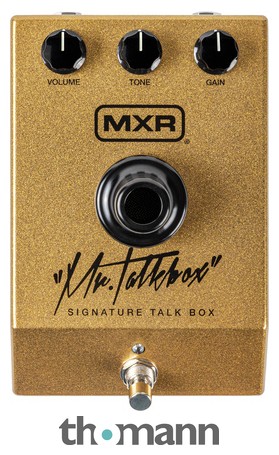
5. MXR Mr. Talkbox Signature Talk Box
The MXR Mr. Talkbox Signature Talk Box adds more headroom and routing options to the self-contained format. It uses a 25W amplifier and neodymium driver, with volume, tone and gain controls. Its two extra switches are the main reason to choose it over the simpler M222.
Pros
- Built-in amplifier and speaker driver
- Mute switch controls the signal sent to your amp
- Gain Bypass suits stronger keyboard signals
Cons
- Pricey
- Still needs a microphone for PA or recording
The Mute switch lets you choose whether the normal instrument signal continues to the amp while the tube is active. Gain Bypass routes around the preamp and clipping stages, which is useful with a hot keyboard signal or when you want to use your own drive pedals.
| Connections | 1/4-inch instrument input and output; voice tube |
| Power | Included 18V DC power supply |
| Controls | Volume, tone, gain; Mute and Gain Bypass switches |
MXR includes an eight-foot tube, mic stand clip and power supply. Choose this model if those routing choices will solve a problem in your guitar or keyboard setup. The M222 remains my general recommendation for getting started, while this Signature model makes more sense when you already know how you want the instrument and talk-box paths to interact.
What is a Talk Box and how does it work?
A tube talk box sends amplified instrument sound into your mouth through a plastic tube. Moving your lips and mouth filters the sound into speech-like shapes. A microphone captures that sound for a PA or recording; you do not have to sing the notes as you would with an electronic vocal effect.
The self-contained tube models here include their own amplifier and driver. Some older designs connect between an instrument amplifier and its speaker instead, so follow the instructions for your exact model. The TC-Helicon is an electronic alternative that uses your microphone signal and has a different setup.
Is a Talk Box worth it?
A talk box is worth considering if the vocal instrument effect has a clear place in your songs or live set. Allow for a microphone, an appropriate instrument sound and time learning to articulate vowels and words. If you only want occasional electronic vocal effects, the TC-Helicon may be the more practical choice.
What is the best way to use a Talk Box?
Connect the instrument to the talk box as the manual directs, secure the tube beside your vocal microphone and start with a moderate output level. Play a sustained note while changing your mouth shape, then try short phrases. Route the microphone to your mixer or interface, and keep the ordinary guitar or keyboard signal separate where the setup requires it.
Verdict
For a straightforward tube talk box, my main recommendation is the Dunlop MXR M222. Choose the TC-Helicon Talkbox Synth if you want a budget electronic alternative without a tube. The Banshee 2 and MXR Signature add routing options, while TalkStar is the dedicated synthesizer choice.