
A USB condenser microphone combines a capsule, preamp and audio converter in one device. It is a convenient way to record a voice or instrument without a separate interface. Choose by pickup pattern, monitoring and controls rather than treating USB alone as a measure of sound quality.
For one performer, start with a cardioid microphone and direct monitoring. Multiple patterns are useful when you deliberately need stereo or more than one direction of capture.
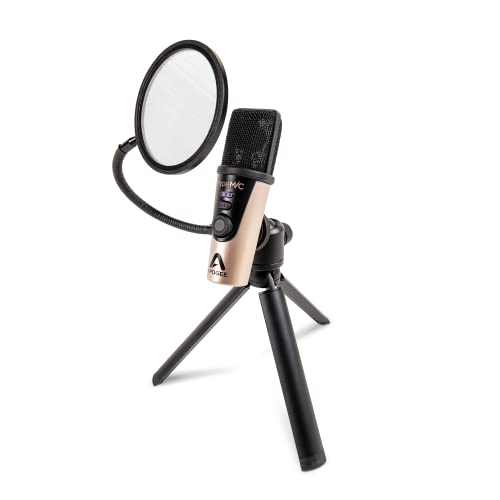
My top recommended USB condenser microphone is the Apogee HypeMiC. This excellent mic features a built-in compressor and delivers clear recorded vocals.
My simpler desktop recommendation is Sennheiser Profile USB Microphone – Table Stand Set, with physical gain and monitor-mix controls. The offer includes the microphone and table stand.
The 7 Best USB Condenser Mics (2026)


Let’s compare these in more detail.

1. Apogee HypeMiC
Apogee HypeMiC remains my specialist choice for a singer or instrumentalist who wants to manage dynamics before the signal reaches the computer. Its built-in analog compression distinguishes it from software-only streaming microphones. Headphone monitoring helps you hear the performance while recording, and the compact format suits a small home setup. Use the compressor deliberately, starting with gentle settings rather than treating it as a cure for every recording problem.
It cannot remove room reflections or repair an overloaded performance. Check connection and adapter requirements for your computer or mobile device, and choose a simpler USB microphone if you do not need analog compression.
Pros
- A USB condenser with analog compression for a single performer.
- Capsule: Condenser; Distinctive feature: Analog compression; Monitoring: Headphone output
Cons
- It cannot remove room reflections or repair an overloaded performance.
| Model | HypeMiC |
| Capsule | Condenser |
| Distinctive feature | Analog compression |
| Monitoring | Headphone output |
2. Sennheiser Profile USB Microphone - Table Stand Set
Sennheiser Profile USB is my choice for a single speaker, singer or acoustic instrument when easy level adjustment matters more than several pickup patterns. Gain, headphone volume and the monitor mix are controlled on the microphone. The cardioid capsule and tilt-adjustable mount help you place it toward the source. This listing includes the table stand and USB-C cable, not just the separately sold stand.
The desk stand may transmit knocks and keyboard vibration. Move the microphone closer on a suitable arm when needed, and do not expect a cardioid condenser to remove all room sound.
Pros
- A simple cardioid USB-C microphone with useful physical controls.
- Package: Microphone; table stand; USB-C cable; Pattern: Cardioid; Controls: Gain; mute; headphone level; monitor mix
Cons
- The desk stand may transmit knocks and keyboard vibration.
| Model | Profile USB |
| Package | Microphone; table stand; USB-C cable |
| Pattern | Cardioid |
| Controls | Gain; mute; headphone level; monitor mix |

3. Logitech Blue Yeti - Blackout
Blue Yeti remains the option for someone who needs more than one pickup pattern. Cardioid suits a single voice, while stereo, omnidirectional and bidirectional modes offer other arrangements for music or conversation. A gain control, mute switch and headphone monitoring make it easy to use on the desk. Blackout is the black-finished version of the classic Yeti.
It is a large, sensitive condenser. Position it carefully and keep it away from keyboard vibration; extra pickup patterns do not make a noisy room disappear. This is the classic Yeti rather than Yeti GX or Orb.
Pros
- A multipattern USB condenser for varied desktop recording.
- Patterns: Cardioid; stereo; omnidirectional; bidirectional; Connection: USB; Monitoring: Headphone output
Cons
- It is a large, sensitive condenser.
| Model | Yeti Blackout |
| Patterns | Cardioid; stereo; omnidirectional; bidirectional |
| Connection | USB |
| Monitoring | Headphone output |

4. RØDE NT-USB+
RØDE NT-USB+ is the choice for vocals, acoustic instruments or voice work when you want a conventional cardioid condenser setup with a direct computer connection. The newer model adds USB-C, the Revolution preamp and APHEX processing accessible through supported RØDE apps. Its pop filter, desk stand and direct headphone monitoring make it a useful starting package.
It has one cardioid pickup pattern. Gain and processing are managed through the connected device or software rather than a physical gain knob, and a desk stand still needs careful placement away from knocks.
Pros
- A single-source USB-C microphone with direct monitoring and onboard DSP.
- Pattern: Cardioid; Connection: USB-C; Resolution: 24-bit/48 kHz; Monitoring: Zero-latency headphone output
Cons
- It has one cardioid pickup pattern.
| Model | NT-USB+ |
| Pattern | Cardioid |
| Connection | USB-C |
| Resolution | 24-bit/48 kHz |
| Monitoring | Zero-latency headphone output |
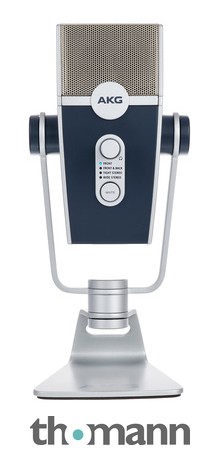
AKG Lyra remains a flexible desktop choice when you want to alternate between solo speech and broader recording arrangements. Its four capture modes provide front, front-and-back and stereo options, and the headphone output allows direct monitoring. USB-C makes it convenient to connect to a suitable computer. I would choose it for the capture options rather than assuming every mode is useful for a single singer.
Wider modes capture more of the room. Use the front mode for a close voice and check operating-system and adapter compatibility before using it with a mobile device.
Pros
- A four-mode USB-C condenser for voice and stereo sources.
- Capture modes: Front; front-and-back; tight stereo; wide stereo; Connection: USB-C; Resolution: Up to 24-bit/192 kHz
Cons
- Wider modes capture more of the room.
| Model | Lyra |
| Capture modes | Front; front-and-back; tight stereo; wide stereo |
| Connection | USB-C |
| Resolution | Up to 24-bit/192 kHz |

6. Audio-Technica AT2020USB-X
Audio-Technica AT2020USB-X is the straightforward option for a vocalist or acoustic instrument player who wants direct monitoring and a simple signal path. The updated USB-C model adds touch mute and supports recording up to 24-bit/96 kHz. Its headphone mix control lets you balance the live microphone against computer playback while recording. It fits a music-focused setup without adding a choice of pickup patterns.
It has no XLR output and is not the noise-reduction AT2020USB-XP. Room treatment, placement and recording level matter more than selecting the highest sample rate.
Pros
- A cardioid USB-C condenser with mix control and touch mute.
- Pattern: Cardioid; Connection: USB-C; Resolution: Up to 24-bit/96 kHz; Controls: Touch mute; headphone mix and volume
Cons
- It has no XLR output and is not the noise-reduction AT2020USB-XP.
| Model | AT2020USB-X |
| Pattern | Cardioid |
| Connection | USB-C |
| Resolution | Up to 24-bit/96 kHz |
| Controls | Touch mute; headphone mix and volume |
7. HyperX QuadCast 2 S - Black
HyperX QuadCast 2 S is the choice for someone who records, streams and wants visible lighting and easy onboard controls. Four pickup patterns cover solo voice and wider arrangements, while tap-to-mute and the included shock mount help with everyday desk use. This generation uses USB-C and keeps the multipattern recording workflow. Choose its pattern to suit the source rather than leaving an omnidirectional setting on for solo recording.
Lighting is a convenience, not an audio-quality measure. Check NGENUITY and platform support for the controls you plan to use; the desktop condenser still picks up room reflections and background noise.
Pros
- An RGB USB-C condenser with four pickup patterns and onboard controls.
- Patterns: 4; Connection: USB-C; Included: Shock mount
Cons
- Lighting is a convenience, not an audio-quality measure.
| Model | QuadCast 2 S |
| Finish | Black |
| Patterns | 4 |
| Connection | USB-C |
| Included | Shock mount |
What is a USB Condenser Microphone and how does it work?
A USB condenser microphone draws power from a USB cord instead of an XLR cable. These mics contain a built-in analog to digital converter, so they don’t need an external interface to process the input signal.
USB mics are very easy to use. Just plug in the cable and start. The mic even comes with its own USB cable.
What is the difference between USB mics and XLR mics?
Many XLR condenser microphones require phantom power from a suitable interface or preamp. Dynamic XLR microphones usually do not. A USB microphone receives power and carries digital audio through its USB connection.
Sound quality depends on the capsule, electronics, placement and room. USB and XLR describe connections; neither is automatically superior. XLR makes it easier to use several microphones through one interface, while USB keeps a single-source setup simple.
Choose an XLR system when you need several microphones or separate preamps and converters. A suitable USB microphone can still produce useful professional recordings in a controlled room.
What is the difference between a conventional USB mic and a Condenser USB Mic?
Dynamic and condenser microphones use different capsule designs. Both can record voices and instruments; sensitivity, polar pattern, maximum level and placement matter more than assigning one type to all loud or quiet sources.
These condenser picks are useful for voice and acoustic detail, but they also capture the room. Move close enough for a clear source and use appropriate recording levels and pop protection.
What is the optimal positioning of a USB Condenser Mic?
Keep a USB condenser mic at a slight angle to your audio source, whether it’s your mouth or an instrument.
Condenser mics are sensitive; placing them too close can result in unwanted low-end pickups, while keeping them too far may muffle your audio with background noise. The optimal distance is between 4 to 12 inches. Experiment to find what works best for you.
What to look for in a USB Condenser Mic when buying?
Check headphone monitoring, gain controls, mute behavior and compatibility with your computer. A quoted 20–20,000 Hz range alone does not establish a balanced sound.
You also want to see how many polar patterns are available. More patterns mean a wider range of applications.
Get your money’s worth. While USB mics are often cheaper, only you know your budget. If you use your mic sparingly, a budget option will do. However, if you’re serious about content creation, consider investing in a more expensive mic.
You want a durable microphone. Choose a metal body over plastic. Consider additional features like a headphone jack for zero-latency monitoring, mic stands, and pop filters for improved recording quality.
Verdict
Choose a USB microphone for a convenient single-source setup. Direct monitoring and usable controls make recording easier; placement and the room still determine much of the result.
My top USB condenser microphone is the Apogee HypeMiC. Though pricier than others, it features a built-in compressor, a quality bundle, and delivers clear recordings.
My simpler USB condenser choice is Sennheiser Profile USB Microphone – Table Stand Set, with a cardioid capsule and physical recording controls.