
A vocal harmonizer pedal can be useful for a live singer. It processes your voice in real time and adds harmony voices during a performance. Some models also include looping, recording or other effects, but those features vary.
Solo performers can use effects to build a fuller arrangement. A vocal harmonizer is optional, adding generated harmonies to a live vocal when the song benefits from them. The best choice depends on how you control the key and which other effects you need.
My top recommended vocal harmonizer pedal is the BOSS VE-22 Vocal Performer. It’s a versatile harmonizer offering harmony, doubling and several effects.
My second recommended vocal harmonizer pedal is the TC-Helicon VoiceTone H1. It provides a solid signal path and excellent harmonies, all at an affordable price.
The 7 Best Vocal Harmonizer Pedals (2026)


Let’s compare them in more detail!
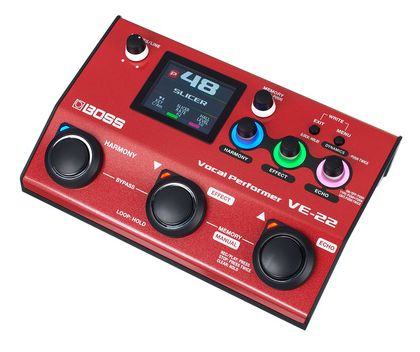
1. BOSS VE-22 Vocal Performer
The BOSS VE-22 Vocal Performer is a versatile vocal processor for live performance, practice and recording. Its harmony, effect and echo controls provide access to familiar reverb and delay as well as more obvious electronic vocal treatments. It suits a singer who wants several sounds in one pedal, rather than only a backing-harmony switch.
Pros
- Broad vocal effect selection
- 99 user memories
- USB-C audio and headphone practice
- 37-second phrase looper
Cons
- No guitar input for automatic chord sensing
- AC adapter sold separately
The VE-22 offers harmony and doubling, 39 effect types, 99 user memories and 50 preset memories. Set the song key and harmony voicing yourself: there is no guitar input to detect chord changes. The built-in phrase looper records up to 37 seconds, making it useful for short practice ideas and live layers rather than a full backing-track arrangement.
Three onboard switches give you control of effects and memories while singing. The XLR microphone input provides switchable 48 V phantom power, and the two XLR outputs support stereo operation. Set microphone gain and effect levels during soundcheck, because adding several voices and long reverbs can make a busy arrangement less clear.
| Pedal Type | Vocal processor |
| Effects | Harmony, doubling, reverb, delay, pitch and electronic vocal effects |
| Power | Four AA batteries or separately sold BOSS PSA-series adapter |
| Bonus Features | USB-C audio, 99 user memories and 37-second phrase looper |
USB-C audio provides a route to compatible recording and streaming setups, while the headphone/line socket and auxiliary input support practice. It runs on four AA batteries or a separately sold BOSS PSA-series adapter. Choose the VE-2 instead if following your guitar chords is more important than the VE-22’s larger effect and memory system.
2. TC-Helicon VoiceTone H1
TC-Helicon’s VoiceTone H1 is a compact vocal harmonizer that adds one or two harmony voices. Guitar-chord sensing lets the harmonies follow a connected instrument, while a manually selected key offers another way to use it. This focused design suits someone who wants harmony control without a large preset menu.
Pros
- Guitar or manually selected key
- Direct harmony and blend controls
- Adjustable microphone gain
- Compact VoiceTone Singles format
Cons
- No battery operation
- No onboard reverb
- USB does not record audio
The Voices control selects the harmony arrangement, and the level control blends it with your lead voice. A separate microphone gain control lets you set the input appropriately. Feed the guitar input a clean chord signal before distortion and other effects so the pedal has useful information for its harmony choices.
The H1 has a metal enclosure and can connect with other VoiceTone Singles when you want separate vocal effects. Its USB connection is for VoiceSupport and firmware updates, not a USB recording interface. The XLR microphone input supplies always-on 24 V phantom power, so confirm that your microphone is compatible rather than assuming every condenser requires the same supply.
| Pedal Type | Vocal processor |
| Effects | One or two generated harmony voices with blend control |
| Power | Supplied 12 V adapter; no batteries |
| Bonus Features | Manual key or guitar sensing; VoiceSupport USB updates |
Choose the H1 for a small, direct harmony setup with guitar or fixed-key control. It uses a supplied 12 V adapter and does not run on batteries. The Harmony Singer 2 adds battery operation, reverb and adaptive Tone processing, but lacks the H1’s dedicated key selector, so the simpler-looking pedals do not serve exactly the same job.
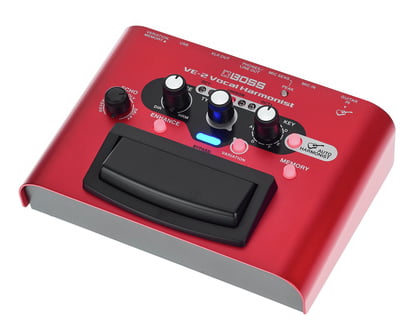
3. BOSS VE-2 Vocal Harmonist
The BOSS VE-2 combines a compact interface with 24 harmony types and additional vocal effects. It is particularly relevant to singing guitarists: Auto Harmony uses the chords you play, while fixed-key operation also works without an instrument. Its smaller memory system keeps it more focused than a full vocal workstation.
Pros
- Guitar Auto, fixed-key and Hybrid modes
- Three setup memories
- USB audio
- Four-AA battery option
Cons
- Only three memories
- No dedicated guitar-effects channel
The 24 selections are harmony types, not 24 simultaneous voices. Guitar and vocals are intended to work together in Auto mode; you do not need to use them one at a time. Hybrid mode combines guitar information with the selected key, helping when the guitar part has gaps rather than providing a general cure for every complex chord progression.
Reverb and delay share the ambience control, while Enhance offers dynamics processing and an optional pitch-correction setting. Three memories let you recall preferred setups. Try the harmony choices with actual songs, especially key changes and sections where you stop strumming, before deciding one setting can cover an entire set.
| Pedal Type | Vocal processor |
| Effects | 24 harmony types, reverb/delay and Enhance processing |
| Power | Four AA batteries or separately sold BOSS PSA-series adapter |
| Bonus Features | Auto/Hybrid harmony, three memories and USB audio |
The VE-2 runs on four AA batteries or a separately sold 9 V BOSS PSA-series adapter and provides USB audio for compatible computer recording. It is worth considering when guitar-led harmony is the priority. The BOSS VE-8 Acoustic Singer adds a dedicated acoustic-guitar effects channel, more memories and a longer looper, but is a larger all-in-one solution.
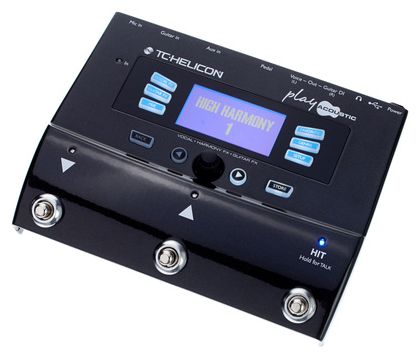
4. TC-Helicon Play Acoustic
The TC-Helicon Play Acoustic is an all-rounder for a singer who also plays electro-acoustic guitar. It combines vocal harmonies and effects with a separate guitar-processing path. That can reduce the number of boxes in a solo setup, although it also means spending time learning input settings, output routing and preset controls.
Pros
- Vocal and acoustic-guitar processing
- Editable stored vocal presets
- BodyRez and performance looper
- Configurable vocal/guitar output routing
Cons
- More setup and routing decisions
- Loop timing needs practice
- External power required
NaturalPlay harmonies use musical information from the connected guitar or other supported sources, with manual key and scale settings also available. Vocal processing includes dynamics, doubling, pitch effects, delay and reverb. BodyRez and the guitar effects help shape a pickup signal, but cannot make every guitar, pickup and PA combination sound identical.
You can edit and store vocal presets: this pedal is not limited to factory sounds without memory slots. The HIT function brings additional effects into a preset, and the performance looper lets you build a short vocal or guitar layer. Rehearse the footswitch sequence and loop timing before relying on it during a performance.
| Pedal Type | Vocal and guitar processor |
| Effects | NaturalPlay harmony, doubling, pitch effects, BodyRez and guitar effects |
| Power | 12 V adapter; no batteries |
| Bonus Features | Stored vocal presets, performance looper and configurable outputs |
The microphone and guitar inputs, auxiliary input, headphones, USB audio and configurable XLR outputs support several practical setups. Select the output mode to suit a combined mix or separate vocal and guitar feeds. Choose Play Acoustic if both channels need processing; the H1 or VE-2 is simpler when your guitar already has the effects and amplification you need.
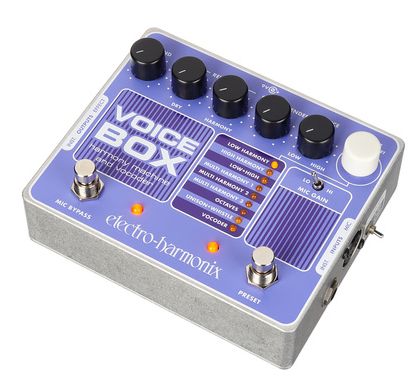
5. Electro-Harmonix Voice Box
The Electro-Harmonix Voice Box is a vocal harmony processor and vocoder with a different emphasis from the guitar-and-vocal workstations here. It combines familiar backing harmonies with more conspicuous vocal textures. Its physical controls suit a player who wants to shape an effect directly rather than select a large bank of named presets.
Pros
- Nine modes with a preset for each
- Harmony, formant and vocoder controls
- Separate dry/harmony reverb
- Switchable microphone phantom power
Cons
- Instrument needed for harmony and vocoder modes
- Line-level XLR output needs appropriate input
- No battery or USB-audio option
Nine modes include six harmony modes, Octaves, Unison + Whistle and a vocoder. You can save one preset for each mode. The harmony modes use the instrument input to determine their pitches, and the vocoder also needs an instrument signal; the Octaves and Unison + Whistle modes can operate without one.
The Gender Bender control changes formants, affecting vocal character rather than simply turning every setting into a vocoder. Separate dry and harmony reverb controls help you balance the lead and generated voices. Start with conservative blend levels, then listen to the result in the arrangement rather than assuming the largest stack of voices is always the most useful.
| Pedal Type | Vocal harmony processor/vocoder |
| Effects | Six harmony modes, Octaves, Unison + Whistle, vocoder and formant control |
| Power | Supplied 9 V DC adapter; no batteries |
| Bonus Features | Nine saved mode presets; line-level XLR output; 45 V phantom power |
The XLR output is line level, so use an appropriate mixer or interface input and gain setting. The instrument output passes the connected instrument onward, and the microphone input has switchable 45 V phantom power. The supplied 9 V adapter powers the pedal; there is no battery option. Choose it for harmony and sound-design controls, rather than a USB recording or backing-track system.
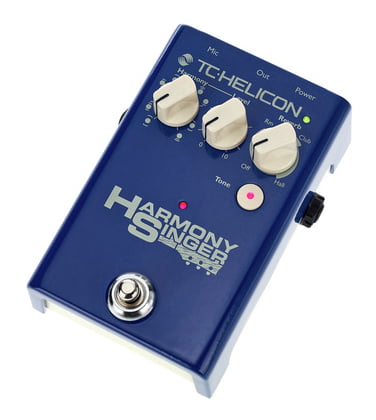
6. TC-Helicon Harmony Singer 2
The TC-Helicon Harmony Singer 2 is a straightforward option for a singing guitarist who wants harmony, reverb and vocal Tone processing. It generates one or two harmony voices alongside your lead, with automatic input gain. A connected guitar provides the chord information, so it is most useful when that instrument is central to the performance.
Pros
- Direct guitar-led harmony controls
- Reverb and adaptive Tone processing
- Four-AA battery option
- Momentary harmony switching
Cons
- No dedicated manual-key control
- No preset memory bank
- USB does not record audio
The Tone button combines adaptive EQ, compression, de-essing and a noise gate. Normal and Less Bright settings offer a useful adjustment if the processed voice is too bright for the microphone or system. These features simplify a small setup, but do not replace sensible microphone technique and a soundcheck.
The three knobs select eight harmony arrangements, set harmony level and adjust Room, Club or Hall reverb. The footswitch bypasses harmony while Tone and reverb remain active, and a momentary mode lets you bring harmonies in only while holding the switch. Feed the guitar input before effects that could obscure its chord information.
| Pedal Type | Vocal processor |
| Effects | Eight harmony arrangements; Room, Club and Hall reverb; adaptive Tone |
| Power | Four AA batteries or compatible 9 V supply |
| Bonus Features | Auto microphone gain; always-on 24 V phantom; momentary harmony mode |
Four AA batteries or a compatible 9 V supply power the pedal. Micro USB is for updates through VoiceSupport, not audio recording, and the microphone input has always-on 24 V phantom power. Choose it for quick guitar-led harmonies with reverb; consider the H1 if a manually selected key is important, or Play Acoustic if you also need guitar processing and stored presets.
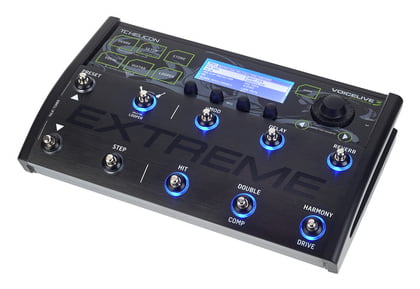
7. TC-Helicon VoiceLive 3 Extreme
If you want an extensive system for vocals and guitar, the TC-Helicon VoiceLive 3 Extreme offers more than a simple harmony pedal. Vocal and guitar effects, backing-track playback and effect automation make it relevant to a performer building arranged solo shows. Those capabilities are useful only if you are willing to prepare and rehearse the setup.
Pros
- Vocal and guitar processing
- Stored loops and backing tracks
- Effect automation
- Direct USB-drive performance recording
Cons
- More preparation and menu learning
- Larger system than a simple harmony pedal
- No battery operation
The vocal processing includes harmony, doubling, pitch effects and vocoder or talkbox-style treatments, while the guitar section provides effects and amp/speaker emulation. These are integrated processing blocks, not a promise that the unit loads every TonePrint preset from a separate pedal. Set the vocal and guitar routes to suit your PA and amplifier arrangement.
| Pedal Type | Vocal and guitar processor |
| Effects | Vocal harmonies, vocoder/talkbox-style processing, guitar effects and amp/speaker emulation |
| Power | External 12 V supply; no batteries |
| Bonus Features | Stored loops, imported backing tracks, effect automation and USB-drive recording |
Stored phrase loops and imported backing tracks support more structured performances than a short, temporary loop alone. Effect changes can be recorded against a backing track, reducing the need to switch every sound manually during the song. Keep an unprocessed or simpler preset available when you need a clear speaking voice between numbers. The Extreme version can record a performance directly to a USB flash drive, which is a different workflow from recording into a computer. Its microphone, guitar, monitor and MIDI connections require more planning than the smaller pedals here, and it uses an external 12 V supply rather than batteries. Choose it for stored loops and arranged tracks, not simply because a more elaborate processor must improve every singer’s performance.
What is a Vocal Harmonizer Pedal and how does it work?
A vocal harmonizer pedal acts like a backup singer in a box. Sing through it and adjust harmony controls for real-time harmonies, just like having a backup singer. Some models also offer pitch correction (auto-tune) and octave control to further enhance your performance.
Do you need a Vocal Harmonizer Pedal?
A vocal harmonizer isn’t essential for musicians, but it can be a valuable addition, especially for solo acts. Decide whether the songs benefit from generated backing voices and whether you need extra effects. EQ, compression and recording are not included in every harmonizer.
What to look for in a Vocal Harmonizer Pedal when buying?
Before buying a vocal harmonizer pedal, consider the sound quality, onboard effects, useful features, and the price.
Sound quality should be your main concern. Reputable manufacturers like Boss and Electro-Harmonix have a longstanding reputation for producing high-quality pedals with excellent sound detail. Try out any vocal harmonizer yourself. Visit a local music shop and hear the sound firsthand.
Consider the onboard effects and features of the pedal. Look for vocal effects like reverb and delay, plus extras like a mic preamp, EQ, and compression.
Lastly, consider the total cost, including a compatible power supply, cables and any external controls. Choose features you will use rather than assuming experience requires a more expensive pedal. Check guitar-guided versus manual-key harmony, microphone phantom-power requirements, output levels and whether USB carries audio or only updates.
Summary
Vocal harmonizers enhance your performance with added harmonies and effects for vocals or instruments. Many excellent harmonizer pedals provide various features and effects at reasonable prices. You can improve your vocal performance and, where the model supports it, use an instrument to guide the harmonies.
My top pick is the BOSS VE-22 Vocal Performer, a versatile vocal harmonizer with harmony, doubling and various other vocal effects.
My budget pick is the TC-Helicon VoiceTone H1, a cost-effective pedal that delivers a strong signal path and top-notch harmonies.