
Vocal microphones are crucial for both recording and live performances. This list offers top picks for various styles and budgets.
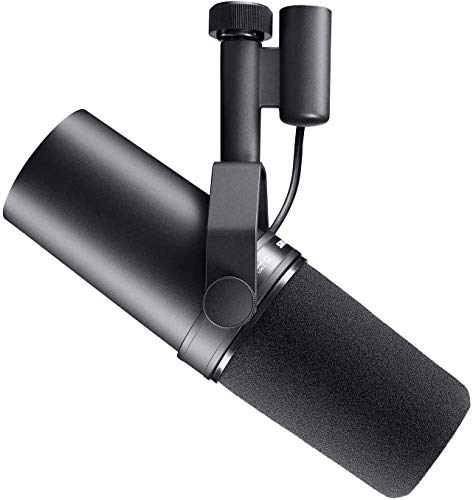
My top pick is the Shure SM7B. It’s one of the best high-end dynamic vocal microphones, offering great sound quality, low noise, and versatility.
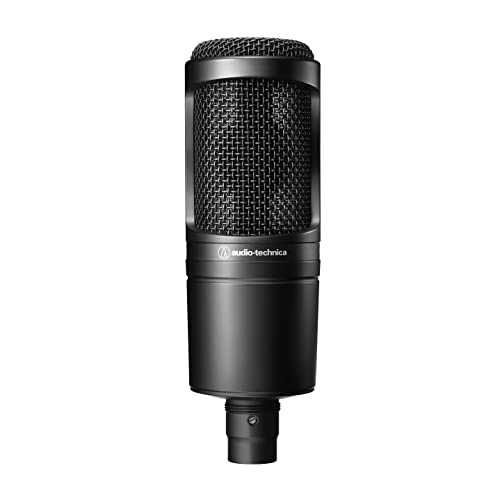
If you want a budget-friendly option, check out the Audio-Technica AT2020. This cardioid polar pattern condenser mic offers great value for the price and a wide dynamic range for vocal recording.
The 7 Best Vocal Mics (2026)



Let’s compare these in more detail.
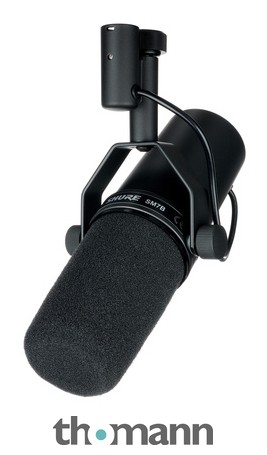
1. Shure SM7B
The Shure SM7B is a strong choice for close vocal recording, broadcasting and spoken-word work. It is a cardioid dynamic microphone with an XLR output, not a USB microphone. Its family has a long recording history: Michael Jackson’s Thriller sessions used the earlier SM7, rather than the later SM7B version sold today.
Pros
- Close-miking vocal and speech applications
- Switchable bass roll-off and presence emphasis
- Internal isolation and included windscreens
- Passive XLR design with no phantom-power requirement
Cons
- Large body needs a suitable stand
- Quiet sources may need substantial clean preamp gain
Its internal air-suspension isolation and foam windscreens help reduce handling vibration and breath noise. Rear switches provide bass roll-off and presence emphasis, so you can adjust the response without assuming one setting suits every singer. Start with a consistent mouth-to-microphone distance and listen to the recording before adding heavy processing.
The SM7B is relatively large and needs a stand or boom that can support it. Its low output also makes clean preamp gain important, particularly for quiet speech. Shure recommends a preamp capable of around 60 dB of gain for typical use; the required setting depends on the source and distance. A compatible inline booster is an option, not an automatic requirement with every modern interface.
| Microphone Type | Dynamic |
| Connector Type | XLR |
| Polar Pattern | Unidirectional, Cardioid |
| Material Type | Metal |
| Audio Sensitivity | -59 dBV/Pa |
This is a useful fit when you already have a suitable XLR recording chain and want a familiar close-miking workflow. The passive microphone does not need phantom power; an active booster may. Compare the SM7dB if built-in additional gain is important, while keeping in mind that its active preamp requires phantom power. Neither model eliminates room reflections or poor microphone placement.
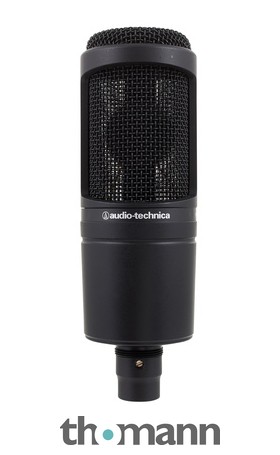
2. Audio-Technica AT2020
The Audio-Technica AT2020 is a practical condenser microphone for home-studio vocals and acoustic instruments. This entry is the XLR model, which needs an audio interface or mixer providing 48 V phantom power. AT2020 USB versions have different connections and specifications, so a similar name does not make them interchangeable offers.
Pros
- Straightforward fixed-cardioid recording
- Vocals and acoustic-instrument applications
- Supplied stand mount and pouch
- Metal body
- 48V XLR connection works with suitable interfaces
Cons
- 20dBA self-noise can matter for quiet sources
- No onboard pad, low-cut or pattern switch
Its fixed cardioid pattern emphasizes sound from the front, and the supplied pivoting stand mount and pouch cover basic mounting and storage. You still need a suitable stand, an XLR cable and, for close vocals, appropriate breath protection. Speak or sing into the side marked as the front, rather than treating it like an end-address handheld microphone.
Audio-Technica rates self-noise at 20 dBA. That is higher than the quieter studio condensers here and can matter for very soft sources or recordings that need substantial amplification. It does not mean the microphone can only work in a silent room or is unusable on stage. Room sound, placement and the rest of the recording chain are also important.
| Microphone Type | Condenser |
| Connector Type | XLR |
| Polar Pattern | Unidirectional Cardioid |
| Material Type | Metal |
| Audio Sensitivity | -37 dBV/Pa |
For ordinary vocal and instrument recording, the AT2020 keeps the controls simple: there is no onboard pad, low-cut switch or selectable pattern. Its diaphragm is 16 mm, so describing it as a conventional one-inch large-diaphragm design would be misleading. Choose it for a straightforward fixed-pattern setup, and compare a quieter or more adjustable condenser if your recordings specifically need those facilities.
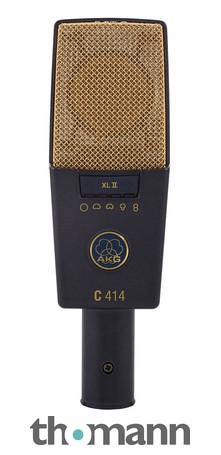
3. AKG C414 XLII
The AKG C414 XLII is a studio condenser for users who want more control over how a microphone captures the room and source. It offers nine patterns: five main directional choices and four intermediate settings. Changing the pattern can be useful for a solo vocal, a roomier recording or a shared microphone arrangement, provided placement is adjusted accordingly.
Pros
- Nine selectable polar patterns
- Pads and bass-cut settings
- Shockmount, case and pop filter in single-mic package
- 6dBA rated self-noise
Cons
- More controls to learn than a basic cardioid mic
- Requires suitable phantom power and mounting
Its 20 Hz to 20 kHz frequency range does not mean every setting is equally flat or ideal for every singer. The XLII has a presence emphasis associated with AKG’s C12-inspired voicing. The C414 XLS is a different version, so choose the tonal approach deliberately rather than assuming XLII and XLS are only different finishes.
The rear controls provide attenuation of 6, 12 or 18 dB for loud sources and selectable bass-cut settings to manage low-frequency pickup. The rated self-noise is 6 dBA. These facilities are useful for a varied studio, but the pad and filter solve specific problems; they do not replace setting input gain or dealing with an acoustically difficult room.
| Microphone Type | Condenser |
| Connector Type | XLR |
| Polar Pattern | Omni, Wide Cardioid, Cardioid, Hypercardioid, Figure-8 |
| Material Type | Metal |
| Audio Sensitivity | -33 dBV/Pa |
The single-microphone package includes a shockmount, case and pop filter. It needs suitable phantom power and a stand that supports the microphone and mount. This is a more involved choice than a basic cardioid condenser, rewarding a user who will actually use its patterns and controls. Check the offer carefully if you want one microphone rather than a matched stereo pair.
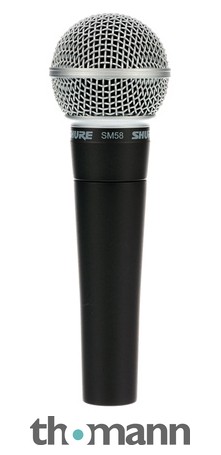
4. Shure SM58
The Shure SM58 is a familiar handheld dynamic microphone for live vocals. Its cardioid pattern and vocal-oriented frequency response make it a useful starting point for stage sound, rehearsals and straightforward recording. This is the standard XLR microphone rather than a wireless system or an SM58S version with an on/off switch.
Pros
- Handheld format for stage vocals
- Cardioid pattern supports appropriate monitor placement
- Metal construction
- Internal handling-noise isolation
- Built-in spherical wind/pop filter
Cons
- No USB connection; recording needs an appropriate input
The rounded grille contains a spherical wind and pop filter, while the internal pneumatic isolation helps control handling noise. These are practical features for a singer who holds the microphone. Keep the grille clear rather than cupping it, and place monitors appropriately: no microphone can guarantee freedom from feedback in every room.
The specified frequency response is 50 Hz to 15 kHz, with sensitivity of -54.5 dBV/Pa. Lower electrical output than many condensers means the preamp needs more gain for the same source; it does not mean the SM58 cannot capture quiet sounds or that it automatically ignores background noise. Close placement helps improve the voice-to-room balance.
| Microphone Type | Dynamic |
| Connector Type | XLR |
| Polar Pattern | Unidirectional Cardioid |
| Material Type | Metal |
| Audio Sensitivity | -54.5 dBV/Pa |
This remains a sensible live-vocal choice when you want a durable, straightforward microphone without phantom power. You can also record instruments with it; the SM57 is an alternative with a different grille and response rather than a universally better instrument microphone. Check package contents because some SM58 offers add a cable, while the bare-microphone offer does not.
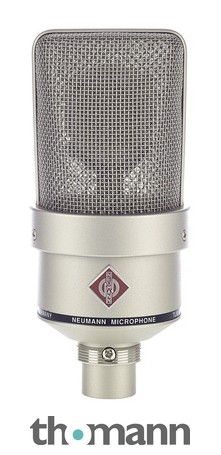
5. Neumann TLM103 Nickel
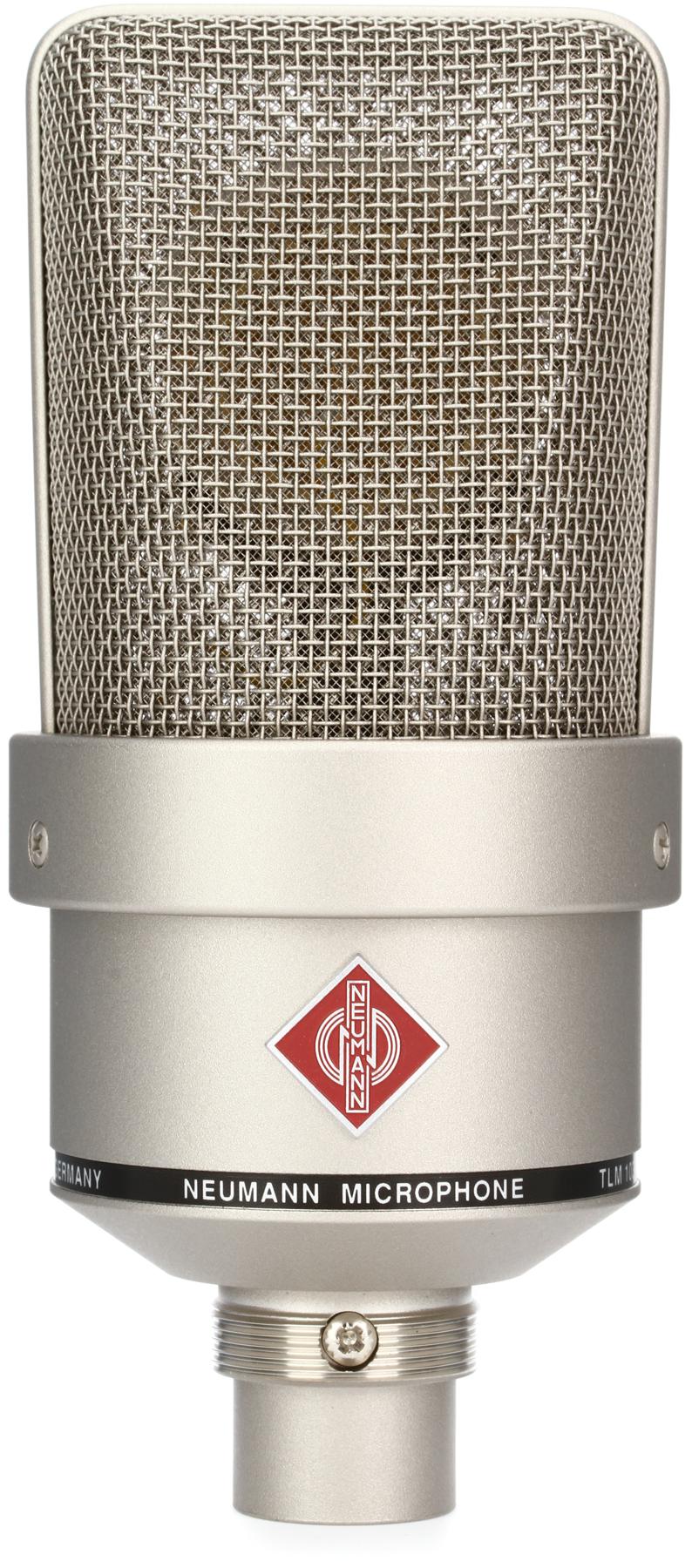
The Neumann TLM103 is a fixed-cardioid studio condenser for vocal and instrument recording. Its capsule design draws on the U87 family, but that does not make it a less expensive U87 with identical features or sound. The TLM103 has its own response and a single pattern, with a noticeable high-frequency presence lift.
Pros
- 7dBA rated self-noise
- High output sensitivity for suitable recording inputs
- Fixed-cardioid vocal and instrument recording
Cons
- Single polar pattern
- No onboard pad or filter
- Presence lift may not suit every voice
Neumann specifies 7 dBA self-noise and 23 mV/Pa sensitivity. That combination is useful for quiet passages and allows an appropriate interface to reach a useful level without unusually high gain. Low microphone self-noise does not remove computer fans, traffic or reflections; a quiet recording position and suitable room treatment still matter.
There are no onboard pattern, pad or filter switches. If you want to manage low-frequency rumble, use placement and appropriate recording-chain filtering. Its presence lift may help one voice sound clear but emphasize sibilance in another, so a high price or brand reputation is not a substitute for comparing it with your singer and recording setup.
| Microphone Type | Condenser |
| Connector Type | XLR |
| Polar Pattern | Unidirectional Cardioid |
| Material Type | Metal |
| Audio Sensitivity | 23 mV/Pa (approximately -32.8 dBV/Pa) |
The selected version is the single nickel microphone, not the black finish, anniversary edition or a shockmount bundle. Check what mounting accessories are included and plan suitable breath protection. It suits a studio that wants a low-noise fixed-pattern condenser, while users who need multiple patterns may get more practical flexibility from a different design.
6. Shure MV7+ Black
The Shure MV7+ is a current dynamic option for podcasts, voiceovers and close vocal recording, with both USB-C and XLR outputs. USB makes it convenient to connect to a compatible computer without a separate audio interface; XLR lets you use it with an existing recording chain. This is the black microphone, not a desktop-stand or boom-arm bundle.
Pros
- USB-C and analog XLR outputs
- Headphone monitoring
- Configurable USB Auto Level
- USB denoising and pop processing
- Supported software for deeper settings
Cons
- Digital processing does not affect XLR output
- Stand or arm not included in bare-mic offer
The USB path provides configurable Auto Level, a real-time denoiser, Digital Popper Stopper and other processing through Shure’s supported software. You can also use the headphone output for monitoring. These functions can simplify a speech setup, but listen to the results before using them for singing: processing that helps a podcast is not automatically right for a musical performance.
The XLR output is a separate analog signal and does not receive the USB digital processing. Do not buy it expecting the denoiser or automatic level control to appear at an ordinary mixer’s XLR input. The LED touch panel can mute the microphone, and software handles deeper settings. The embedded video shows the earlier MV7, whose USB connector and controls differ.
| Microphone Type | Dynamic |
| Connector Type | XLR, USB-C |
| Polar Pattern | Unidirectional Cardioid |
| Material Type | Metal |
| Audio Sensitivity | -55 dBV/Pa (XLR) |
Overall, the MV7+ suits someone who wants a compact hybrid recording workflow with optional speech processing. It still needs a suitable mount and thoughtful placement. It is not the MV7i, which adds an input for another source, or the XLR-only MV7X. Those differences matter more than the shared family name when choosing a complete recording setup.

7. RØDE NT1000
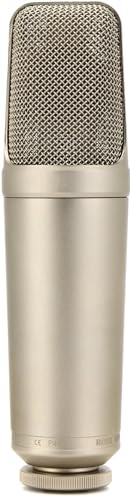
The RØDE NT1000 is a large-diaphragm studio condenser for vocals and instruments. It has a fixed cardioid pattern and a conventional XLR output, keeping the workflow straightforward when you already own a suitable interface. Its rated 6 dBA self-noise is a useful feature for quieter recording passages, rather than a claim that every room will sound quiet.
Pros
- 6dBA rated self-noise
- Fixed-cardioid vocal and instrument use
- Simple XLR recording workflow
- Supplied mount and pouch
Cons
- No onboard pad, high-pass filter or pattern switch
Cardioid pickup is least sensitive toward the rear, but it does not block all off-axis sound. Aim the front toward the source and consider where reflections or noise are coming from. The broad 20 Hz to 20 kHz response supports a range of sources, including voice, piano and drum overheads; microphone position still determines how much room and low-frequency energy you capture.
Use a suitable stand and 48 V phantom-power input. The supplied mount and pouch cover basic support and storage, while a pop filter or appropriate wind protection is useful for close vocal work. There are no onboard pad, high-pass or pattern controls, so this is simpler to operate than a multipattern condenser but provides fewer ways to adjust pickup at the microphone.
| Microphone Type | Condenser |
| Connector Type | XLR |
| Polar Pattern | Unidirectional Cardioid |
| Material Type | Metal |
| Audio Sensitivity | -36 dBV/Pa |
If you want a low-noise fixed-cardioid studio microphone, the NT1000 remains a useful option. Compare RØDE’s NT1 variants if their different self-noise, connection or package features better suit your workflow. The NT1000’s appeal is its straightforward XLR recording role; neither brand reputation nor a low-noise specification guarantees a perfect match for every singer.
How does a microphone work?
Microphones convert changes in air pressure into electrical audio signals. Sound causes a diaphragm to move, but the electrical mechanism depends on the microphone type. Moving-coil dynamic, ribbon and condenser microphones achieve this conversion in different ways.
Transducers convert one form of energy into another. A microphone converts acoustic movement into an electrical signal; it does not follow that every design moves a magnet. Understanding the type helps explain its power and connection requirements.
In a moving-coil dynamic microphone, diaphragm movement moves a coil within a magnetic field. In a condenser microphone, movement changes the capacitance between the diaphragm and backplate. Its electronics need power, commonly supplied by an appropriate phantom-power input.
What is frequency response?
Frequency response describes how the microphone’s output varies across low and high frequencies for a given sound pressure. A stated range gives only part of the picture: the response curve shows where sensitivity rises or falls within it. Absolute output sensitivity is a separate specification.
Frequency response is best examined as a curve as well as a range. There is no single minimum range that makes every vocal microphone good. Consider bass roll-off, presence emphasis and the source you want to capture, then compare the microphone’s response with actual recordings when possible.
Is the polar pattern that important on a microphone?
Polar patterns dictate a mic’s sensitivity to sound from various angles. Each pattern suits different uses. For instance, cardioid mics are ideal for vocals, capturing sound primarily from the front.
There are cardioid, super-cardioid, omnidirectional, figure-8, and wide cardioid polar patterns, each with unique angle focuses.
Cardioid mics are most sensitive at 0° and least at 180°, picking up sound mainly from the front. Super cardioid mics, while similar, offer more side rejection and slightly less rear rejection, making them more directional.
Omnidirectional mics capture sound from all around, providing 360-degree coverage. In contrast, Figure-8 microphones pick up sounds from the front and rear but reject those from the sides.
Finally, wide cardioid mics fall between cardioid and omnidirectional mics. They pick up sounds from all directions but focus more on those coming from the front.
What are the different types of microphones?
Dynamic microphones, large and small diaphragm condenser microphones, and ribbon microphones are the main types. Each converts sound waves to electrical signals differently, making them suitable for various miking purposes.
Many dynamic microphones are practical for live use because of their construction and handheld format. Their often lower electrical output may need more input gain, but sensitivity alone does not determine background pickup or resistance to feedback. Directionality, placement and the stage system matter.
Condenser microphones use powered electronics and can provide relatively high output sensitivity. Many XLR studio models require 48V phantom power from an appropriate mixer or interface, while USB models receive power through USB. Check the model’s requirements rather than assuming every condenser uses the same power arrangement.
Condenser microphones are often described as small-diaphragm or large-diaphragm designs. Both can record voices and instruments. Choose according to response, directional behavior, noise and practical mounting rather than assuming diaphragm size assigns one microphone exclusively to vocals.
Ribbon microphones generate a signal through movement of a conductive ribbon in a magnetic field. Many have a figure-8 pattern and a gentler high-frequency response, but voicing varies. Passive and active ribbon designs also have different power requirements; follow the particular microphone’s instructions.
What sets apart vocal mics from conventional ones?
A good vocal microphone suits the voice, recording position and intended use. A presence lift can help intelligibility, but it can also emphasize sibilance. A flatter response may suit another singer or processing approach better, so there is no universal frequency boost that every voice needs.
Compare the response curve with how the microphone sounds on the voice you are recording. Consider low-frequency proximity effect, high-frequency emphasis and room pickup. These practical differences matter more than choosing the widest range or strongest presence boost.
For live handheld vocals, the microphone should be comfortable to hold and resistant to handling noise. Studio vocal microphones are often designed to stay on a stand or shockmount, so a handheld shape is not a requirement for every good vocal recording.
What else do you need for recording apart from a microphone?
An XLR microphone needs a suitable microphone input, normally on an audio interface, mixer or recorder. Check gain and any phantom-power requirement. A USB microphone already includes conversion and can connect directly to a compatible device. Add the correct cable, stand, monitoring headphones and any breath protection your setup needs.
On a smart device or computer, use compatible recording software. A simple recording app can capture a voice track; a DAW (Digital Audio Workstation) provides more extensive recording, editing and mixing tools. Check device, connection and software compatibility before choosing a USB workflow.
What to look for when buying a vocal microphone?
Important factors in a vocal mic include type, quality, polar pattern, extra features, and price.
First, decide where and how you will use the microphone. A handheld dynamic can be practical on stage; studio recording may suit a dynamic or condenser depending on the source, room and input. Some condensers are designed specifically for stage vocals, so the type alone does not settle the choice.
Sound quality is crucial for clear and warm vocal recordings. Choose a microphone’s polar pattern and type based on how you’ll use it. Extra features like low and high-cut filters add versatility and should be considered.
Conclusion
Many vocal mics are available, which can be overwhelming if you’re not familiar with them. After reading this article, you’ll know what type of mic you need and the best options to consider.
My top recommendation is the Shure SM7B, a popular and versatile dynamic microphone perfect for vocal recording, podcasting, and broadcasting.
I recommend the Audio-Technica AT2020 as a budget-friendly option for studio-quality projects.