
Budget electronic drum sets have massively improved in recent years. Higher end sets can be quite pricey, and a more modest set might just be what you need.
Disclosure: This post contains affiliate links, meaning I may get a commission if you make a purchase through my links, at no extra cost to you. As an Amazon Associate I earn from qualifying purchases.
The Best Budget Electronic Drum Kits

Now on to the full list.
A budget electronic kit should fit the space you have and the technique you want to learn. These five choices cover mesh pads, a larger kick tower, a rubber-pad alternative and a compact all-in-one starter package. Check the exact package: headphones, a throne and extra cymbals are not included with every model.
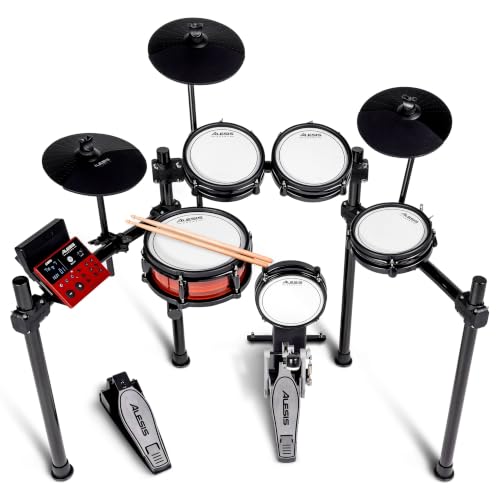
The Alesis Nitro Pro is my choice here for a player who wants room to develop without moving into a much larger kit. It has a 10-inch dual-zone mesh snare, three 8-inch mesh toms and an 8-inch kick tower. The larger tower is designed to accommodate double-kick pedals, although the kit itself supplies a single kick pedal.
The four-post steel rack and dual-zone drums distinguish the Pro from the lighter Nitro Max. It also has three 10-inch cymbal pads, including a crash with choke. I would choose it when drum-zone control and kick technique matter more than having the most compact package. It still uses a rack-mounted hi-hat with a separate controller rather than an acoustic-style moving hi-hat.
Its module includes BFD-derived sounds, Bluetooth audio for playing along and MIDI over USB. Bluetooth is for incoming backing audio, not a low-latency wireless headphone connection. Connect wired headphones or a suitable speaker system to hear the drums. A throne and headphones may need to be added separately, so compare the complete practice setup before buying.
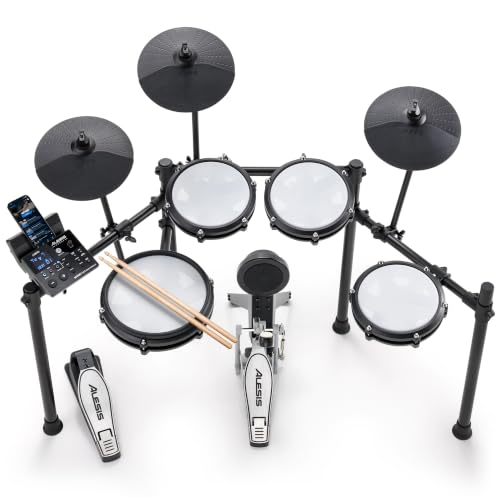
The Alesis Nitro Max is the smaller mesh-kit comparison with the Nitro Pro. Its 10-inch dual-zone snare, three 8-inch toms and kick tower give a beginner a familiar kit layout. The snare has a rim zone, while the tom pads are single-zone. Choose it when the core practice setup is enough and the Pro’s extra drum zones are less important.
The Nitro Max module has 32 factory kits, 16 user-kit slots and 441 sounds. It also accepts Bluetooth audio for backing tracks and sends MIDI over USB to compatible music software. Those are different functions: a computer can receive MIDI notes, while recording the module’s actual sound needs an appropriate audio connection.
The standard kit includes a four-post aluminum rack, kick pedal, hi-hat controller, sticks, cables and a power supply. The 6-inch kick pad is smaller than the Pro’s 8-inch tower. A throne, headphones and expansion pads depend on the exact retailer package, so do not assume a bundle image describes the standard kit.
I would choose the Nitro Max for a first mesh kit with useful sound and play-along features. The Pro offers more pad zones and a more substantial rack, while the simpler Turbo Max below saves space. None of them is silent: the pads and pedals still make mechanical noise in the room.
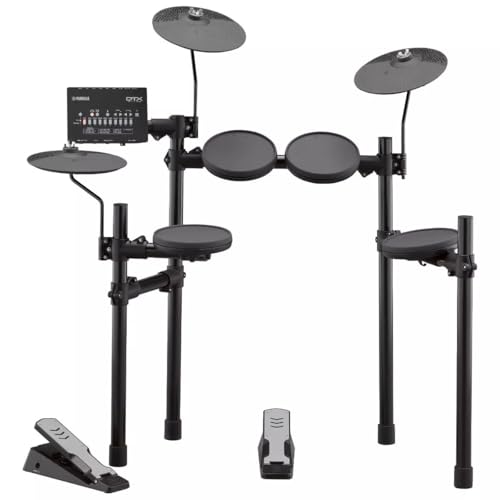
The Yamaha DTX402K offers a different approach: rubber drum pads, a simple module and Yamaha’s beaterless KU100 kick pedal. I would consider it when straightforward practice and a compact pedal arrangement matter more than the rebound of mesh heads.
The DTX402K remains a specific configuration within the 402 series. It should not be confused with the DTX432K or DTX452K, which have different kick or snare hardware. Compare the exact kit rather than borrowing features from the most expensive member of the family.
This kit has four rubber drum pads, a hi-hat pad, crash and ride pads, plus separate hi-hat and kick controllers. Its cymbal setup includes a choke-capable crash. The KU100 is a beaterless controller, so it does not give the same physical experience as a pedal striking a kick tower.
That arrangement can be useful for a new player practising in a small room, particularly when a striking kick beater is undesirable. The trade-off is a different pedal feel from an acoustic bass drum. Test the feel if you are choosing a kit specifically to develop acoustic-style foot technique.
The module has 10 editable drum kits and 10 training functions, with further control through Yamaha’s DTX402 Touch app on compatible devices. The kit sends MIDI through USB. Check current app and device compatibility rather than treating a smartphone as a required part of basic practice.
I would keep it on the shortlist for a player who prefers Yamaha’s simple practice approach. Its rubber pads and screenless module are the main compromises beside the mesh alternatives here. You can still practise timing and coordination without choosing the kit with the most sounds.
The Donner DED-200X is the current four-cymbal mesh package in this list. This recommendation is the five-pad/four-cymbal version, not the older 225-sound DED-200 listing or the three-cymbal DED-200 package. Check the X suffix and the box contents before comparing offers.
The selected package includes mesh drum pads, a kick tower and pedal, hi-hat controller, throne, headphones and sticks. Four cymbal pads provide a hi-hat, ride and two crash positions. I would choose this package when having the extra crash position and basic practice accessories together is useful.
Its module has 450 sounds and 31 kits. That is a catalogue of usable practice voices, not a guarantee that every sound will suit every player. Compare the pad layout, triggering and the sounds you actually intend to use rather than deciding from the largest sound count.
USB MIDI lets you trigger compatible computer software, while the aux input supports playing along with an external source. The selected bundle provides a practical starting setup, but leave room around the rack for a safe seated position. It is a different package from the DED-200 MAX and later Pro variants, so their pad sizes or functions should not be assumed here.

The Alesis Turbo Max is the compact starter package here. It includes four 8-inch mesh drum pads, three 8-inch cymbal pads, a foldable rack, two floor pedals, headphones, a stool and sticks. I would consider it for a first practice setup where a complete small package matters more than advanced pad control.
Its single-zone snare cannot trigger a separate rim sound. The kick and hi-hat pedals are switch-type controls rather than an acoustic-style kick tower and a continuous hi-hat system. That makes the setup simple, but it is a limitation for a player working on more detailed foot technique.
The Turbo Max module provides 12 preset kits and 110 sounds. You cannot create custom kits inside the module, although MIDI can be used with a compatible computer instrument. Bluetooth audio supports playing along with tracks; use wired headphones to hear the drums without wireless-audio delay.
Choose the Turbo Max for its compact, included-accessory approach. Choose the Nitro Max or Pro when a kick tower, more sound editing or additional pad zones will be useful. Do not buy a Turbo Max on the assumption that a different kick tower or acoustic-style hi-hat can simply be plugged in later.
Factors to Consider When Buying a Budget Electronic Drum Kit
Shopping for a budget electronic drum kit doesn’t mean sacrificing essential features. Consider these key factors when buying:
Quality
If you’re buying an entry-level electronic drum kit, pay attention to its build quality. Even an entry-level kit should be well-built. Look for a sturdy frame for durability and essential features for great sound.
Pads
Check the trigger pads and the module together. Mesh and rubber are different playing surfaces; neither tells you everything about sensitivity, rim zones or compatibility. Replacement and expansion pads must suit the module, so confirm support before assuming any standard-looking cable will make a pad work.
Sounds
Listen to the sounds through the headphones or speaker you will use. A module responds to trigger information from the pads, and its velocity settings affect how naturally soft and loud strokes translate. Brush techniques and positional detail are not supported equally by every entry-level kit, so test the techniques that matter to you.
Value For Money
Choosing a budget electronic drum kit should offer good value. Despite being budget-friendly, these kits can still be costly. Make sure you get your money’s worth.
MIDI
For computer use, distinguish MIDI from audio. USB MIDI records note and velocity messages that can trigger a software instrument. Recording the module’s own drum sound requires an audio connection or supported USB-audio feature; a USB port alone does not prove that audio recording is available.
Zones
Multiple zones let a compatible pad trigger different sounds, such as a snare head and rim. The zones are not necessarily concentric rings, and more zones do not automatically improve the basic playing feel. Compare the exact snare, tom and cymbal functions you need.
Choking Cymbals
Look for electronic drum kits with choking cymbals. You can hit and grab them to stop their sound, mimicking an acoustic kit. Cheaper options often lack this feature.
Conclusion
Electronic kits reduce the sound of the instrument through headphones, but sticks hitting pads and feet operating pedals still make noise. Bass-pedal vibration can travel through floors. Consider the room, neighbours and any isolation needed before treating a kit as a silent apartment solution.
With an electronic drum kit, you gain more control over your drum outputs than with an acoustic set. You don’t need drum microphones for each component to sound. Plus, an electronic drum kit is much more portable.
Entry-level kits can provide a useful foundation for learning, but the complete setup may also need a throne, headphones, a speaker or a floor mat. Check what is supplied, how the rack fits your body and whether the pedals support the technique you plan to practise. That is a more useful comparison than sound count alone.