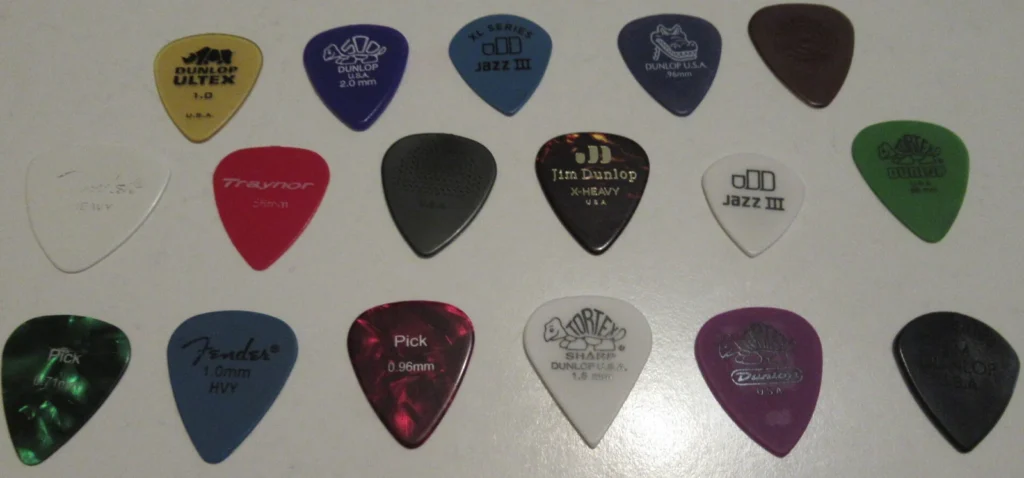
The best guitar pick is one you can hold comfortably and use without fighting the strings. A medium standard-shaped pick is a sensible starting point, with thinner nylon options for light strumming and smaller, heavier picks for focused lead work.
My top pick is the Dunlop Tortex Standard 0.73mm. Its moderate gauge and full-size outline make it an easy first choice for switching between chords and single notes.
My budget recommendation is the Fender Classic Celluloid 351 Medium. It gives you a traditional shape and enough spare picks to keep with your guitar.
The 6 Best Guitar Picks (2026)

A standard-size Delrin pick with a matte surface and moderate flexibility.

A traditional 351-shape celluloid pick in a medium gauge.

A thin nylon pick with a raised coarse-grid gripping surface.

A compact nylon pick with a pointed tip and molded edge.

A substantial Delrin pick with a machined bevel and a pointed playing end.

An Ultex pick with a low-profile grip and hand-burnished sculpted edges.
1. Dunlop Tortex Standard 0.73mm
The Dunlop Tortex Standard 0.73mm is my top recommendation for players who use one pick for chord work and melodies. Its standard outline gives you more to hold than a small jazz pick, while the yellow 0.73mm gauge occupies a useful middle ground between a thin strumming pick and a heavy plectrum. The matte Tortex surface is also worth considering if a polished pick tends to turn in your fingers.
This is the version I would start with for a first pick purchase alongside an electric or steel-string acoustic guitar. You can adjust how much tip projects past your thumb to change the feel without immediately buying another shape. Players who dig into thick strings or want very little flex should move to a heavier gauge; the 0.73mm model does not cover every playing style.
Check for the word Standard on the pack. Tortex Flow, Sharp and Jazz III versions have different outlines, so a matching thickness alone does not guarantee the same feel. A small pack is plenty while you decide whether the shape suits your hand.
Pros
- Moderate thickness for chords and single notes
- Matte gripping surface
- Color-coded gauge
Cons
- May feel too flexible for players who prefer a stiff lead pick
| Thickness | 0.73mm |
| Material | Delrin / Tortex |
| Shape | Standard |
| Color | Yellow |
2. Fender Classic Celluloid 351 Medium
The Fender Classic Celluloid 351 Medium is my budget pick for someone who wants a straightforward pack of familiar-shaped plectrums. Fender specifies its medium gauge at about 0.71mm. That puts it close to the Tortex above in thickness, but the different material and surface give you another useful starting point.
The 351 outline has a broad shoulder and a rounded playing end. I would choose it for a player learning chords, picking out melodies and still deciding how tightly to hold a pick. The 12-pack makes it easy to keep a few in your guitar case or practice space. The plain surface may be a drawback if your current picks slip during a song.
Buy the Medium version for this recommendation. Fender also offers thin, heavy and extra-heavy versions under similar product names. A color change is largely cosmetic; a gauge change can make the pick feel much more different.
Pros
- Traditional shape works for varied techniques
- Medium gauge offers some flex
- A 12-pack provides spares
Cons
- Smooth surface has no raised grip
| Gauge | Medium, approximately 0.71mm |
| Material | Celluloid |
| Shape | 351 |
| Recommended pack | 12 picks |
3. Dunlop Max-Grip Nylon Standard 0.60mm
The Dunlop Max-Grip Nylon Standard 0.60mm is the option I would try for relaxed acoustic strumming when keeping hold of the pick is the main concern. Its molded grid creates a much more pronounced gripping surface than the Fender or Tortex. The 0.60mm gauge also gives the tip room to bend as it passes through a chord.
That flexibility can be helpful if your strumming hand is tense and a thick pick keeps catching on the strings. It also changes the response: players who want firm resistance for palm-muted riffs or forceful single-note work may prefer the heavier models below. Extra texture cannot compensate for squeezing too hard, so keep enough pressure to hold the pick without locking your wrist.
Max-Grip comes in several gauges and in the small Jazz III shape. Choose Nylon Standard 0.60mm if you want the flexible, full-size pick described here.
Pros
- Raised grip gives fingers a textured surface
- Thin gauge suits light strumming
- Standard shape offers a generous holding area
Cons
- Thin tip can feel too flexible for hard single-note picking
| Thickness | 0.60mm |
| Material | Nylon |
| Shape | Standard |
| Grip | Molded coarse grid |
4. Dunlop Jazz III Red Nylon 1.38mm
The Dunlop Jazz III Red Nylon 1.38mm is my recommendation for guitarists who want a small pick for lead passages. The compact body and sharp tip let you hold the playing end close to your fingers. That can suit alternate picking and string changes when you prefer to expose very little of the pick.
Its shape is the reason to buy it, and also the reason to hesitate. If a standard pick already feels small, the Jazz III gives you even less material to grip. Broad acoustic strumming may feel awkward at first. Try it alongside your normal pick rather than assuming a switch will improve speed immediately; clean picking still depends on timing and a controlled hand.
This entry refers to the original red nylon Jazz III. Black Stiffo, Ultex, Max-Grip and Jazz III XL models are separate choices. The XL is worth investigating if you like a pointed end but want a larger holding area.
Pros
- Compact shape encourages a short exposed tip
- Pointed end suits single-note work
- Clearly defined red-nylon version
Cons
- Small size gives you less material to grip
| Thickness | 1.38mm |
| Material | Red nylon |
| Shape | Small Jazz III |
| Model family | 47-3N |
5. Ernie Ball Prodigy Standard 1.5mm Black
The Ernie Ball Prodigy Standard 1.5mm Black suits players who want a firm tip but do not want to move to a tiny jazz pick. Its Delrin body, machined bevel and pointed end make this a sensible alternative for riffs and single-note passages. The Standard outline also leaves more room for your fingers than the miniature versions in the Prodigy range.
I would choose it if a medium pick bends more than you like when digging into the strings. The trade-off is the lack of that thin-pick give during vigorous chord strumming. Use a lighter touch and listen to the attack before deciding whether it suits your rhythm parts. A thick pick gives a different response, not an automatic improvement in technique.
The exact pack here is six black Standard picks at 1.5mm, model P09199. Prodigy Sharp, Shield, Teardrop and Mini packs change the outline, and the white 2.0mm versions change the gauge.
Pros
- Thick pick for players who dislike flex
- Standard shape offers more holding area than a Jazz III
- Machined beveled edge
Cons
- Stiff 1.5mm gauge is less forgiving for loose strumming
| Thickness | 1.5mm |
| Material | Delrin |
| Shape | Standard |
| Pack / model | 6 picks / P09199 |
6. Dunlop Primetone Standard Grip 1.0mm
The Dunlop Primetone Standard Grip 1.0mm is the choice for players who already like a standard outline and want to experiment with a sculpted edge. Dunlop uses Ultex and hand-burnished edges on this range. The low-profile grip gives it a different surface from both a smooth celluloid pick and the coarse Max-Grip grid.
This is worth trying after you know roughly which thickness works for you. The 1.0mm gauge offers a firmer option than the first three picks, while the shaped perimeter changes how the tip meets and releases the string. I would compare it during a familiar picking pattern and a chord progression; whether the edge feels helpful is more useful than treating it as a premium upgrade you must have.
Choose Standard Grip 1.0mm. Primetone also includes smooth surfaces, triangles and jazz shapes. Check the pack quantity when comparing listings, since a small premium pack should not be mistaken for a bulk bag.
Pros
- Sculpted edges change the string-contact profile
- Low-profile gripping surface
- Standard outline with a heavier gauge
Cons
- Firmer feel may not suit players used to thin, flexible picks
| Thickness | 1.0mm |
| Material | Ultex |
| Shape | Standard |
| Surface | Grip version |
How to Choose a Guitar Pick
Start with a standard shape around 0.70–0.75mm if you have no strong preference. Use it for both a chord progression and a short melody. If the tip bends before the string moves the way you want, try a heavier pick. If strumming feels stiff and catches on the strings, try a thinner one.
Change one feature at a time. Comparing a thin standard nylon pick against a thick Jazz III changes thickness, material and shape together, which makes it harder to tell what helped. First compare two gauges in the same range, then try a different outline or surface.
What Pick Thickness Is Best for Acoustic Guitar?
For light steel-string acoustic strumming, a flexible pick around 0.50–0.70mm is a useful place to start. A medium or heavier pick may suit flatpicked melodies and players who want more resistance. These are starting points, not rules tied to the instrument.
Listen for pick noise as well as the notes. A very flexible tip can add an audible flap or click, especially when recording close to the strings. Your grip, angle and attack all affect that sound, so try a small adjustment before ruling out the pick.
Are Small Picks Better for Electric Guitar?
Small picks can help players who like holding the tip close to their fingers, but an electric guitar does not require a small pick. A standard outline works for rhythm parts and lead playing. Choose the Jazz III because its size suits your grip, rather than because its name suggests a particular genre.
If a pick rotates, check how much of its body sits between your thumb and finger. A different gripping surface may help, but leaving a long tip exposed can still make control harder. There is no need to grip tightly enough to strain your hand.
Should Beginners Buy a Variety Pack?
A variety pack is useful when you do not know your preferred gauge, provided you keep track of which pick you are using. Play the same short passage with each one and note whether it feels too flexible, too stiff or comfortable. Then buy spares of the version you actually use.
Check what the assortment contains. Some packs vary only the thickness; others mix materials and shapes. A small pack of one medium pick plus a thin and a heavy alternative is enough for a useful comparison. Large novelty assortments can make the choice harder.
When Should You Replace a Guitar Pick?
Replace a pick when its tip or edge no longer feels the way you want. Wear can round a pointed tip, leave a rough edge or change how it releases the string. There is no fixed replacement schedule that applies to every material and playing style.
Keep a spare in your case and compare it with the worn one occasionally. If you rely on a particular point for lead work, the difference may matter sooner than it does for gentle chord strumming.
Summary
My first choice is the Dunlop Tortex Standard 0.73mm for a practical balance of rhythm and lead use. The Fender 351 Medium is the budget starting point, while the Max-Grip Nylon 0.60mm is worth trying for flexible strumming and a textured grip.
Choose a Jazz III for a small pointed pick, the Prodigy Standard for a thicker full-size alternative, or the Primetone Standard Grip to try a sculpted edge. Buy a small pack first; comfortable control matters more than collecting every gauge.
For more guitar accessories, see our guides to acoustic guitar slides and guitar wall hangers.
Photo: Urban Versis 32 / Wikimedia Commons, CC BY-SA 4.0.
