
Choosing a bass amp for home practices can be tricky. You’ll need an amp with a deep, vibrant sound that keeps you motivated but also one that won’t annoy your neighbors with too much bass.
You’d need something lightweight and portable for home jams and rehearsals. Finding a bass practice amp with these features isn’t easy, but I can help.
My top pick is Fender Rumble 40 v3, an excellent 40-watt combo practice amp with punchy low frequencies.
For tighter budgets, my top pick is the Fender Rumble 25 v3, offering 25 watts of power.
The 7 Best Bass Practice Amps (2026)


Let’s look at them in more detail:
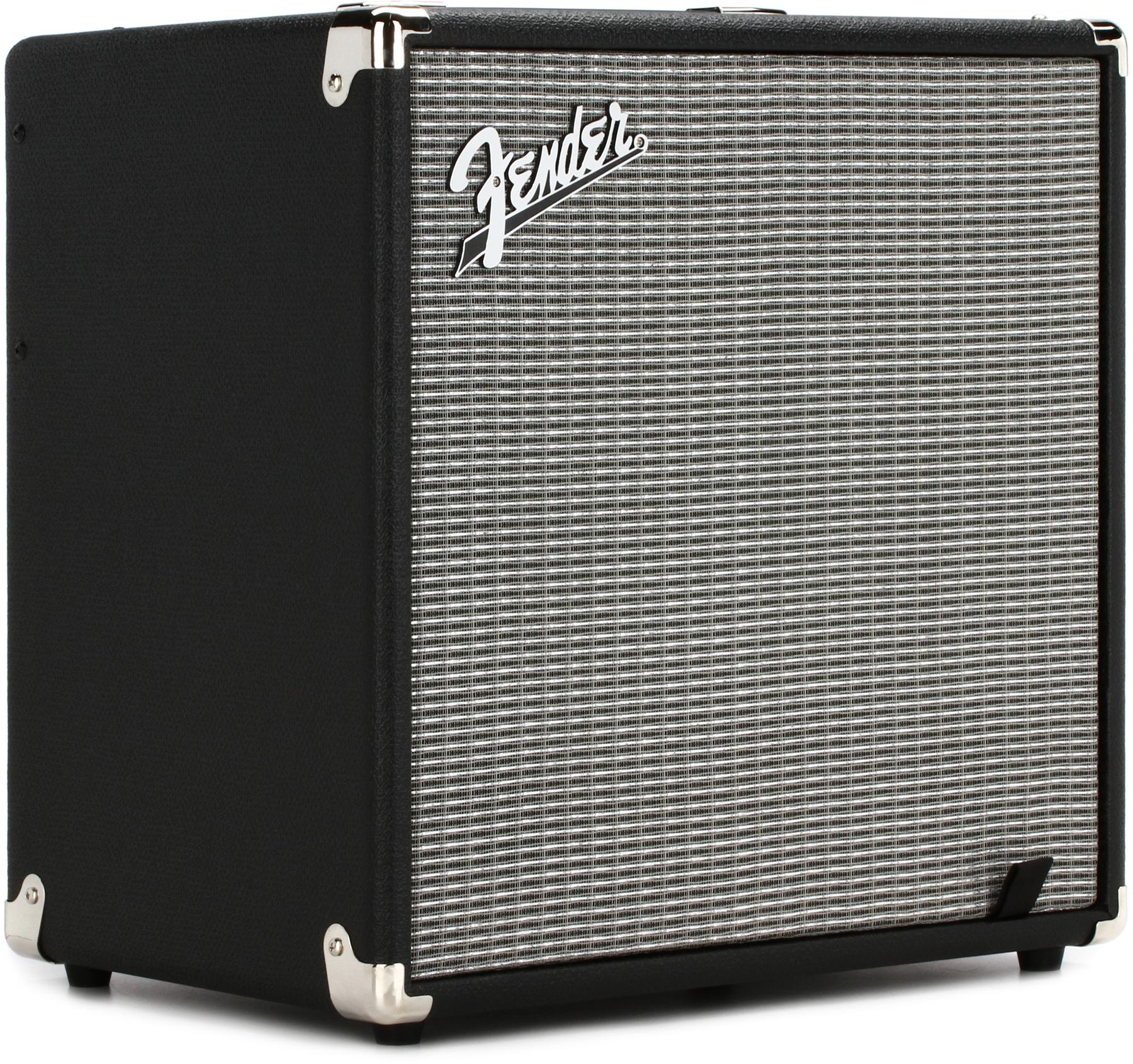
1. Fender Rumble 40 v3
The Fender Rumble 40 v3 is my top pick for players who want a straightforward practice amp with room to shape the sound. This 40W combo has one 10-inch speaker, four-band EQ and three voicing buttons. Those buttons change the tone; they are not three separate channels.
Pros
- High build quality
- Great punchy bass tones
- Multiple connection options
- Relatively compact and lightweight
Cons
- No built-in effects beyond overdrive
Gain, Drive and Level controls work alongside Bass, Low Mid, High Mid and Treble EQ. Bright, Contour and Vintage buttons offer quick alternatives to the basic sound. You can engage overdrive from the panel or with a compatible optional footswitch.
Fender lists the combo at 18lb, making it a manageable carry for an amp with a 10-inch driver. Try it at normal practice volume with your own bass. The useful test is whether you can hear the notes clearly without turning it up enough to disturb the household.
| Power | 40W |
| Type | Solid state |
| Speaker | 1 x 10-inch |
| Expansion | No extension speaker output |
| Tone controls | Gain, Drive, Level, four-band EQ, Master |
| Operation | Panel controls and voicing buttons |
| Carrying weight | 18lb |
An AUX input accepts backing tracks, and a headphone output allows quieter practice. The balanced XLR output is an advantage if you later need to send the bass to a PA. Its 40W rating alone does not guarantee enough headroom for a rehearsal with a loud drummer.
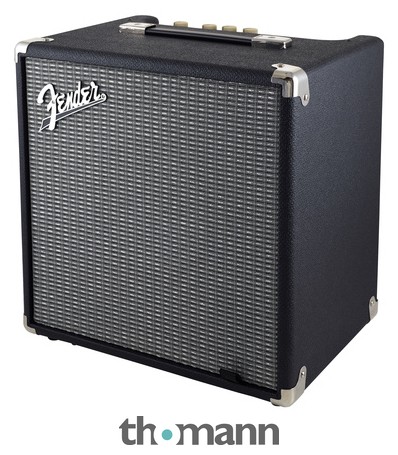
2. Fender Rumble 25 v3
The Fender Rumble 25 v3 is a simpler alternative to the Rumble 40. Its 25W amplifier and single 8-inch speaker suit home practice, while three-band EQ, overdrive and Contour controls offer useful tone changes. It is smaller, although at 21lb it is heavier than the Rumble 40.
Pros
- Compact and lightweight
- Good and warm tones
- Great value for the price
Cons
- Not very loud
- No gain control
The three-band EQ uses Bass, Mid and Treble knobs, with separate push buttons for overdrive and Contour. There is no separate Gain knob, so the controls are more limited than on the Rumble 40. That can be an advantage if you want to plug in and practice without navigating presets.
This is primarily a home practice amp. It may suit a quiet jam, but the band’s volume matters much more than the room’s size. Do not buy it assuming that 25W will keep up with a drum kit or cover a concert without suitable reinforcement.
| Power | 25W |
| Type | Solid state |
| Speaker | 1 x 8-inch |
| Expansion | No extension speaker output |
| Tone controls | Volume, three-band EQ, overdrive, Contour |
| Operation | Simple panel controls |
| Carrying weight | 21lb |
Fender 25 v3 features a headphone jack for quiet practice and an Aux input for playing along with your favorite tracks. It’s a fantastic, budget-friendly amp, perfect for beginner bassists needing an affordable, portable practice amplifier.

3. Hartke HD50
The Hartke HD50 is a 50W practice combo with a single 10-inch HyDrive speaker. Its paper/aluminum cone construction provides a different speaker design from the Fender options. Volume and three-band EQ controls keep the panel simple, with auxiliary input and headphone output for practice.
Pros
- Clean and powerful sound
- High build quality
- AUX input and headphone output for practice
Cons
- 34lb weight is substantial for a practice amp
- Relatively low sonic versatility
Hartke identifies the HyDrive cone as a combination of paper and aluminum. The current HD50 specification does not support the previous claim about neodymium magnets. A built-in limiter is another useful feature, although it does not make excessive volume or extreme bass boost a good idea.
The HD50 has no built-in overdrive or modeling menu. A suitable pedal can add drive if you need it, while the basic controls suit players who mainly want a clean practice sound. Try its available headroom with the group before using it for a rehearsal or small gig.
| Power | 50W |
| Type | Solid state |
| Speaker | 1 x 10-inch HyDrive |
| Expansion | No extension speaker output |
| Tone controls | Volume, Bass, Mid, Treble |
| Operation | Simple panel controls |
| Carrying weight | 34lb |
Hartke lists a weight of 34lb (15.4kg), so it is substantially heavier than the Rumble 40. Check the carrying weight as well as the dimensions if the amp will travel regularly. It offers simple tone shaping rather than a broad set of effects.
I recommend considering the HD50 for players who prefer a 10-inch speaker and a simple clean practice setup. Its AUX input is useful for backing tracks and the headphones are useful for quieter sessions. Match its headroom to the actual rehearsal before treating it as a gigging amp.

4. Ampeg Rocket Bass RB-110
The Ampeg Rocket Bass RB-110 replaces the previously listed BA-110 v2. This 50W combo has a single 10-inch speaker, three-band EQ and SGT overdrive. It retains the appeal of a straightforward Ampeg practice amp with a current 50W combo and SGT drive controls.
Pros
- Simple and practical bass amp
- SGT overdrive with Grit and Level controls
- Normal and -15dB inputs
- Great value for the price
Cons
- No XLR direct output on the RB-110
The RB-110 has separate Grit and Level controls for SGT overdrive, alongside Bass, Mid and Treble EQ. Normal and -15dB input options accommodate different bass output levels. It uses the Rocket Bass cabinet format rather than the older BA model’s angled monitor design.
An auxiliary input lets you connect backing tracks and the headphone output is useful at home. There is no XLR direct output on this size of Rocket Bass combo, so do not assume it has the connections of the larger RB-112 or RB-210. Confirm the exact revision when ordering.
| Power | 50W |
| Type | Solid state |
| Speaker | 1 x 10-inch |
| Expansion | No extension speaker output |
| Tone controls | Volume, three-band EQ, Grit, Level |
| Operation | Simple panel controls |
| Carrying weight | Confirm exact revision |
Choose the RB-110 if you want simple Ampeg controls and built-in drive for practice. Its 50W rating gives more nominal output than the smaller 25W options, but it still needs to be tried with the band before you rely on it for loud rehearsals or gigs.

5. Orange Crush Bass 50
The Orange Crush Bass 50 combines a 50W amplifier with one 12-inch speaker. Its analog Gain and Blend controls make it interesting for players who want clean and driven sounds without a modeling menu. Parametric mid control, an effects loop and a tuner add practical flexibility.
Pros
- Multiple connection options
- Great versatile tones from clean to distortion
- Sturdy and elegant build
- Feature-packed
Cons
- High-end product
- No extension-speaker or XLR direct output
The three-band EQ includes a mid-frequency control, and Gain and Blend set the balance of driven and clean sound. The connections include an effects loop, AUX input and CabSim headphone output. There is no extension-speaker output or XLR DI: the headphone socket must not be used to drive a passive cabinet.
The 12-inch speaker makes this a larger practice option, rather than evidence that it must be louder than every other 50W amp. Check its carrying weight and clean headroom in person if possible. Headphones are the more considerate option for late practice in a shared home.
| Power | 50W |
| Type | Analog solid state |
| Speaker | 1 x 12-inch |
| Expansion | No extension speaker output |
| Tone controls | Volume, three-band EQ, Mid Freq, Blend, Gain |
| Operation | Panel controls with parametric mids |
| Carrying weight | Check carrying weight |
Orange Crush Bass 50 is a versatile, quality amp recommended for bass players with a sufficient budget.
6. Blackstar Debut Bass M25
The Blackstar Debut Bass M25 is a current 25W home practice combo with an 8-inch speaker. Its clean/drive controls and practice connections make it a useful smaller alternative to the previously listed Peavey MAX 100. This is a smaller-output alternative for home use, not a power upgrade over the old 100W choice.
Pros
- 25W output for home practice
- Durable construction
- Easy to use
- Clean and Drive channels with three-band EQ
- Line/headphone output for quieter sessions
Cons
- Lower headroom than the former 100W option
- Signature finish may not suit every player
The M25 is the Marco Mendoza signature version of the Debut Bass 25, with a red finish and his logo. Its practical appeal is the simple clean/drive operation, three-band EQ and practice connections. Buy it for those features and the way it fits your sessions rather than assuming a signature finish changes your playing.
Low, Mid and High controls provide the main tone adjustment. Clean and Drive channels let you move between a cleaner sound and grit without learning a preset system. The controls offer fewer sound-shaping options than the previously listed Peavey, which may suit a player seeking a simpler home amp.
The line input accepts a playback source, and the line/headphone output supports quieter practice. The 25W amplifier and 8-inch speaker are aimed at everyday sessions. If the old 100W Peavey’s rehearsal headroom was the feature you needed, this lower-output replacement will not be equivalent.
| Power | 25W |
| Type | Solid state |
| Speaker | 1 x 8-inch |
| Expansion | No extension speaker output |
| Tone controls | Volume, Low, Mid, High, Clean/Drive |
| Operation | Simple clean/drive controls |
| Carrying weight | Confirm exact M25 package |
Check the exact M25 model and the included accessories before ordering. The ordinary Debut Bass 25 and smaller Debut Bass 15 are separate variants. This M25 earns its place as a currently available clean/drive home option, while the larger combos above are worth considering if band practice matters more.
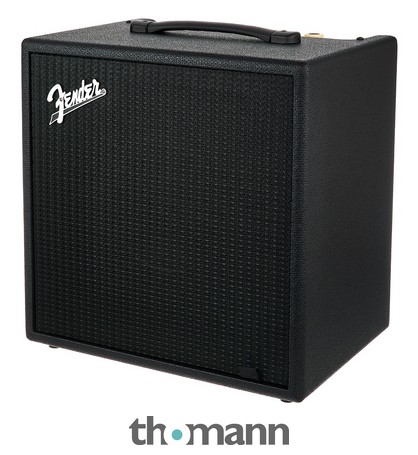
7. Fender Rumble LT25
The Fender Rumble LT25 is the modeling option in this list. It combines 25W output and one 8-inch speaker with 15 amp types, 20 effects and 50 preset slots, including 30 preloaded presets. A built-in chromatic tuner and USB recording connection make it useful for varied practice routines.
Pros
- Versatile tones with many effects, and presets
- Feature-packed
- Great sound
Cons
- Not meant for loud playing
Gain, three-band EQ and Master controls work alongside the preset selector. An AUX input and headphone output support backing tracks and quieter sessions. The compatible footswitch is optional rather than included. USB connects to a computer for recording and firmware updates; Fender Tone support is through the desktop application, not Bluetooth phone control.
The LT25 suits beginners or students who want to compare amp models and effects without buying a set of pedals. Save a useful clean sound early so that changing presets does not take over the whole practice session. Its flexibility is valuable if you actually use the different sounds.
| Power | 25W |
| Type | Solid state with modeling |
| Speaker | 1 x 8-inch |
| Expansion | No extension speaker output |
| Tone controls | Gain, three-band EQ, Master, preset selector |
| Operation | Panel controls and preset menu |
| Carrying weight | 19.2lb |
The 25W output suits home practice and quiet sessions. It is not a substitute for a larger rig at a loud rehearsal. Try the headphones and controls before buying if possible, especially if most of your playing will happen at low room volume.
What is a practice amp?
A practice amp is a low-power amp with features and tonal versatility, ideal for playing and practicing at low volumes in your house. These amps are typically compact and lightweight, making them easy to carry and use anywhere.
Should you invest too much in a practice amp?
Investing in a quality amp is essential for staying motivated. You don’t need to break the bank, but an amp with enough sonic versatility and high sound quality will encourage you to play more, which is key to progressing with your instrument. Sound quality and versatility can make all the difference.
A good amp is as important as a quality instrument. Consider your budget and aim for a versatile, high-quality amp. Since practice amps will be used at low volumes, focus on versatility and quality rather than power.
What are the features to look out for in practice amps?
When choosing a practice amp, consider the power output, speaker size, tone controls, sonic versatility, warranty, and price. A quality bass practice amp balances these factors well.
Amps in the 25–50W range are common home choices, but the master-volume behavior and headphone connection matter more than a fixed wattage rule. An 8-inch driver can suit practice at modest levels; larger drivers can provide a different room sound but also make the amp heavier.
Though a large speaker doesn’t always promise better sound quality, small speakers typically struggle with bass. They find lower-end frequencies challenging to manage. Opt for a medium amp for balanced sound.
If the amp travels regularly, compare its actual weight and dimensions. For band use, check clean headroom at the group’s normal volume. More power and a larger speaker system can help, but neither guarantees a better sound or enough output for every rehearsal.
Tonal flexibility comes from usable controls rather than simply counting knobs. Three-band EQ is a useful starting point, while voicing buttons, drive or modeling can add options. Choose a panel you can adjust easily while concentrating on the bass part.
To get an amp that lasts, focus on construction quality and the warranty. Look for a model with a long warranty and durable build. Price matters too. Since these amps are for practice and don’t need high power, you won’t have to spend a lot.
How many watts do I need for a bass practice amp?
For home practice, a 25W amp may be plenty, particularly with headphones available. A drummer or louder jam can require considerably more headroom. For gigging, consider the whole band, PA and monitoring setup instead of treating 50W as a universal threshold.
Does bigger mean better when it comes to bass practice amps?
Bigger amps don’t always mean better bass practice amps. Bass amps need more power to handle low-end frequencies compared to guitar amps, often leading to larger sizes. However, balance matters: practice amps should still be compact and lightweight for easy portability.
Summary
Choosing a bass practice amp can be challenging. Consider factors like power output and sonic versatility since these amps will support your growth as a bass player. High-quality sound keeps you motivated, making practice sessions more enjoyable.
Choose the amp that matches your practice volume, connections and carrying needs. Try it with your bass when possible and compare current offers, accessory requirements and warranty terms before deciding.
My top pick is the Fender Rumble 40 v3 for its balance of sonic versatility, power, ease of use, and Fender quality.
If you’re looking for a more affordable option, check out Fender Rumble 25 v3. It offers great value with plenty of features for home practice.