
Starting your journey with the Native American flute can be thrilling yet confusing with many options on the market. I’ll help you choose the right Native American flute to develop your skills and enjoy a rewarding musical experience.
Disclosure: This post contains affiliate links, meaning I may get a commission if you make a purchase through my links, at no extra cost to you. As an Amazon Associate I earn from qualifying purchases.
The Best Native American Flute for Beginners


Let’s look at these in more detail.
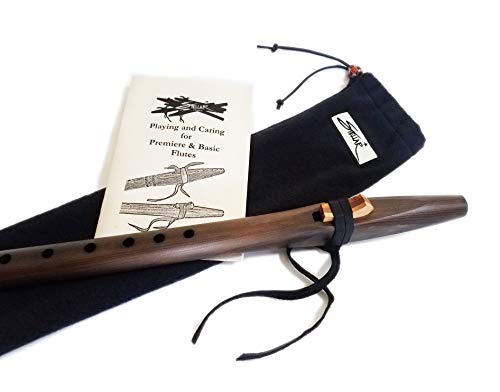
The Basic A is a useful starting point for beginners who want the smaller finger stretch in Stellar’s Basic range. It is about 21 1/2″ long, with a 7/8″ bore. Finger-hole centers are approximately 1″ apart, with the first hole around 9 3/4″ from the mouth end. Each Basic A flute has natural grain variation, so its appearance may differ from online images.
The selected flute is iron-stained western red cedar, not a different wood from Stellar’s unstained heartwood version. It uses A-minor pentatonic tuning with the standard A440 reference. The selected package includes an instruction book and flute bag. A finished wooden flute still needs appropriate drying and storage; a protective finish does not make it immune to moisture damage.
Choose it for reach and the included learning materials rather than a promise that every small hand will fit. The lower G model has wider spacing, while a differently designed A flute can have different dimensions despite sharing the key. Check the measurements and exchange terms if buying for someone else.
The Basic G Native American style flute offers a lower starting pitch than the Basic A. Its unstained western red cedar shows the natural heartwood color and grain. It is the medium-sized option in Stellar’s Basic range, so it is worth considering when you can comfortably cover the holes and prefer the G-minor register.
The Basic G measures about 23 1/2″ long. Its finger-hole centers are approximately 1 1/8″ apart, with the first hole about 10 1/8″ from the mouth end. That extra reach matters more than the word beginner on a listing. The selected package includes an instructional book but does not include a flute bag; allow for a suitable bag separately.
Compare the package contents carefully if choosing a Basic G, because listings with a bag and listings without one are separate bundles. Iron-stained and golden-cedar G packages are other appearances to compare, but there is no reason to change the selected heartwood finish merely because another listing is newer.
If you want a flute made by an Indigenous artisan, consider the Jonah Thompson Natural Eagle pack. Direct sellers identify Thompson as a Diné (Navajo) musician and flute maker from Kayenta, Arizona. This selected model is a six-hole, approximately 18-inch A-minor flute made from ponderosa pine, with a carved eagle wind block.
The relatively compact body makes it worth comparing for a smaller hand span, but overall length alone does not guarantee comfortable finger coverage. The selected Natural Eagle pack includes a woven bag and an introductory booklet. Check that exact package and block design; other animal carvings and stained finishes are separate selections.
This is a choice for personal playing and appreciation of the maker’s work. If precise ensemble tuning is your main goal, ask about the individual flute’s tuning and return arrangements before buying. A seller’s description of a handmade instrument should not be treated as a guarantee that every example behaves identically across its entire range.
Buyer’s Guide: Factors to Consider When Buying a Native American Flute
Other makers, including High Spirits, offer beginner-oriented flutes with different dimensions and accessories. Compare the exact model rather than assuming one brand will sound better for everyone. If you’re looking for the best Native American flute for beginners, consider these key factors:
1) Size and Keys
If you’re starting to play the flute, consider its size and keys. Flutes come in different keys. For instance, the Love Flute is available in A or G keys. Alternatively, you can choose flutes in lower keys like F#, F, or E.
Consider the size when choosing a beginner’s flute. Lower-key models often require more reach, but hole placement varies by maker. Start with a size you can hold with relaxed hands and fully covered holes. A lower register is a musical preference, not proof that a flute has better sound quality.
2) Look for Good Wood Materials
Flutes come in various materials. If you’re shopping for the best flutes, you’ll often choose among different wooden types. Cedar is a common choice in the flutes above. Consider the finished instrument’s weight, its condition and the maker’s care instructions. Moisture absorption is not a feature to seek out; breath condensation needs to be managed.
Wood choice can be part of a maker’s design, but it is not a reliable sound label on its own. Bore, voicing, tuning and playing pressure also matter. Listen to recordings of the exact model in the intended key rather than assuming cedar always sounds mellow or walnut always sounds bright.
If you choose big flutes, opt for lightweight wood to avoid tiring your hand while playing. Many tonewoods are available for making wooden flutes.
Dense woods such as African blackwood and boxwood also appear in other wooden-flute traditions. That does not make them the natural upgrade path for these instruments. For a first Native American style flute, comfortable reach, dependable tuning and clear care instructions are more useful priorities than a long tonewood list.
3) Consider Your Experience Level
Your playing skill could be beginner, intermediate, or advanced. If you’re a beginner, you’ll play basic pieces and work on foundational skills. You need easier-to-handle flutes, avoiding large ones that are hard to manage.
Once you’re ready to develop further, build on comfortable hole coverage, steady breath and clear note changes. There is no fixed three-year timetable for becoming an intermediate player. Choose another key when it supports the music you want to play and your hands can manage its spacing, rather than buying a larger instrument to match a supposed experience level.
Additional Tips for Newbie Native American Flute Players
If you’re a first-time flute player, you might find playing the flute challenging. You may feel uneasy as you try to position your fingers on the holes. This is a common feeling for beginners. However, these basic tips for beginner Native American Flute players can help:
1. Selecting a flute you can hold comfortably is crucial. Check that your fingers seal the holes without strain before concentrating on speed or extra notes.
2. You do not need to read music to begin with a pictorial fingering chart. The ducted airway can help you produce a first tone, but breath control and clean fingering still need practice.
3. When choosing a flute, listen to its sound. Pick the one that resonates well with you.
4. Skills from one flute can transfer to another, but check the new fingering chart, key and hole spacing rather than assuming every instrument is identical.
5. Experience with another wind instrument can help with breath control. Begin gently and adjust to this flute’s response instead of applying the same pressure automatically.
Care matters as well as materials. Let breath moisture dry before putting the flute away, and protect it from direct heat and abrupt temperature changes. Follow the specific maker’s directions for moving the block or applying any oil; a care treatment intended for one finish may not suit another.
Conclusion
The flute is one of the oldest musical instruments and comes in various designs and materials. Many modern Native American style flutes offer a beginner-friendly airway and a pentatonic fingering pattern. Knowing a few essential factors helps you find the best Native American flute.
Hold these flutes in front of you to play. Their two-chamber design and wind block guide air toward the sounding edge, so you do not form the same lip-directed air jet used on a transverse flute. A relaxed seal and controlled breath still matter. Native American style describes the instrument design; if Indigenous authorship is important to your purchase, check the named maker and provenance separately.
Lynnae McConaha says
I am looking for a beginner flute for my grandson. We’re wanting a more melodic flute made from cedar. We are wanting lower notes and I’m see the key of G is good. I wish we could hear the sounds before purchasing! Please guide us.
Poietes says
I have a Stellar G flute and highly recommend it to you.