A replacement 12-inch guitar speaker can change an amp’s sound and weight, but it must first match the amplifier and cabinet. These picks cover different tonal goals; the correct impedance, power handling and mounting fit determine which one you can use.
My top pick is the Celestion G12M-65 Creamback. Its 65W rating and warm midrange make it a useful starting point for a compatible combo or cabinet aimed at classic guitar tones.
My budget pick is the Jensen MOD 12-70. Its 70W rated power and three impedance versions make it a flexible budget candidate for a compatible guitar amp.
The 5 Best 12-Inch Guitar Speakers (2026)

Its 65W rating and warm midrange make it a useful starting point for a compatible combo or cabinet aimed at classic guitar tones.

Its 70W rated power and three impedance versions make it a flexible budget candidate for a compatible guitar amp.

Its prominent guitar-focused mids and 100dB sensitivity suit a compatible rig where projection is part of the goal.

Its bright upper response and classic American voicing make it a candidate for compatible clean-oriented amps.
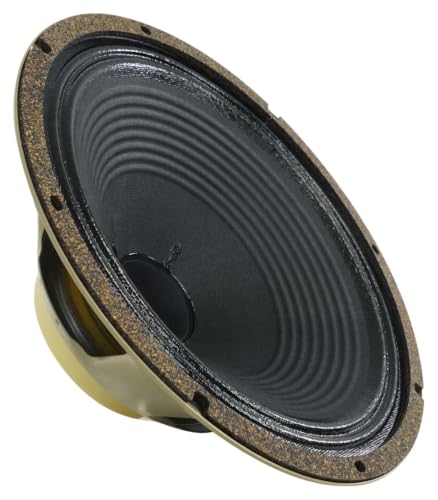
Its neodymium magnet makes it a useful candidate when carrying the amp matters as much as changing its sound.
1. Celestion G12M-65 Creamback
The G12M-65 Creamback is my starting choice for classic rock and blues rigs where a warm, mid-focused speaker makes sense. Celestion developed it around the G12M family’s character with greater power handling. Its 65W rating gives it a different application range from a lower-rated Greenback, though your amplifier’s output and intended use still determine whether it is suitable.
I would choose it when the existing speaker feels too sharp and you want a more vintage-oriented direction. Its published 97dB sensitivity is lower than the Vintage 30’s 100dB figure, which can matter when comparing loudness from the same amp. It is a colored guitar driver, so it is not the right substitute for a full-range modeler monitor. Check depth, mounting holes and the correct impedance version before treating it as a drop-in replacement.
Pros
- Vintage-oriented midrange
- 65W rating
- 8Ω and 16Ω versions
Cons
- Lower sensitivity than the Vintage 30 means less volume at the same amp power
| Diameter | 12 inches |
| Power handling | 65W |
| Impedance versions | 8Ω, 16Ω |
| Sensitivity | 97dB |
| Magnet | Ceramic |
2. Jensen MOD 12-70
The Jensen MOD 12-70 earns the budget slot as a straightforward replacement option when the original driver is worn out or the amp’s present sound is not working for you. Jensen describes a defined overdrive response and lists 4Ω, 8Ω and 16Ω variants. That wider choice is useful, especially when an amp needs a load that the Celestion choices here do not offer as a single driver.
Buy it for compatibility and a practical tonal change rather than expecting it to imitate one famous vintage speaker. The specification table uses the 8Ω version’s sensitivity; the other impedance variants have different published values. Also distinguish the 70W rated figure from Jensen’s higher musical-power figure. The rated number is the sensible comparison here. A budget speaker still needs correct cabinet fit and enough power handling for the amplifier connected to it.
Pros
- Three impedance versions
- 70W rated power
- Practical budget replacement
Cons
- The 8Ω version has lower sensitivity than the Vintage 30
| Diameter | 12 inches |
| Rated power | 70W |
| Impedance versions | 4Ω, 8Ω, 16Ω |
| Sensitivity, 8Ω | 97.5dB |
| Magnet | Ferrite |
3. Celestion Vintage 30
The Vintage 30 is the choice I would consider for a rock rig that needs a stronger midrange voice. Celestion rates it at 60W, despite the 30 in its name, and specifies 100dB sensitivity. It is useful when you want the speaker to contribute a recognizable guitar character rather than reproduce a processor’s cabinet simulation neutrally.
Compare it with the Creamback according to your amp’s existing balance. A mid-forward speaker can help a guitar part remain audible among bass and drums, but adding more presence to an already forward rig may not suit you. The Vintage 30 is also heavier than the lightweight Neo choice below. Buy the impedance version your amplifier and cabinet require; a recognizable model name does not make every variant interchangeable.
Pros
- Strong midrange character
- 100dB published sensitivity
- 60W power handling
Cons
- Strong mids can sound too pronounced in an already mid-heavy amp
- Heavier than the Neo Creamback
| Diameter | 12 inches |
| Power handling | 60W |
| Impedance versions | 8Ω, 16Ω |
| Sensitivity | 100dB |
| Magnet | Ceramic |
4. Jensen C12N
The C12N is worth considering when clear highs and an American-style voice are closer to your target than British rock mids. Jensen’s description points toward bright clean sounds and a stronger mid bite with overdrive. That makes it an interesting option for clean chord work, blues and a compatible amp that you want to keep lively at the top.
It is rated at 50W, which is a real limit to consider when choosing a single-speaker cabinet or combo replacement. The 4Ω, 8Ω and 16Ω versions expand the matching options, but their published sensitivity values differ. Use the 8Ω figure here only when comparing that variant. If your current setup already has too much treble, a brighter speaker may move you further from the sound you want; consider the Creamback direction instead.
Pros
- American-style voicing
- Three impedance versions
- Clear clean and crunch role
Cons
- Bright voicing can make an already trebly amp sound harsh
- 50W rating is too low for some single-speaker amp setups
| Diameter | 12 inches |
| Rated power | 50W |
| Impedance versions | 4Ω, 8Ω, 16Ω |
| Sensitivity, 8Ω | 97.7dB |
| Magnet | Ferrite |
5. Celestion Neo Creamback
The Neo Creamback is the speaker I would consider when a compatible combo or cabinet is becoming uncomfortable to carry. Celestion uses a neodymium magnet to reduce weight and places its voice between the G12M-65 and G12H-75 Creambacks. Its 60W rating and 97dB sensitivity give you a clear starting point for checking the electrical match.
Choose it for transport as well as tone, especially when replacing several heavy drivers. The cabinet itself still contributes weight, so changing one speaker cannot transform every cumbersome amp. Nor should you expect the Neo to sound identical to the ceramic G12M-65. Check its actual mounting dimensions against your cabinet before ordering, then choose 8Ω or 16Ω according to the required total load rather than whichever listing appears first.
Pros
- Lighter magnet design
- Creamback-family voicing
- 8Ω and 16Ω versions
Cons
- No 4Ω version for amps that require one
| Diameter | 12 inches |
| Power handling | 60W |
| Impedance versions | 8Ω, 16Ω |
| Sensitivity | 97dB |
| Magnet | Neodymium |
What Should You Check Before Buying a 12-Inch Guitar Speaker?
Match the electrical requirements and physical fit before choosing a tonal character. You need the correct nominal impedance, enough power handling for the intended amplifier output, and a driver that fits the baffle and available depth. These are passive replacement guitar speakers, not complete amplifiers, PA cabinets or powered monitors.
Read the amplifier manual and the original speaker label. In a cabinet with more than one driver, the wiring determines the total impedance; an individual speaker’s rating is only part of the calculation. Confirm the complete cabinet load and the amp’s permitted output setting. If you cannot establish the wiring and ratings, have an amp technician check them before buying or connecting a replacement.
Should You Choose an 8-Ohm or 16-Ohm Guitar Speaker?
Choose the impedance that gives your amplifier its specified load. For a direct single-speaker replacement, that usually means matching the original nominal rating, provided the existing arrangement is correct. For a multi-speaker cabinet, series and parallel connections produce different total loads, so buying the same diameter or wattage alone is insufficient.
Tube amps commonly specify a matching output tap or setting. Solid-state amps specify permitted loads, often with a minimum impedance. Follow the particular manual; do not assume a mismatch is safe because it worked with another amp. The DC resistance shown by a meter is also different from nominal impedance, so it is not a reason to substitute a differently rated driver.
How Much Speaker Power Handling Do You Need?
The speaker or cabinet must handle the amplifier’s intended output with an appropriate margin. A higher-rated driver does not make an amp more powerful, and it does not automatically make it louder. Amp output can exceed a nominal clean rating when driven hard, so use the amp and speaker manufacturers’ guidance for your operating conditions.
For a cabinet with identical, equally powered speakers, total handling can be calculated from the individual ratings. Mixed drivers, impedances or wiring arrangements need more careful assessment because power may not be shared equally. Do not simply add the printed wattages of different speakers and assume the result is safe. A technician can confirm the allowable handling for the actual cabinet.
Jensen lists both rated power and musical power. The product tables here use rated power for comparison. These are different labels for different specifications, and choosing the larger number without understanding the manufacturer’s rating method can lead to a poor match.
Does Higher Sensitivity Mean a Louder Speaker?
Higher sensitivity generally means more sound output from the same input under the stated measurement conditions. It is separate from power handling. Within Celestion’s published figures, the Vintage 30 is rated at 100dB and the G12M-65 Creamback at 97dB. That difference can be audible even though the Creamback has the higher power rating.
Compare measurements cautiously across brands and variants. Frequency response, the cabinet, room placement and the amp’s settings also affect perceived loudness. A less sensitive speaker can be useful if you want a different volume balance, but it does not act as a substitute for an attenuator or solve every loud-amp problem.
Will a Different Speaker Change Your Guitar Tone?
A guitar speaker can change the balance of lows, mids and highs, as well as how the rig responds as volume rises. Decide what you dislike about the current sound: an overly sharp top, a lack of midrange presence or an unsuitable breakup character. Manufacturer sound clips can help you compare directions, but the result in your own cabinet will depend on the amp and enclosure.
Open-back and closed-back cabinets behave differently, and microphone position changes what a recording captures. For a small EQ adjustment, compare the cost and effort of a speaker swap with an EQ pedal. If you need a complete portable rig rather than a component upgrade, see our guitar practice amp selections.
Can You Install a Replacement Speaker Yourself?
A straightforward cabinet swap may be manageable if you already understand the connection, polarity and mounting requirements. Keep the amplifier off and unplugged, avoid touching the cone, and follow the speaker manufacturer’s mounting instructions. A guitar amplifier chassis can retain dangerous voltage even when unplugged, so leave work that requires entering the chassis to a qualified technician.
Preserve the correct connections and use proper speaker cable where the amp connects to an external cabinet. An instrument lead is not a substitute for speaker cable. Tighten the mountings evenly according to the instructions; overtightening can distort the frame. After the swap, check the complete load and connections before powering up. Speaker size alone does not confirm compatibility.
Summary
My top pick is the Celestion G12M-65 Creamback for a compatible rig aimed at vintage-style rock and blues. The Jensen MOD 12-70 is my budget choice. Choose the Vintage 30 for stronger midrange presence, C12N for American-style clean and crunch, or Neo Creamback to reduce carrying weight. Confirm the exact impedance version, power requirement and physical fit before ordering.
Photo: SydHolden / Wikimedia Commons.
