A good bass compressor pedal helps control loud peaks and keeps quieter notes present. The best choice depends on how much control you want, whether you need a dry blend, and how clearly the pedal shows its gain reduction.
My top pick is the Empress Effects Bass Compressor. Its dry/wet mix, separate attack and release controls, and sidechain filter make it the most adaptable choice here for shaping a bass signal.
My budget pick is the Electro-Harmonix Bass Preacher. Two main knobs and a three-position attack switch make it a practical starting point for everyday note leveling.
The 5 Best Bass Compressor Pedals (2026)
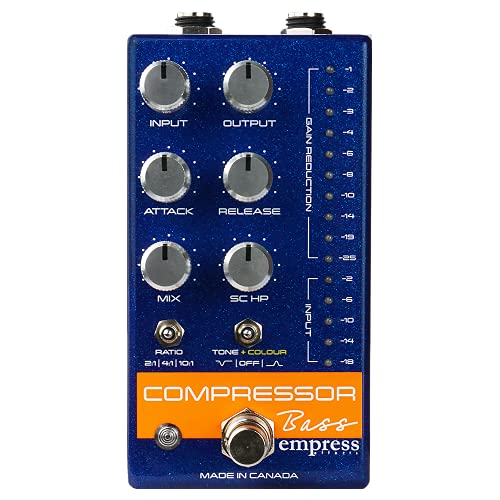
Its dry/wet mix, separate attack and release controls, and sidechain filter make it the most adaptable choice here for shaping a bass signal.

Two main knobs and a three-position attack switch make it a practical starting point for everyday note leveling.

Its multiband processing and visible gain reduction suit players who move between registers and techniques.

Separate attack, release, input and output knobs make it a compact option for learning conventional compressor behavior.

The current bass model combines an analog FET circuit, parallel compression and a gain-reduction meter.
1. Empress Effects Bass Compressor
The Empress Bass Compressor is my choice for bassists who want to understand what their compressor is doing. Input and gain-reduction metering help separate an overloaded signal from deliberate compression. Its three ratio settings cover gentle leveling through stronger peak control, while the independent timing controls let you adjust how the beginning and tail of a note behave.
The mix knob is particularly useful if you want a compressed foundation with some original attack blended back in. The sidechain high-pass filter changes which frequencies trigger compression; it does not simply remove bass from your audible output. Choose it for a pedalboard that needs flexibility across fingerstyle, picked parts and slap. If you want one quick adjustment before a rehearsal, the range of controls can feel excessive.
Pros
- Input and gain-reduction metering
- Separate attack and release
- Parallel blend and sidechain filter
Cons
- Ratio is limited to three preset settings
| Ratios | 2:1, 4:1, 10:1 |
| Signal path | Analog |
| Blend | Parallel compression mix control |
| Detection | Variable sidechain high-pass filter |
2. Electro-Harmonix Bass Preacher
The Bass Preacher suits a player who wants quieter notes to sit closer to louder ones without learning a row of studio controls. Sustain sets the amount of compression and Volume restores the output level. The attack switch gives you a useful choice between catching the note quickly and leaving more of its initial hit intact.
That straightforward layout is why it earns the budget slot. It is easy to revisit the same settings after someone bumps a knob, and you can hear the effect of the attack choices without scrolling through menus. You give up a gain-reduction meter and separate ratio or release controls. Start with modest Sustain, then compare effect-on and bypass at similar volume so a louder signal does not disguise excessive squeezing.
Pros
- Small number of controls
- Three attack settings
- Designed for bass
Cons
- No gain-reduction meter
- No separate ratio or release controls
| Controls | Volume, Sustain |
| Attack | Fast, Medium, Slow |
| Circuit | Analog |
| Bypass | True bypass |
3. BOSS BC-1X Bass Comp
The BC-1X is a good fit for bass lines that jump from low sustained notes to sharper upper-register passages. Its multiband processing treats different parts of the signal separately, rather than relying on one simple response across the whole frequency range. The threshold and ratio controls remain familiar, with a gain-reduction display to show how strongly you are compressing.
Choose it if you want that frequency-aware response in a conventional stompbox. It provides more information than the Bass Preacher without asking you to adjust separate bands yourself. There is no dedicated attack knob or clean-blend control, so players who want to preserve transients by manual adjustment have more options on the Empress. BOSS specifies internally increased working voltage; use the prescribed external supply rather than assuming that means an 18V adapter is required.
Pros
- Multiband response
- Visible gain reduction
- Threshold and ratio controls
Cons
- No manual attack control
- No blend control for mixing in your dry signal
| Processing | Digital multiband, BOSS MDP |
| Controls | Level, Release, Ratio, Threshold |
| Meter | 12-segment gain reduction |
| Bypass | Buffered |
4. MXR M87 Bass Compressor
The MXR M87 gives you a traditional compressor layout in a small pedal. Input determines how hard you drive the compression circuit, Output sets the resulting level, and the ratio switch moves from moderate compression toward limiting. The LED meter makes it easier to see whether every note is being reduced heavily or only the occasional peak.
I would choose it for a bassist who wants manual timing control but has little pedalboard space. You can experiment with a slower attack to retain the front of a picked note, then shorten the release if the next note is arriving before the compressor recovers. The M87 lacks the Empress’s parallel blend and sidechain filter. Those omissions matter if you want strong compression while preserving a separate dry signal or reducing how much low notes trigger the detector.
Pros
- Independent attack and release
- Four ratio settings
- Compact gain-reduction meter
Cons
- No dry-signal blend
- No sidechain filter to reduce how strongly low notes trigger compression
| Ratios | 4:1, 8:1, 12:1, 20:1 |
| Meter | 10 gain-reduction LEDs |
| Controls | Attack, Release, Ratio, Input, Output |
| Bypass | True bypass |
5. Origin Effects Cali76 Bass Compressor
The Cali76 Bass Compressor is worth considering when you want the response of a studio-style FET compressor on your board. Origin draws on the 1176 design and adds bass-oriented controls, including a dry signal blend. The ten-LED meter helps you judge the amount of reduction while you adjust the input and compression settings.
It is the option here for players who specifically want that compression approach rather than a broad selection of effects. The dry control lets you retain some uncompressed definition while using stronger compression underneath. Buy the current Cali76 Bass Compressor if you want the features described here; the older Cali76 Compact Bass is a different model. It is a specialist purchase, and a simpler pedal is easier to justify when occasional peak smoothing is your only requirement.
Pros
- Analog FET circuit
- Dry signal blend
- Detailed gain-reduction meter
Cons
- Attack and release share one control, so you cannot adjust them independently
| Circuit | Analog FET |
| Blend | Dry control |
| Meter | 10 gain-reduction LEDs |
| Model | Cali76 Bass Compressor |
What Does a Bass Compressor Pedal Do?
A bass compressor reduces the level difference between louder and quieter parts of your playing. Once the signal exceeds its threshold, the compressor applies gain reduction according to its ratio and timing. Output or makeup gain then lets you bring the processed signal back to a useful level. Compression can make a part easier to place in a band mix, but heavy settings also change its feel.
Think about the problem you want to fix before buying. Uneven fingerstyle notes call for gentle leveling. Slap peaks may need faster control. Sustaining a note longer involves a different balance of gain reduction and output level. Compression cannot correct timing or muting, and it can make background hiss more noticeable when you raise quieter parts.
Which Controls Should You Look For?
A gain-reduction meter is useful because compression can be difficult to hear in isolation. Ratio describes how strongly the signal is reduced above the threshold. Attack controls how quickly reduction begins, and release controls how quickly it stops. A slower attack can leave more initial bite; a release that stays active through the next note can make a busy line feel less lively.
A blend control combines dry and compressed signals. It is useful when you like the sustain of stronger compression but want some natural attack. A sidechain high-pass filter reduces the influence of low frequencies on the detector, while retaining them in the audio path. Neither feature is compulsory for good bass compression, but both expand the settings you can use.
Where Should a Bass Compressor Go in the Signal Chain?
A sensible starting point is after the tuner and before drive or modulation, so later effects receive a steadier signal. An envelope filter is an exception worth trying: compression before a filter can reduce the playing dynamics that trigger it. Put the filter first if you want its sweep to follow your picking strength. Our envelope filter pedal guide covers that separate effect.
Compression after drive controls the level of the distorted sound instead. Try both positions at rehearsal volume and compare them at similar output levels. EQ solves a different problem: it changes frequency balance, while compression changes dynamics. See our guitar and bass EQ pedal choices if the main issue is too much boom or a missing midrange.
Can You Use a Guitar Compressor on Bass?
You can often use a guitar compressor on bass, but the controls and frequency response determine how useful it is. Check that it accepts your instrument’s output, retains low frequencies and gives you the response you need. A hot active bass can also expose input headroom limits. Turn down an onboard boost before assuming that the pedal itself is faulty.
A bass-specific compressor is a convenient starting point when you mainly play bass. If you need compression plus several other effects, our bass multi-effects guide covers processors and strips. A dedicated compressor is the better fit when you already like your other pedals and want direct access to dynamics controls.
How Much Compression Should You Use?
Begin with a low or moderate ratio and enough threshold or input adjustment to catch your stronger notes. Match the bypass volume with the pedal’s output control. Play a soft verse part, an accented chorus and any slap or picked passages in the same session. A setting that suits one sustained note may respond differently to a fast line.
Listen with the band before making the effect stronger. If every note loses its front edge, slow the attack or blend in dry signal where available. If sustained reduction follows you into the next phrase, adjust release. For a small board, check the pedal’s voltage, polarity and current requirements against your pedalboard power supply before connecting it.
Summary
My top pick is the Empress Effects Bass Compressor for its metering, parallel blend and adjustable detection. The Electro-Harmonix Bass Preacher is my budget choice for straightforward leveling. Pick the BOSS for multiband processing, the MXR for compact manual controls, or the current Cali76 Bass Compressor for its FET approach and dry blend.
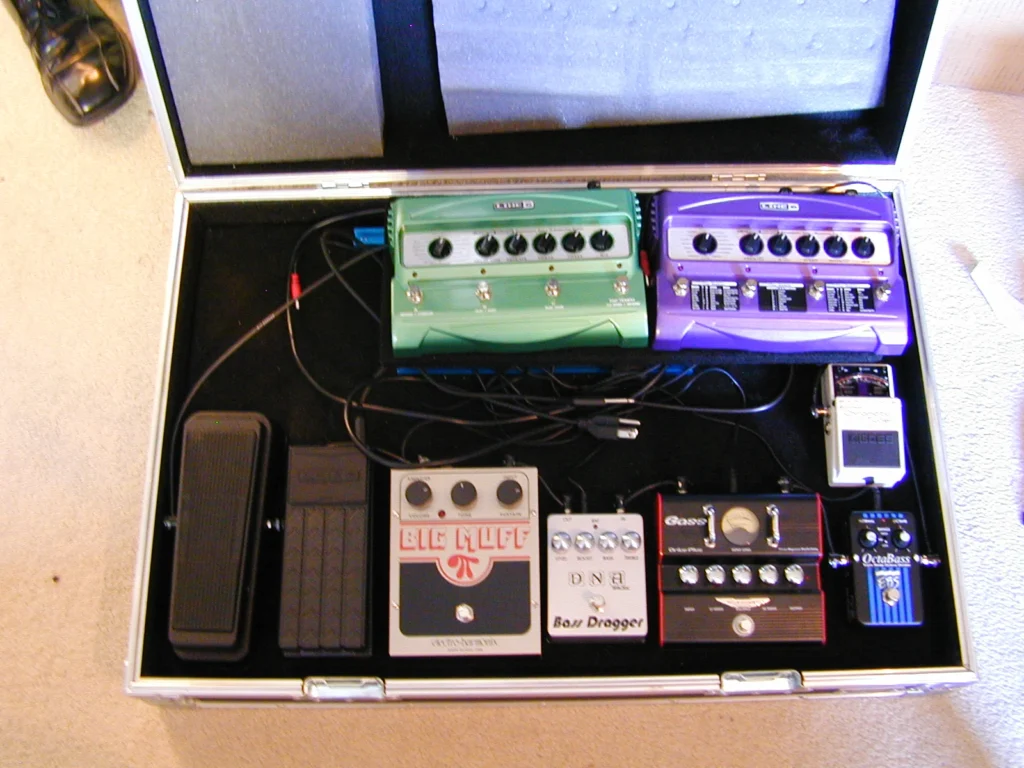
Photo: John Athayde / Wikimedia Commons, CC BY 2.0.
